

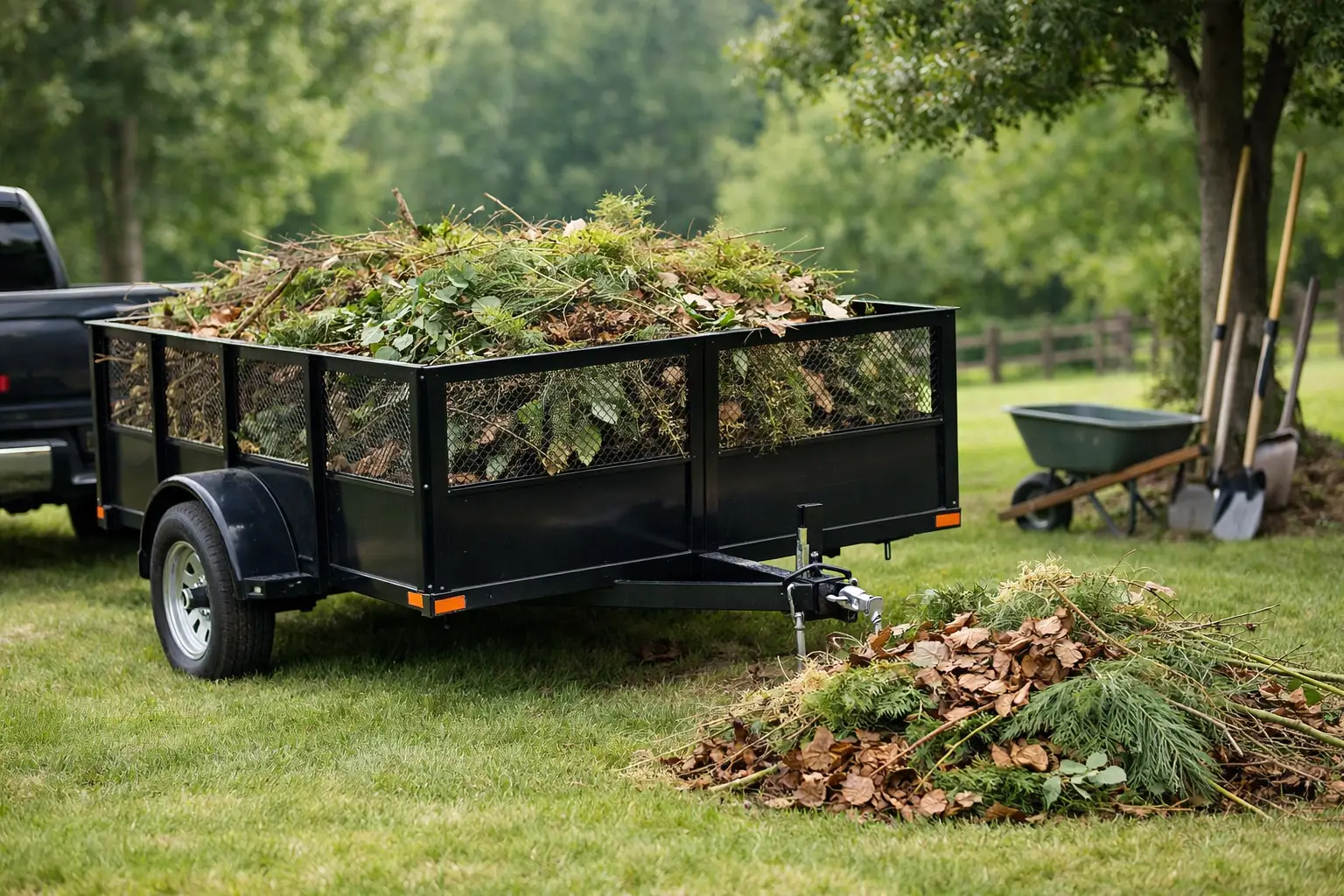
A pile of mesquite trimmings, brush, old shrubs, and bagged leaves can fill a pickup bed faster than most people expect. The best trailer for yard waste is usually an open utility trailer with enough bed space and side height for your load, but the right choice depends on what is in the pile, how far you are hauling it, and what your vehicle can safely tow.
For most Verde Valley cleanup jobs, the goal is simple: make fewer trips, keep the load contained, and unload without turning a Saturday yard project into an all-day headache. Start with the material you have, not just the biggest trailer you can find.
Best Trailer for Yard Waste: Start With the Load
Yard waste is bulky, uneven, and often lighter than it looks until you add wet grass, soil, logs, or rock. A trailer that works well for a few piles of dry branches may not be the right fit for a landscaping cleanup with heavy debris mixed in.
An open utility trailer is the practical choice for most homeowners. It is easy to load from the sides, gives you room for branches that do not fit neatly in bags, and works well for brush, palm fronds, clippings, light lumber, and old garden materials. If you are clearing a backyard in Cottonwood, hauling pruning debris from a Sedona property, or cleaning up around a rental, this is often the trailer that makes the most sense.
A dump trailer can be a better fit when the job includes heavy, loose material such as dirt, gravel, decomposed granite, sod, mulch, or a large amount of wet green waste. The ability to raise the bed can save a lot of shoveling. The trade-off is that dump trailers are heavier, require more tow vehicle capacity, and may be more trailer than you need for a straightforward brush haul.
An enclosed trailer is generally not the first pick for yard waste. It protects material from weather and keeps loose debris contained, but branches can scratch the interior, unloading is less convenient, and airflow is limited. Save enclosed trailers for tools, furniture, and items that need protection.
Choose Bed Size Before You Think About Weight
With yard waste, space is usually the first limitation. A trailer can be well under its weight capacity and still be full because branches and brush create a lot of empty air between them.
A smaller utility trailer works for routine pruning, several bags of leaves, or a quick run to dispose of light debris. It is also easier to back into a driveway and easier to tow if you have a midsize SUV or pickup. For a single weekend cleanup, though, a larger open-bed trailer often saves money and time by avoiding multiple disposal runs.
A trailer around 12 to 16 feet long is a useful range for larger residential jobs. That extra floor space matters when you are dealing with long limbs, hedge trimmings, or a full truck-bed-sized pile of brush. Side rails are also helpful because they give you tie-down points and a little more control over an uneven load.
Do not choose a trailer only by length. Check the bed width, rail height, and gate design. A landscape gate is useful if you are loading a mower or wheelbarrow, while a low rear gate can make hand-loading branches easier. If the trailer has removable sides or rails, confirm how they should be used before piling material above the top edge.
Match the Trailer to Your Tow Vehicle
The right trailer is only useful if your vehicle can tow it safely. Look at your vehicle owner’s manual or the towing information on the driver’s door area for its maximum towing capacity, then account for the trailer’s empty weight and the full weight of your debris.
Dry branches may be light, but fresh-cut wood, wet leaves, dirt stuck in root balls, and chunks of landscaping rock add up quickly. A load that appears manageable can become heavy after a watering, rainstorm, or irrigation leak. In Arizona, people also commonly mix yard cleanup with old pavers, block, soil, or tree rounds. Those materials should not be treated like ordinary brush.
Your hitch, receiver, ball mount, wiring connection, tires, and trailer brakes all matter. Make sure the hitch ball is the correct size and that safety chains are crossed beneath the coupler. The trailer should sit level or close to level when connected. A nose-high or nose-low setup affects handling and can put too much weight in the wrong place.
If you are not sure what your vehicle can handle, ask before booking. A local rental team should be able to discuss the trailer’s basic size, empty weight, and intended use so you can make a better call. It is far better to rent a manageable trailer than to overload your SUV or struggle with a trailer that is too large for your driveway and experience level.
Load Brush for a Safer, Cleaner Haul
How you load matters as much as the trailer you rent. Start with the heaviest pieces on the trailer floor, positioned low and near the axle area. Keep enough weight toward the front to maintain stable tongue weight, but do not stack all the weight at the very front.
Place long branches lengthwise when possible and cut awkward pieces down before loading. A few minutes with a saw can prevent a tangled pile that takes an hour to unload. Put bagged leaves and lighter clippings on top only after the larger brush is secured.
Do not rely on the side rails alone to hold material in place. Use ratchet straps, rope rated for the job, or a cargo net to secure the load. A tarp is especially useful for leaves, grass clippings, and small loose debris that can blow out on the road. Nothing makes a simple dump run worse than having to stop, pick up scattered debris, and explain why the road behind you is covered in leaves.
Before leaving, walk around the trailer. Check that the coupler is latched and pinned, the chains are attached, the lights and turn signals work, the jack is fully raised, and the rear gate is closed or properly secured. Then check the load one more time after you have driven a short distance. Brush can settle, straps can loosen, and a load that looked secure in the driveway may shift on the first turn.
When a Utility Trailer Is Not Enough
Some yard waste jobs are really land-clearing or renovation jobs. If you are pulling out mature shrubs with root balls, removing a damaged tree, tearing out a gravel landscape, or hauling demolition debris along with green waste, separate the materials whenever possible.
Brush fills space. Soil, rock, concrete, and wood rounds create weight. Combining both in one load can make it hard to stay within a trailer’s capacity and can make unloading more difficult. A better approach may be one trailer load for green waste and another for dense, heavy material. It takes planning, but it protects your vehicle, trailer, and schedule.
You should also consider access. A long trailer may be ideal for volume but difficult to maneuver down a narrow driveway, beside a block wall, or around parked vehicles. Measure the tight spots before pickup. If you can back the trailer close to the pile, loading gets easier and you will spend less time carrying armfuls of brush across the yard.
A Better Rental Plan for Weekend Cleanup
The best rental experience starts with a clear description of the job. Tell the rental provider whether you are hauling light branches, bagged yard waste, logs, dirt, a mower, or a mix of materials. Mention your tow vehicle and whether you need to access a steep driveway or tight residential street.
Book enough time to load, haul, unload, and return the trailer without rushing. Yard work almost always takes longer than expected, especially when you are cutting material down to fit and securing it properly. Contactless pickup and dropoff can make a weekend project easier to schedule, but you still want time to inspect the equipment and ask questions before you pull out.
For homeowners and small crews around Clarkdale, Camp Verde, Cornville, and the surrounding Verde Valley, a dependable utility trailer is often the most cost-effective way to handle a cleanup without buying, storing, and maintaining equipment you may only use a few times a year.
If you are looking at a full yard pile and wondering whether your vehicle can handle it, take a photo, estimate the materials involved, and call Monsoon Trailer Rental before you book. A quick conversation can help you choose a trailer that gets the debris out of your yard safely and lets you get back to the part of the weekend you actually planned to enjoy.

