
A truck bed fills up fast when you are trying to move a mower, a pallet of materials, jobsite tools, or a customer’s vehicle. The right small business hauling trailer options give you room to work without buying equipment that sits unused between jobs. For many Verde Valley operators, renting is the practical middle ground: get the capacity you need for the job, then return it when the work is done.
The best trailer is not always the biggest one. It is the one that matches your cargo, your tow vehicle, your route, and the amount of loading and unloading you need to do. Here is how to narrow it down without paying for more trailer than the job requires.
Start With What You Haul Most Often
Before looking at trailer types, get clear on your regular work. A landscaper may need space for a zero-turn mower and tools. A remodeling crew may need to move lumber, drywall, cabinets, and debris. An auto shop, mechanic, or property manager may occasionally need to transport a vehicle.
Weight matters as much as physical size. Add up the weight of the cargo, fuel, attachments, toolboxes, and anything else going on the trailer. Then check your truck’s towing rating, hitch rating, and payload capacity. A trailer may be capable of carrying the load while your vehicle is not equipped to tow it safely.
Also consider the jobsite. A longer trailer can make loading easier, but it takes more room to turn around and park. That can be a real factor on narrow residential streets, steep driveways, or tight lots around Sedona, Jerome, and older parts of Cottonwood.
Small Business Hauling Trailer Options by Job Type
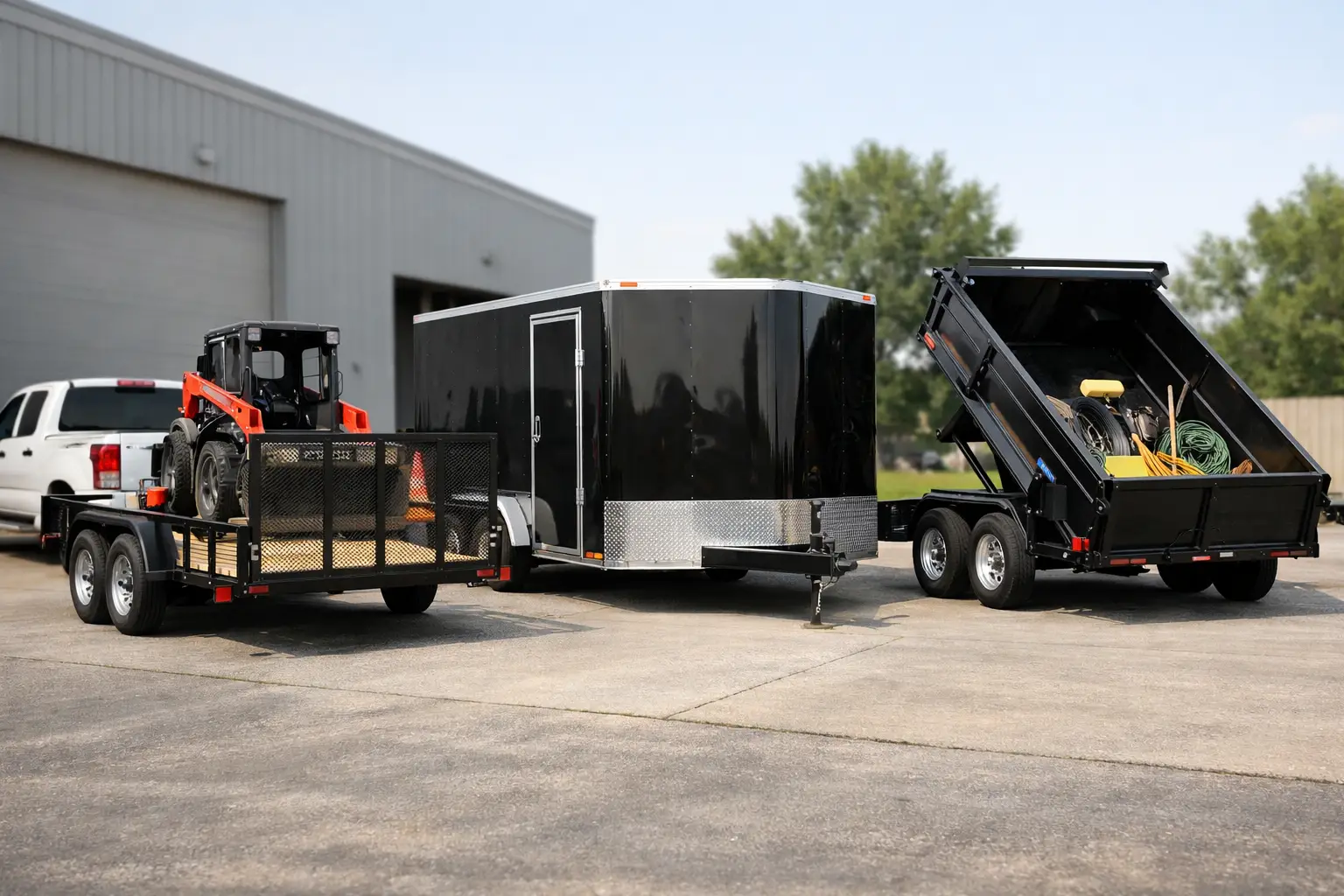
Utility trailers for daily equipment and materials
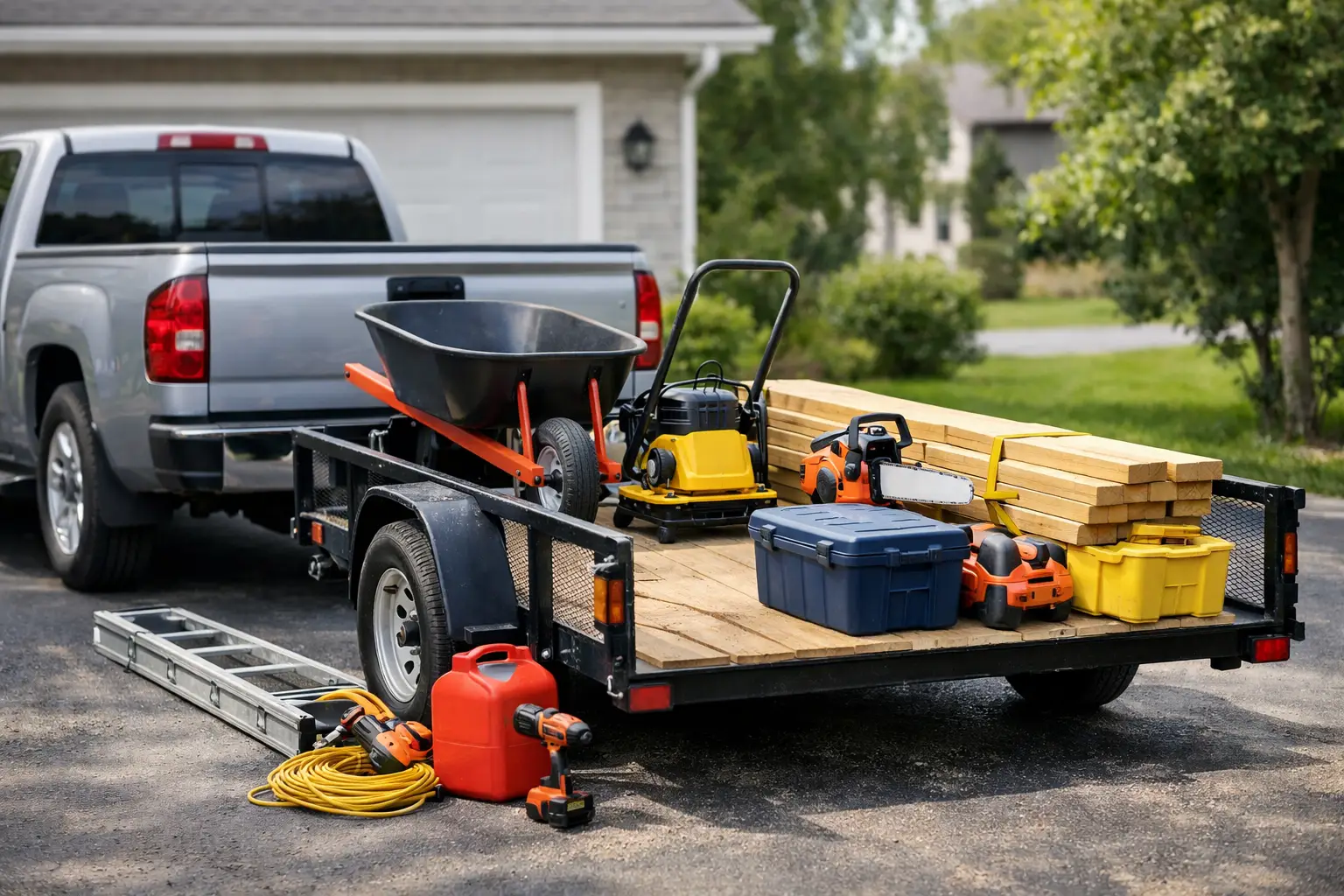
An open utility trailer is often the most flexible choice for everyday business hauling. It works well for lawn equipment, small machinery, building supplies, tools, furniture, bagged material, and cleanup loads. Open sides make it easier to load from different angles, especially when you are handling awkward materials by hand.
For a landscaping crew, an open trailer can carry mowers, trimmers, blowers, and wheelbarrows in one trip. For a handyman or contractor, it can handle lumber and jobsite supplies that do not fit cleanly in a pickup bed.
The trade-off is exposure. Anything that can be damaged by rain, wind, dust, or road debris needs to be covered and secured. Use a properly rated tarp when needed, and do not assume a few loose straps will hold a load in place on a bumpy road.
Car hauler trailers for vehicles and rolling equipment
A car hauler is built for moving cars, trucks, SUVs, and other rolling equipment. It can be a smart rental choice when a customer vehicle is not drivable, a project car needs to get to a shop, or you need to move a side-by-side, small tractor, or other equipment that fits the trailer’s deck and weight limits.
Loading is where preparation pays off. Confirm the vehicle’s width, curb weight, ground clearance, and whether it runs and steers. A low vehicle may need extra care at the ramps. A non-running vehicle may require a winch or another safe loading plan. Never try to improvise a recovery setup just to save time.
Vehicle tie-downs are not optional. Secure the vehicle at proper tie-down points using rated equipment, check that the weight is balanced, and recheck everything after the first few miles. A car hauler is a dependable tool, but only when the load is properly secured.
Flatbed-style trailers for oversized loads
When the load is wide, long, or difficult to load through a gate, a flatbed-style trailer can be the better fit. Contractors may use one for lumber, fencing, pipe, pallets, small equipment, or bulky materials. The open deck gives you flexibility that an enclosed cargo trailer cannot.
This option is especially useful when a forklift is loading materials from the side. It can also make unloading faster at a jobsite. The downside is that flat loads need careful securement. Long materials should be supported, tied down, and flagged when required. A load that hangs too far past the trailer is not just inconvenient – it can create a safety issue.
Dump trailers when the job creates the load
For some businesses, the main challenge is not delivering material. It is removing it. A dump trailer makes sense for landscaping debris, brush, soil, gravel, demolition waste, and cleanup work. The ability to unload without shoveling every pound by hand can save real labor time.
That said, weight adds up quickly with dirt, rock, wet green waste, and construction debris. A trailer that looks only half full can still be overloaded. Keep loads within the trailer’s capacity and be mindful of local disposal rules before leaving the jobsite.
Renting Versus Owning: A Straightforward Business Call
Buying a trailer makes sense when you use the same type of trailer constantly and have secure space to store it. Ownership gives you immediate access, and over time it may be the lower-cost choice for a busy operation.
But ownership comes with more than a monthly payment. There is registration, maintenance, tire replacement, bearing service, repairs, storage, insurance, and the risk of having the wrong trailer when your work changes. A utility trailer may be perfect most weeks, then a vehicle move or larger equipment job comes up and you need something different.
Renting lets a small business match the trailer to the job. It is particularly useful for occasional projects, seasonal work, one-time equipment moves, or periods when your normal trailer is unavailable. You pay for the capability when you need it instead of tying up cash in equipment that may sit for long stretches.
For first-time renters, a local company can also help you confirm whether the trailer type makes sense before pickup. That is worth more than a quick online reservation with no one available to answer basic questions.
Check These Details Before You Book
A few minutes of planning can prevent a wasted trip or an unsafe haul. Have your tow vehicle information ready, including its hitch receiver size, towing capacity, and electrical connection. Know the approximate dimensions and weight of what you are hauling.
You should also ask about ramp access, tie-down points, brake requirements, and what equipment is included with the rental. If you are hauling a vehicle, confirm whether you need straps, a winch, or another loading tool. If you are hauling loose material or debris, plan for a tarp and make sure the trailer is suitable for that use.
At pickup, walk around the trailer before leaving. Check tires, lights, coupler connection, safety chains, breakaway cable if equipped, ramps, and the condition of the deck. After loading, test the trailer lights again and make sure your cargo is balanced. Too much weight at the rear can cause sway. Too much weight at the front can overload the hitch and rear axle of the tow vehicle.
Make the Haul Easier on Your Crew
A trailer should save time, not add a new headache to the workday. Load heavier items low and centered, keep gear from shifting, and leave enough room to access straps without climbing over the load. Stop after the first few miles to inspect the coupler, chains, tires, and tie-downs. It is a simple habit that can catch a problem before it becomes an expensive one.
If your business needs dependable equipment for a vehicle move, materials run, equipment transport, or cleanup job, Monsoon Trailer Rental offers local trailer rentals with straightforward booking and contactless pickup and dropoff. The goal is simple: get the right trailer, get the work done, and do not get soaked by high rates.
The next time a job outgrows your truck bed, choose the trailer around the load – not around a guess. A quick call, accurate measurements, and a realistic weight estimate can turn a long hauling day into a job your crew finishes on time.