
Showing up to grab a rental trailer without a plan is how small problems turn into a wasted morning. A good local trailer pickup checklist keeps the handoff quick, helps you avoid fitment issues, and makes sure you leave ready to haul instead of standing in the lot wondering why your lights do not work.
Why a local trailer pickup checklist matters
Most pickup problems are not major mechanical failures. They are simple misses: the wrong ball size, no usable trailer plug, underestimating trailer weight, or forgetting to check straps, ramps, or tie-down points before pulling away. Those are the kinds of issues that eat up time and create stress.
If you are renting for a dump run, a landscaping job, a UTV move, or a car haul, the goal is the same. You want to hook up once, confirm everything is right, and get on the road with confidence. That is especially true if you are trying to finish a weekend project or keep a jobsite moving.
Before you leave home
The best pickup is the one that feels boring. That usually means you handled the important stuff before you arrived.
Start with your tow vehicle. Know its tow rating, hitch class, and receiver size. If you are not sure, check your owner’s manual or the sticker information on the vehicle. Guessing here can put you in the wrong trailer, and bigger is not always better if your vehicle is the limiting factor.
Next, confirm your hitch ball size and make sure the ball is torqued and mounted correctly. Many trailer delays come down to this one detail. A 2-inch ball and a 2-5/16-inch coupler are not close enough. They need to match exactly.
You should also check your trailer wiring connection before pickup. Common plug styles are 4-pin and 7-way, and they are not interchangeable unless you have the right adapter and it works properly. If your vehicle has had wiring issues before, test them ahead of time instead of hoping it will be fine in the lot.
Bring your driver’s license, proof of insurance if required, and anything the rental company asked for when you booked. If you are moving a vehicle, know the weight and dimensions of what you are hauling. If you are hauling equipment or material, have a realistic estimate of cargo weight. Half the battle is matching the trailer to the job.
The local trailer pickup checklist at the lot
Once you arrive, slow down for five minutes and do a real inspection. This is not about being picky. It is about catching the obvious things while you are still standing next to someone who can help.
Check the tires first. Look for decent tread, visible damage, and proper inflation. Trailer tires take a beating, and a low tire is easier to fix before you leave than on the shoulder of the road.
Look at the coupler, safety chains, jack, and breakaway cable if the trailer has one. The coupler should latch securely over the correct ball size, and the safety chains should be in good shape with working hooks. The breakaway cable should be present and attached properly to the tow vehicle, not wrapped into the chain mess where it cannot do its job.
Test the lights with someone watching. Confirm running lights, brake lights, and turn signals on both sides. If one light does not work, do not talk yourself into fixing it later. Handle it right there.
Then inspect the deck or bed. If it is a utility trailer, look at the floor condition, gate, latch points, and any obvious damage. If it is a car hauler, check ramps, fenders, tire straps, D-rings, and winch access if that applies. If you are loading a low-clearance vehicle, ask about ramp angle before you leave. That small question can save you a lot of trouble at the loading point.
Finally, ask what is included and what is not. Some jobs require straps, wheel nets, or extra tie-down gear. Do not assume the trailer comes loaded with every accessory you need.
Match the trailer to the job, not just the price
Everyone likes a fair rate, but the cheapest trailer is not the cheapest option if it slows down your job or creates a safety issue. A small utility trailer might cost less up front, but if you need two trips instead of one, that bargain disappears fast.
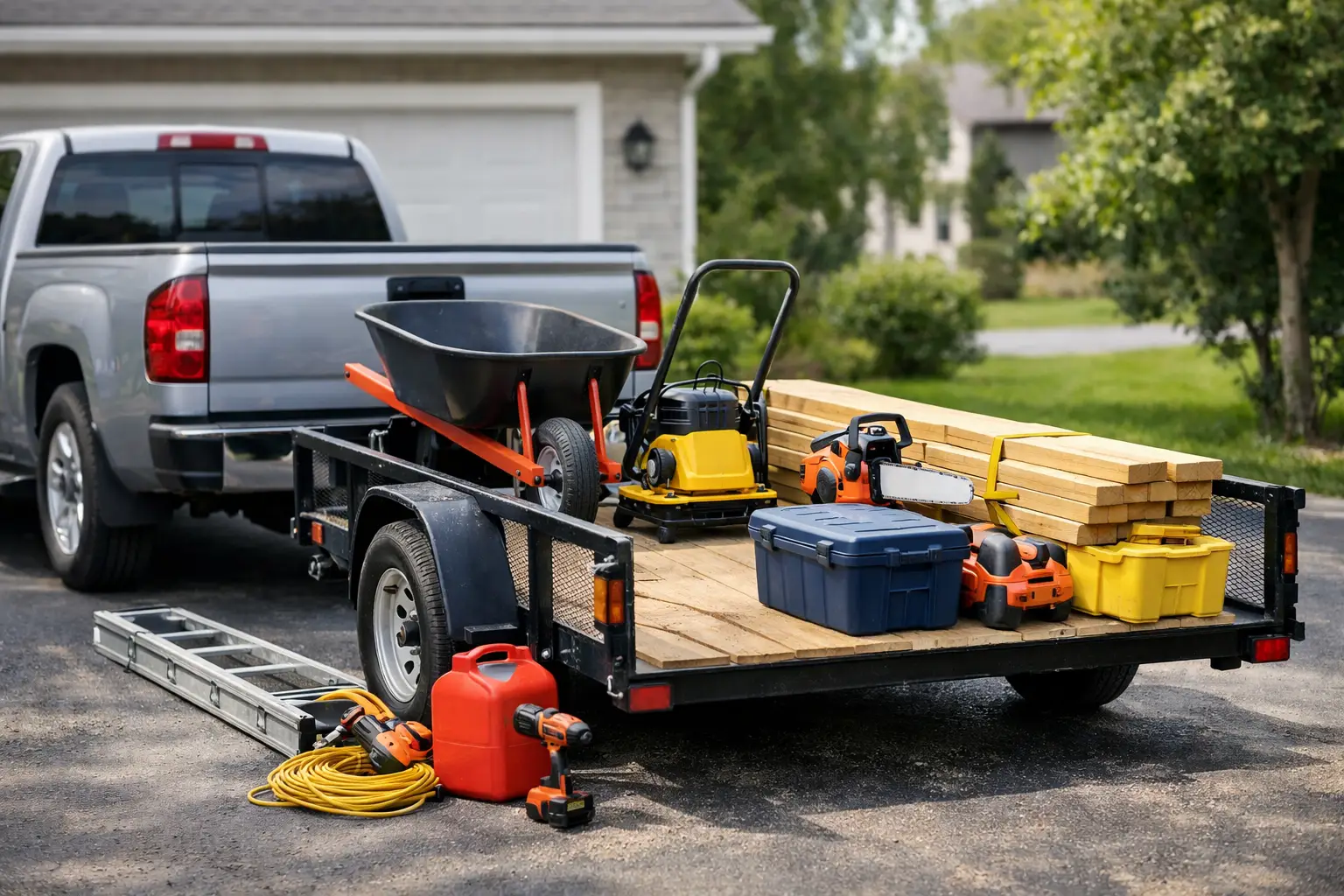
This is where it helps to be honest about what you are hauling. Loose yard debris, pallets of material, a compact tractor, and a sedan all call for different setups. Weight matters, but so do deck length, width, side rails, loading angle, and tie-down points.
For example, a homeowner cleaning up a property in Cottonwood may be fine with a simple utility trailer. A contractor moving equipment between jobs may need something with heavier capacity and easier loading. A car move is a different animal altogether. Vehicle weight, wheelbase, ground clearance, and tie-down method all need to line up with the trailer.
If you are unsure, ask questions before hookup. A local rental yard that knows the work people actually do in the Verde Valley can usually spot a mismatch fast.
What to ask before you pull out
A few direct questions can make the rest of the day easier. Ask about the trailer’s empty weight and payload if you do not already know it. Ask whether there are loading tips for your specific cargo. Ask how the coupler locks, how the ramps secure, and where the best tie-down points are.
If you are renting a car hauler, ask how the vehicle should be positioned for proper tongue weight. Too much weight forward or too much weight to the rear can make towing unstable. If you are hauling equipment, ask whether the trailer is better loaded centered or slightly forward, depending on the machine and attachment setup.
You should also ask about return expectations. Knowing the fuel, cleaning, or timing expectations at pickup helps you avoid extra charges later.
Do one last walk-around before hitting the road
After the trailer is hooked up and loaded, do not skip the final walk-around. This is where you catch the stuff people miss because they are in a hurry.
Make sure the coupler is latched and pinned. Cross the safety chains under the tongue. Check the breakaway cable attachment. Raise and secure the jack fully. Confirm the load is balanced and tied down with the right number of straps or chains. Shut all gates, ramps, and latches completely.
Then step back and look at the trailer as a whole. Is it sitting level enough to tow safely? Are the tires carrying the load evenly? Are straps routed away from sharp edges and moving parts? Can you see your trailer fenders and tires clearly in the mirrors? That one-minute check is worth doing every time.
Common mistakes that waste time
The most common mistake is showing up with the wrong hitch setup. The second is not understanding total weight. People often focus only on the cargo and forget the trailer itself counts too.
Another mistake is rushing the light test or skipping it because the trailer was “probably fine yesterday.” Wiring problems happen. Catching them at pickup is part of the job.
First-time renters also tend to underestimate tie-down needs. A tarp and one old ratchet strap are not a securement plan. If the load shifts, the trip gets expensive in a hurry.
There is also the weather factor. Wind, rain, and extreme heat can change how a load behaves and how your tow vehicle performs. Around northern Arizona, conditions can shift quickly depending on where you are headed, so give yourself some margin.
A checklist should save time, not add friction
A good local trailer pickup checklist is not meant to turn a simple rental into a paperwork exercise. It is there to help you leave with the right trailer, the right hookup, and no surprises once you are miles down the road.
That is why working with a nearby rental company helps. When the process is straightforward and you can talk to someone who actually picks up the phone, it is easier to sort out hitch questions, trailer fit, and hauling details before they become pickup-day problems. Monsoon Trailer Rental is built around exactly that kind of local, no-nonsense service.
If you keep the checklist simple – tow vehicle, hitch match, wiring, trailer inspection, load plan, and final walk-around – you will avoid most of the issues that slow people down. And when the trailer leaves the lot set up right, the rest of the job usually goes a whole lot smoother.