
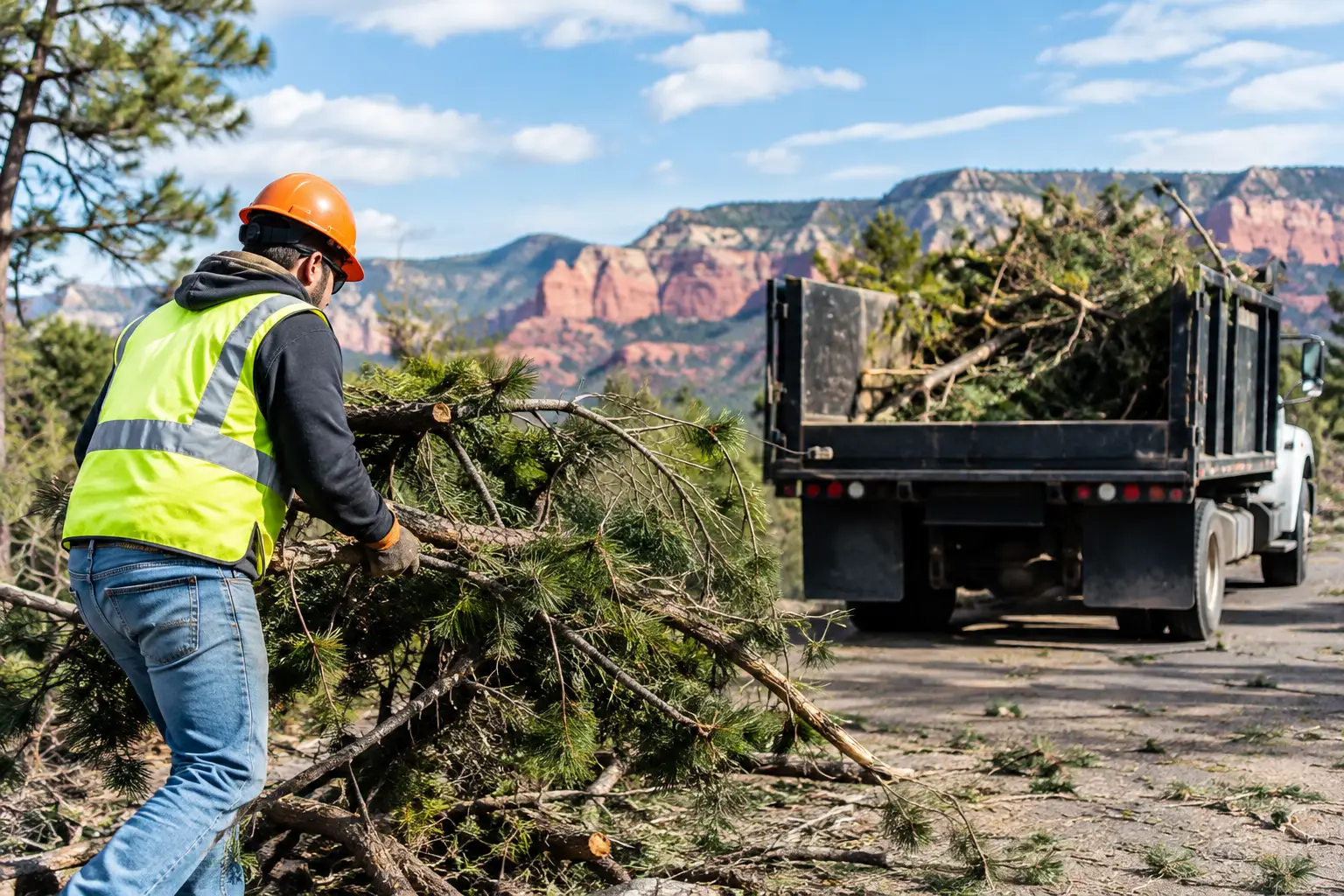
A monsoon can leave a property looking manageable from the road, then turn into a full hauling job once you start walking the fence line. This storm cleanup hauling example shows how a Verde Valley homeowner can clear fallen branches, damaged materials, and yard debris without making extra trips or overloading a pickup bed.
The goal is not to load everything as fast as possible. The goal is to sort the mess, use a trailer that fits the job, secure the load correctly, and make one safe run to the proper disposal location. That saves time, protects your vehicle, and keeps the cleanup from dragging into another weekend.
A Storm Cleanup Hauling Example From Start to Finish
Picture a homeowner in Cottonwood after a hard summer storm. Water has pushed loose gravel into the driveway, a mature tree has dropped several large limbs, and a section of old wood fencing has come down. There are also soaked cardboard boxes from a damaged shed and a few broken patio items.
At first, it is tempting to throw all of it into one pile and start loading. That usually creates a problem at the dump, in the trailer, or both. Wet household materials, green waste, construction debris, and potentially hazardous items do not always belong in the same disposal stream. Separating the debris before loading makes the haul cleaner and may reduce disposal fees.
In this example, the homeowner makes four work piles: green waste such as branches and brush; bulky materials such as fence boards and patio furniture; general trash; and items that need separate handling, including paint, chemicals, batteries, propane cylinders, or electronics. If there is storm-damaged roofing, insulation, or drywall, it should also be kept separate until the disposal site confirms its requirements.
Once the piles are organized, the real question is capacity. A few bags of leaves and small branches may fit in a pickup bed. A fence section, cut limbs, and bulky trash can quickly exceed what is practical or safe to stack in a truck. A utility trailer gives the homeowner room to load the job in a controlled way, rather than piling debris over cab height and hoping it stays put.
Start With Safety, Not the Trailer
Storm debris can hide more than mud and broken limbs. Before handling anything, check for downed power lines, unstable trees, sharp metal, damaged gas lines, and standing water around electrical equipment. If a tree is leaning into a structure or utility line, that is not a routine cleanup job. Call the appropriate utility provider or a qualified tree professional first.
Wear gloves, sturdy boots, eye protection, and long sleeves when moving brush or broken building materials. Arizona storms can also leave snakes, scorpions, and insects tucked into wet piles of debris. Use a rake, shovel, or long-handled tool to move material before reaching into a pile by hand.
Cut branches down to manageable lengths before loading. A trailer is not a place to wrestle with a full-size limb that sticks out several feet past the rear gate. Smaller pieces stack better, tie down more easily, and are less likely to shift on the road.
Choose the Trailer Around the Load
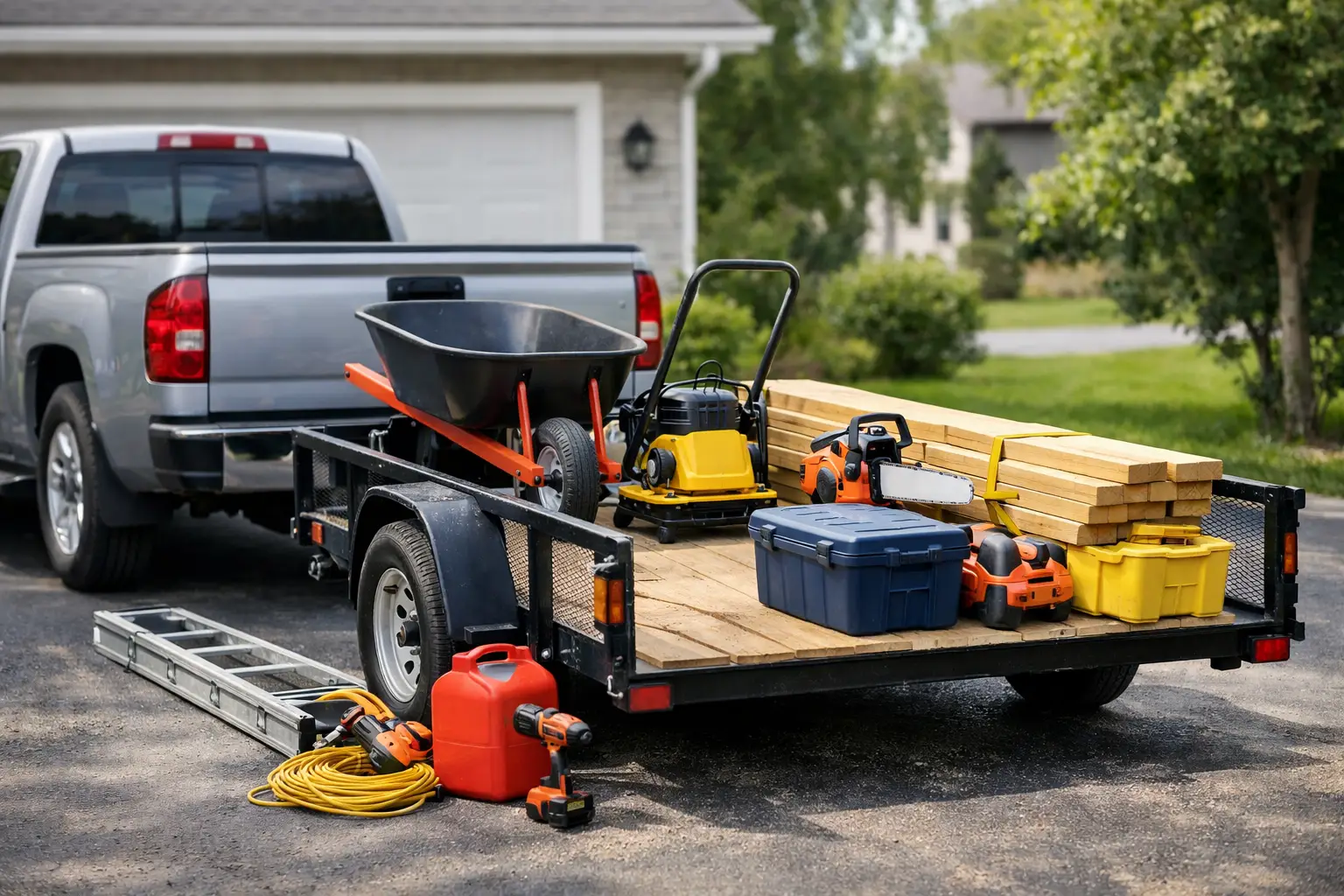
The right trailer depends on what is being hauled, not just how much of it is sitting in the yard. For a typical cleanup that includes brush, fence boards, bagged debris, and a few bulky items, an open utility trailer is often the practical choice. It is easy to load from the side, and it gives you anchor points for straps or a tarp.
A car hauler is built for vehicles and wheeled equipment. It can be useful if the storm cleanup includes moving a disabled mower, side-by-side, compact tractor, or other equipment, but it is not automatically the best option for loose brush and household debris. Match the trailer to the work instead of renting more trailer than the job needs.
Also consider the tow vehicle. Check its towing capacity, hitch rating, wiring connection, and brake requirements before booking. Trailer capacity is only half the equation. Your truck or SUV must be rated to tow the loaded trailer safely, and the hitch ball needs to be the correct size and securely latched.
If you are unsure, describe the materials you need to haul, not just the size of your property. Saying you have twelve bags of yard waste, six fence panels, and several tree limbs gives a local rental team a much clearer picture than saying you need a trailer for storm cleanup.
Load Heavy, Long, and Loose Materials the Right Way
In this storm cleanup hauling example, the homeowner starts with the fence boards and the heaviest solid materials. Those go low on the trailer and slightly forward of the axle, without putting excessive weight on the tongue. Too little tongue weight can make a trailer sway. Too much can overload the rear suspension of the tow vehicle and affect steering.
Next come the cut branches. Lay the longest pieces lengthwise when possible, keeping them inside the trailer boundaries. Brush can look light, but it catches wind and shifts easily. Compact it in layers instead of creating one tall, loose heap.
Bagged waste and lighter items go on top only after the base is stable. Do not use a pile of branches as a platform for heavy trash bags or broken furniture. That load will settle and loosen the tie-downs while you drive.
Use rated straps for heavier items and a tarp or cargo net for light debris. Bungee cords can help secure a tarp, but they are not a substitute for proper tie-down straps. After loading, walk around the trailer and check four things: nothing is hanging over the sides, the trailer lights are visible, the hitch is locked, and the safety chains are crossed under the coupler.
A short stop after the first few miles is worth the time. Recheck straps and the tarp once the load has had a chance to settle. This matters even more on the winding roads and changing elevations around Jerome, Sedona, and the rest of the Verde Valley.
Plan Disposal Before You Pull Out
The best cleanup plan includes a destination before the trailer is loaded. Local transfer stations and landfill facilities can have different rules for green waste, household trash, construction debris, appliances, and hazardous materials. Hours, payment methods, load-cover rules, and accepted materials can change, so confirm the details before you head out.
Do not assume that everything damaged by a storm is regular trash. Paint, solvents, fuel containers, batteries, pool chemicals, and propane bottles need special handling. Keep these items out of the trailer unless you have confirmed the correct drop-off process. Mixing them into general debris can create a safety issue and may result in a rejected load.
If a large tree came down, it may make sense to haul green waste separately from fencing and trash. That can mean two loads instead of one, but it can also make unloading faster and prevent a disposal site from turning you away because the load is mixed. It depends on the volume of debris, your trailer size, and the rules at the destination.
Avoid the Common Cleanup Mistakes
The most common mistake is trying to make one overloaded trip instead of two reasonable ones. A trailer full of loose limbs, broken boards, and unsecured bags is hard to drive, hard to unload, and more likely to scatter debris on the road. A second trip is usually cheaper than damage to your vehicle, a citation for an uncovered load, or an accident.
Another mistake is loading before cutting down oversized debris. If you cannot secure it within the trailer safely, reduce it first. The same applies to waterlogged materials. Wet carpet, drywall, and soil-filled debris can weigh far more than expected, so do not judge the load by volume alone.
Finally, do not wait until the last minute to arrange equipment. After a major storm, trailers, chainsaws, and disposal services can all be in higher demand. Booking early gives you a better chance of getting the equipment you need when the cleanup crew, family help, or weekend schedule is available.
Make the Next Storm Easier to Handle
Once the trailer is unloaded, take five minutes to look at what created the biggest mess. Low branches over a driveway, loose fence sections, unanchored patio furniture, and cluttered sheds tend to become problems when heavy rain and wind move through. A little preventive work before the next monsoon can reduce the next cleanup load.
For jobs that outgrow a pickup bed, Monsoon Trailer Rental offers dependable local trailer options, contactless pickup and dropoff, and real help when you need to choose the right setup. Clear the debris safely, keep the load covered, and give yourself enough trailer for the job. That is how a rough storm cleanup becomes a finished project instead of a lingering pile in the yard.