

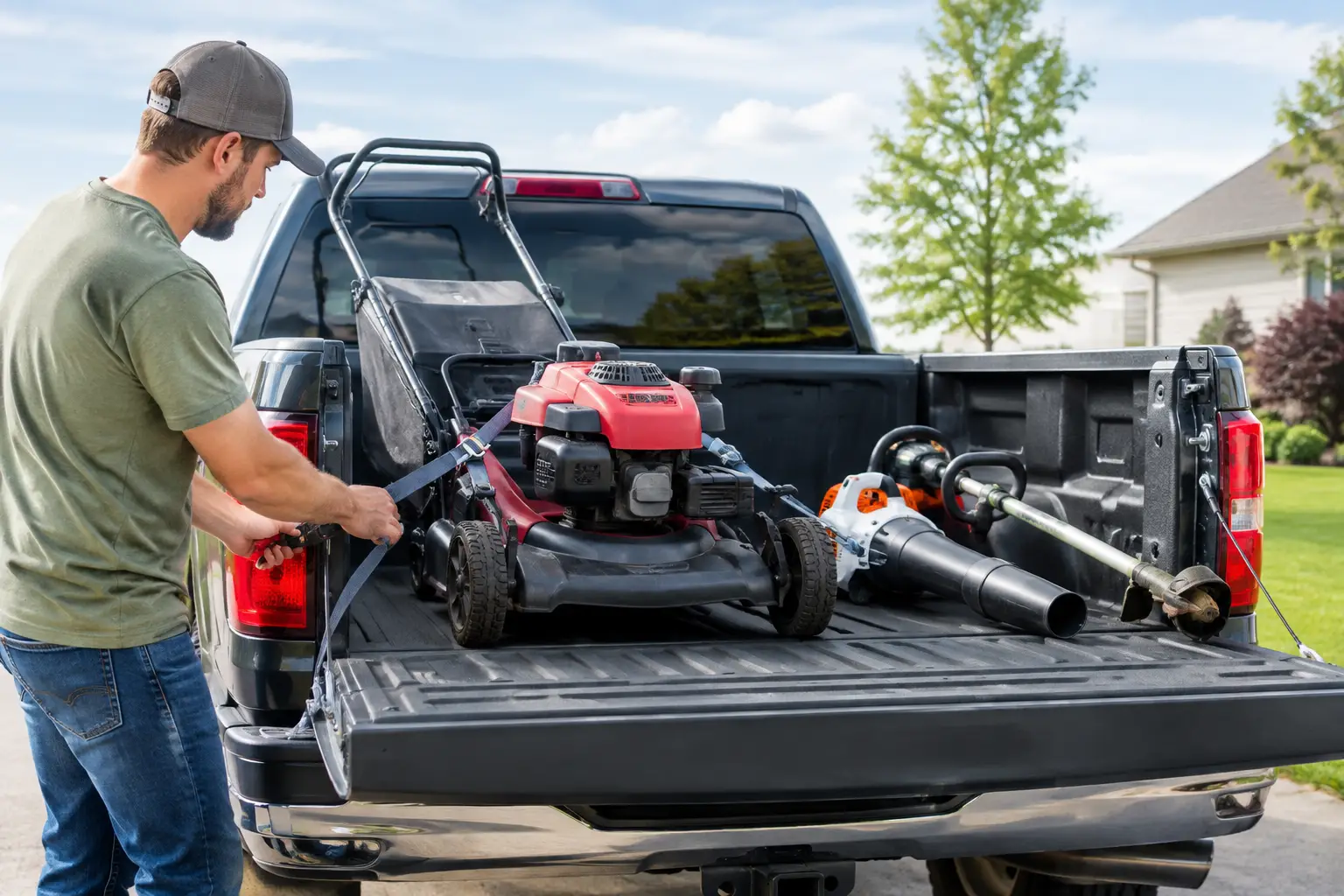
A zero-turn mower can turn a simple Saturday cleanup into an expensive problem if it shifts on the road. Learning how to transport lawn equipment starts with treating every mower, trimmer, and compact machine like a real load – because it is. The goal is not just getting it from point A to point B. It is arriving with the equipment, your tow vehicle, and everyone else on the road in good shape.
Start With the Right Trailer and Tow Vehicle
The trailer should fit the equipment, not the other way around. A push mower and a few handheld tools may fit in a pickup bed, but riding mowers, zero-turns, aerators, compact tractors, and commercial landscaping gear are usually safer on a trailer with proper tie-down points and loading ramps.
Before loading, check your vehicle owner’s manual for its towing capacity and tongue-weight limit. Then check the trailer’s payload rating. Payload is the weight the trailer can carry, not its total weight. Add up the equipment, fuel cans, attachments, toolboxes, and anything else coming along. Guessing is how a trailer that looked fine in the driveway becomes hard to control on the highway.
For most lawn equipment moves, an open utility trailer is a practical choice. It gives you room to position the load and access to multiple anchor points. A car hauler can also work well for heavier riding equipment or a compact tractor, especially when its deck, ramps, and capacity match the job.
Make sure your hitch ball is the correct size for the coupler, the coupler is fully latched, and safety chains are crossed beneath the tongue. Connect trailer lights and test the brake lights, turn signals, and running lights before you leave. If the trailer has electric brakes, confirm the brake controller is working too.
Prepare Lawn Equipment Before Loading
A few minutes of prep prevents most loading trouble. Remove loose items such as baggers, cup holders, detachable ramps, and hand tools. Lower mower decks and attachments when possible, and secure anything that can move independently.
Shut off the equipment, let hot engines cool, and check for fuel or oil leaks. A small amount of fuel is normal for loading, but avoid hauling with overfilled tanks, especially in Arizona heat. Fuel expands, and fumes inside an enclosed space are a bad combination.
For a riding mower or zero-turn, engage the parking brake after it is positioned on the trailer. Put the transmission in the position recommended by the manufacturer for transport. Many machines have bypass valves or hydrostatic-release controls that need to be set correctly. If you are unsure, check the owner’s manual before forcing anything.
Handheld equipment needs attention too. Trimmers, blowers, chainsaws, and hedge trimmers should not roll around loose in the trailer bed. Use a toolbox, rack, crate, or separate tie-downs. Keep sharp blades covered and fuel containers upright in an approved can secured against movement.
Load Slowly and Keep the Weight Balanced
Loading is where most equipment damage happens. Park on firm, level ground whenever possible. Uneven dirt, loose gravel, steep driveways, and wet ramps make a manageable job risky fast.
Use ramps that are rated for the equipment’s weight and wide enough for its tires. Confirm the ramps are properly hooked or pinned to the trailer before driving up. Keep the ramp angle as low as practical. A steep angle can cause mower decks to drag or equipment to lose traction.
Drive straight up the ramps at a slow, steady pace. Do not make sharp steering corrections halfway up. If the equipment does not feel stable, back down carefully and reset rather than trying to save a bad approach.
Once loaded, place the heaviest equipment slightly ahead of the trailer axle. That helps create proper tongue weight, which is generally around 10 to 15 percent of the loaded trailer weight. Too little tongue weight can cause trailer sway. Too much can overload the rear of the tow vehicle and make steering less responsive.
Do not crowd every heavy item at the front just because it seems safer. A trailer loaded too nose-heavy can be just as difficult to tow. If you are carrying several pieces of equipment, position the largest machine first, then distribute the remaining weight evenly from side to side.
How to Transport Lawn Equipment With Secure Tie-Downs
A parking brake is not a tie-down. Neither are wheel chocks by themselves. Every wheeled machine needs straps or chains that are rated for the load and attached to solid points on both the equipment and trailer.
For a riding mower or zero-turn, four tie-downs are the standard starting point: two pulling forward and two pulling backward. This keeps the machine from rolling, shifting sideways, or bouncing when the trailer hits a rough patch. Attach straps to manufacturer-approved frame or axle locations, not to mower decks, steering components, plastic body panels, or any part that can bend.
Use ratchet straps with a working load limit that exceeds the demands of the equipment. The working load limit matters more than the strap’s break strength. Inspect straps for cuts, fraying, damaged hooks, or worn ratchets before every trip. A strap that has sat in the sun for years may not be trustworthy when you need it most.
Crossing straps can help limit side-to-side movement when the trailer’s anchor points allow it, but do not create angles that rub against sharp metal edges. Protect straps from abrasion and keep excess webbing tied off so it cannot flap in the wind or drag near a tire.
After tightening the straps, grab the equipment and try to move it. It should feel planted. Then recheck the straps after the first few miles. New straps often settle as the load shifts into place, and a quick stop to retighten them is far easier than dealing with a loose mower on the roadside.
Drive for the Load You Are Carrying
Towing changes how your vehicle accelerates, brakes, turns, and handles bumps. Give yourself more room to stop, take corners wider, and avoid sudden lane changes. Keep your speed sensible for the road, weather, trailer, and load. A trailer tire failure or sway event gets worse quickly at high speed.
Watch for trailer sway, which feels like the trailer pushing the tow vehicle from side to side. Do not slam on the brakes or jerk the steering wheel. Ease off the accelerator, hold the wheel straight, and allow the combination to slow down. Once stopped safely, inspect weight distribution, tire pressure, hitch setup, and tie-downs before continuing.
In the Verde Valley, wind deserves extra attention. Open trailers catch gusts, particularly on exposed stretches of road and during changing weather. Secure loose tarps tightly or skip them if they cannot be fastened without flapping. A tarp that comes loose can block your view, distract other drivers, or damage equipment.
Check trailer tire pressure when the tires are cold and inspect for cracking, bulges, or low tread. Trailer tires often age out before they wear out, especially in desert conditions. Also make sure wheel bearings, lights, ramps, and coupler hardware are in working order before a longer trip.
Unload With the Same Care
Park level, set the tow vehicle’s parking brake, and chock the trailer wheels if conditions call for it. Remove tie-downs only after you are ready to unload. Keep people clear of the ramp path and do not stand directly behind equipment as it comes down.
Back down ramps slowly and straight. With some equipment, backing down is safer than driving forward because it keeps more weight toward the uphill side of the ramp. Follow the equipment manufacturer’s guidance, use your judgment, and never rush the last part of the job.
If you need a dependable trailer for a mower move, a landscaping job, or a larger piece of equipment, Monsoon Trailer Rental can help you choose a setup that fits the load without soaking you in high rates. The right trailer, a careful load, and a few minutes spent checking straps will save time long after the equipment is back on the ground.

