

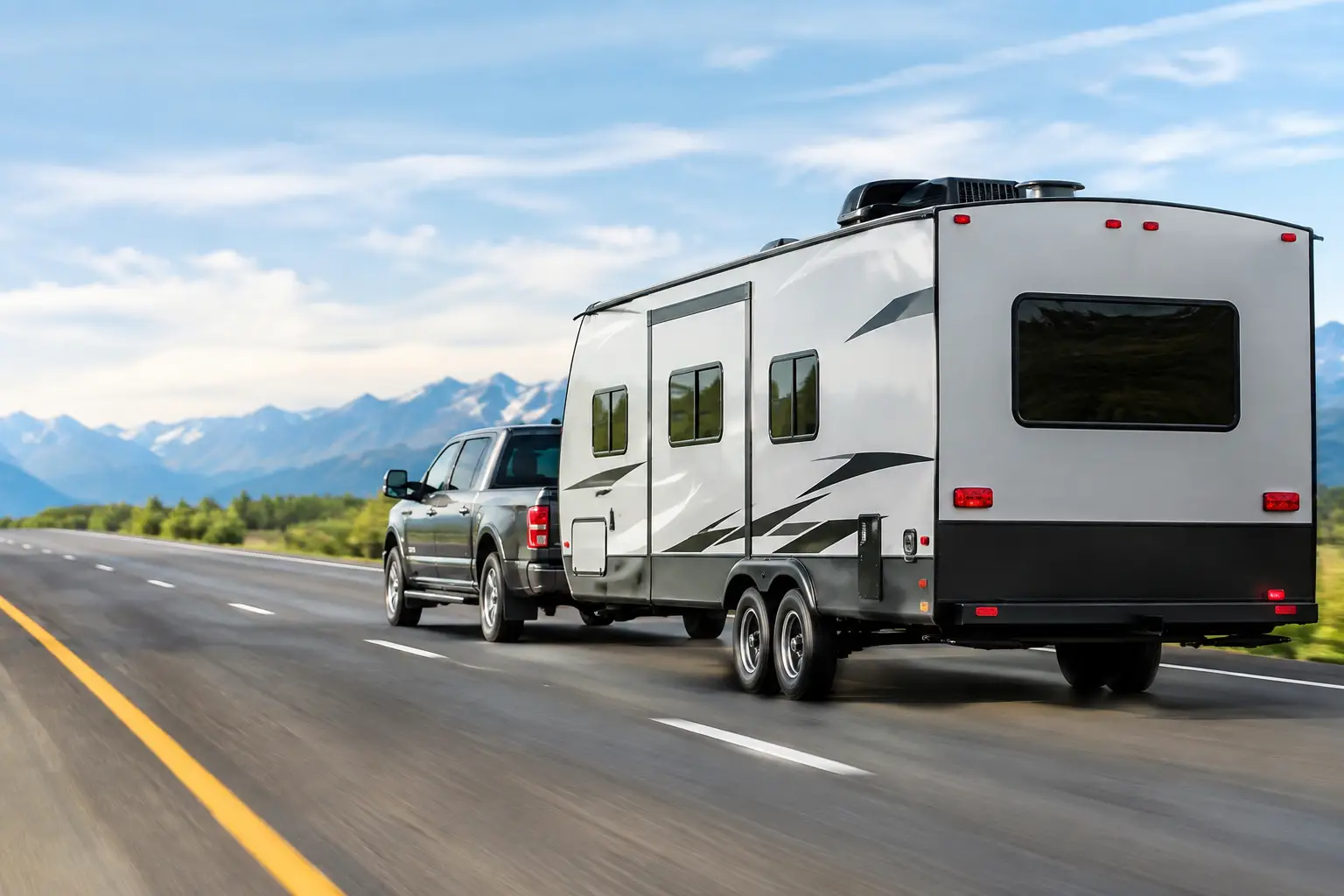
A trailer can feel fine leaving the driveway and get unsettled fast once you meet a downhill grade, a crosswind, or a passing truck. That is why the best way to prevent trailer sway is to handle the setup before the wheels start rolling. A properly matched tow vehicle, balanced load, secure hitch, and calm driving habits do more for safety than trying to correct a bad situation at 60 mph.
Whether you are hauling a car, moving landscaping material, or clearing out a home project around the Verde Valley, trailer sway is not something to gamble with. Here is what causes it and what you can do to keep your haul under control.
Why Trailer Sway Starts
Trailer sway is the side-to-side movement of a trailer behind the tow vehicle. Sometimes it begins as a small wiggle. If the trailer is poorly loaded, traveling too fast, or hit by wind, that wiggle can build into a hard swinging motion that pulls at the tow vehicle.
Most sway problems come back to one of a few basics: not enough weight on the tongue, too much weight behind the trailer axle, a trailer that is too heavy for the tow vehicle, improper tire pressure, or excessive speed for the conditions. Mechanical issues can also contribute, including loose suspension parts, worn tires, or hitch components that are not fully secured.
The good news is that most of these issues can be caught during loading and a quick walk-around. That is time well spent, especially when your route includes the curves, elevation changes, and occasional gusty conditions common around Sedona, Jerome, and Camp Verde.
Load the Trailer With Weight Forward
Load placement is the biggest factor when you want to prevent trailer sway. The trailer needs enough downward force on the hitch ball, commonly called tongue weight, to track behind the tow vehicle instead of steering itself.
For many conventional bumper-pull trailers, tongue weight should generally fall around 10% to 15% of the loaded trailer weight. The exact number depends on the trailer, hitch, tow vehicle, and manufacturer limits, so use the specifications for your equipment rather than guessing. Too little tongue weight is dangerous. It allows the trailer to wander and makes sway much more likely.
Put heavier items low and slightly forward of the trailer axle. Avoid piling heavy material at the very rear of the trailer. A load of mulch, tools, furniture, or equipment may look secure, but if its weight is concentrated behind the axle, it can lift weight off the hitch and create an unstable pull.
A car hauler needs the same attention. When loading a vehicle, position it according to the trailer’s instructions and confirm the proper tongue weight. In many cases, that means loading the vehicle facing forward, but the correct setup depends on the trailer design and the vehicle being moved. Secure it at the approved tie-down points, then recheck the straps after traveling a short distance.
Match the Tow Vehicle, Trailer, and Hitch
A trailer may be within its own capacity and still be too much trailer for the vehicle pulling it. Tow ratings matter, but they are not the only number to check. You also need to account for payload, hitch rating, gross combined weight rating, and the weight of passengers, tools, fuel, and cargo inside the tow vehicle.
Do not assume a larger-looking SUV or pickup can handle any rental trailer. Check the owner’s manual, the tow vehicle’s door-jamb labels, and the trailer’s rated capacity. The hitch ball size must match the coupler, and the hitch should be rated for the job. A ball that is the wrong size, a coupler that is not locked, or safety chains that are improperly connected can turn a routine haul into a serious problem.
Cross the safety chains under the coupler so they can help support the tongue if it comes off the ball. Connect the breakaway cable directly to the tow vehicle, not to the safety chains. Make sure the trailer lights, turn signals, and brake lights work before pulling away.
For heavier trailers, a weight-distributing hitch or sway-control system may be appropriate. These tools can improve stability, but they do not fix bad loading or a tow vehicle that is undersized. They also have setup requirements and may not be needed or approved for every rental trailer. Ask before assuming one is the answer.
Check Tires, Brakes, and Coupler Before Leaving
A five-minute inspection can prevent a long roadside headache. Start with the tow vehicle and trailer tires. Check for visible damage, deep cracking, embedded debris, and low pressure. Inflate tires to the pressure listed for that tire and load application, not simply to whatever number seems close. Low trailer tires can run hot, affect handling, and increase sway risk.
Walk around the trailer and confirm that the coupler is seated and locked on the hitch ball. The jack should be fully raised and secured. Safety chains should have enough slack for turns without dragging. Make sure the load is tied down with properly rated straps, chains, or binders, and that nothing can shift during braking or cornering.
If the trailer has brakes, verify the electrical connection and brake controller operation. Trailer brakes should help the trailer track straight during normal braking. If they are set too aggressively or not working at all, handling can suffer. A short, low-speed test in a safe area is better than discovering a problem on the highway.
Drive Like You Are Pulling Extra Weight
Even a well-loaded trailer changes how a vehicle accelerates, stops, turns, and reacts to wind. Give yourself more space than usual. Brake early and smoothly. Take turns wider and slower, and do not make sudden steering corrections.
Speed is a major sway factor. The faster you tow, the less time you have to react and the more force wind and passing traffic can put on the trailer. Drive at a speed that fits the load, road, weather, and posted limits. On open stretches with strong wind, slowing down is usually the smart move, even if the trailer feels stable at first.
Keep a close eye on downhill sections. Shift to a lower gear when appropriate so the engine helps control speed instead of relying only on the brakes. Riding the brakes can overheat them and make it harder to keep the entire combination under control.
What to Do If Trailer Sway Begins
If you feel the trailer start to swing, stay calm. The wrong reaction can make a small problem much worse.
- Keep both hands on the wheel and hold a straight line.
- Ease off the accelerator gradually. Do not hit the brakes hard.
- Avoid steering back and forth to chase the trailer.
- If your trailer brake controller allows it, apply the trailer brakes manually and gently to help straighten the trailer.
- Pull over in a safe location once the sway stops, then inspect the load, tire pressure, hitch, and tie-downs before continuing.
Do not try to power through repeated sway. It is a warning that something in the setup, load, or conditions needs attention. Repositioning cargo may solve the problem, but it may also reveal that the load or trailer is not properly matched to the tow vehicle.
A Safer Haul Starts Before Booking
Before you reserve a trailer, know what you are hauling, roughly how much it weighs, and what vehicle will pull it. That makes it easier to choose the right trailer size and avoid paying for more capacity than you need. It also helps a local rental team point you toward equipment that fits the job instead of leaving you to figure it out in the parking lot.
At Monsoon Trailer Rental, the goal is simple: dependable equipment for real jobs, without getting soaked by high rates. If you are unsure whether a car hauler or utility trailer fits your load, ask before you hook up. A quick conversation, a careful load, and a proper walk-around can make the difference between a stressful pull and a smooth trip home.

