

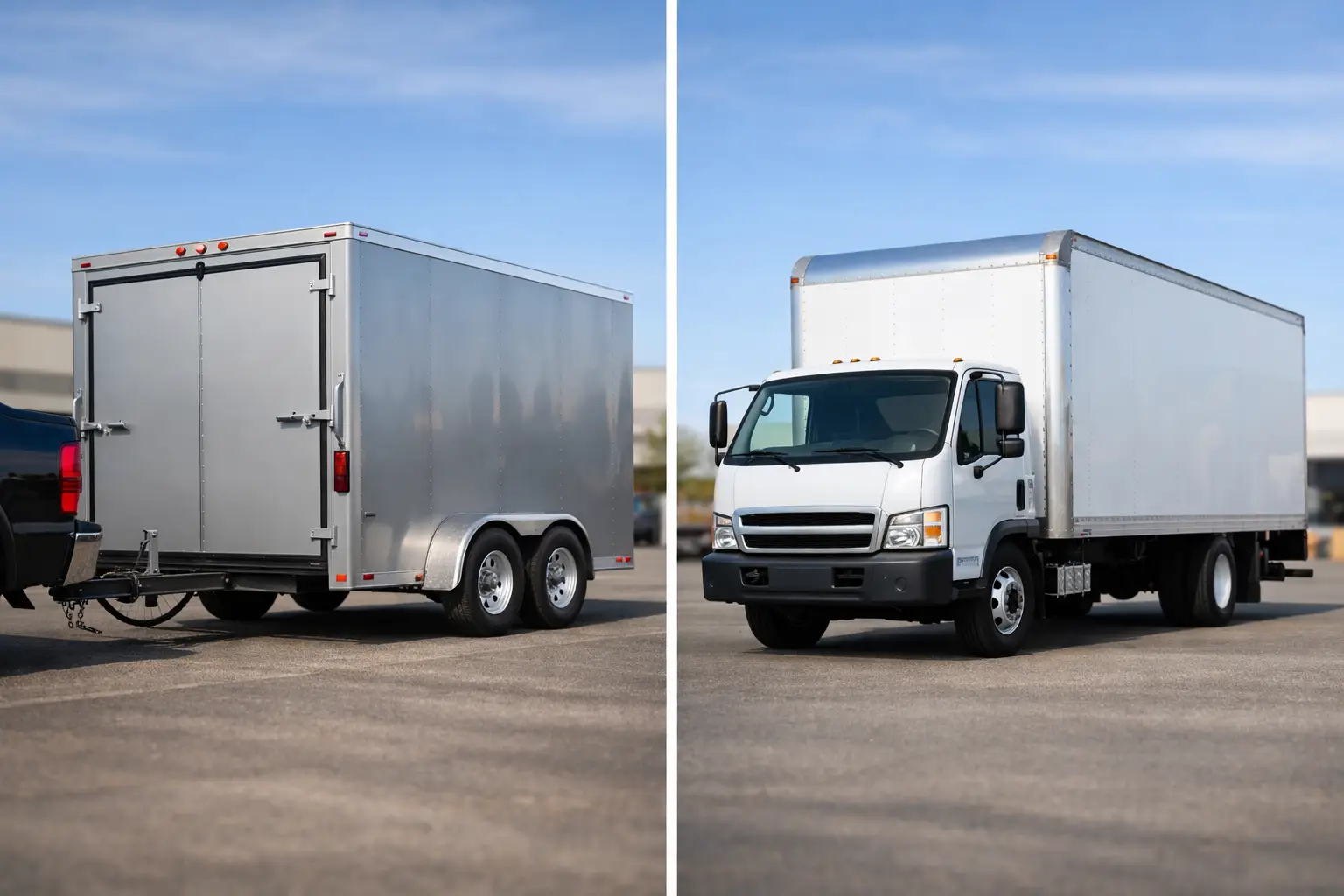
A truck rental can look like the easy answer when there is a big job ahead. But if you already own a capable pickup or SUV, a trailer may get the same work done for less money and less hassle. In the trailer rental vs truck rental decision, the right choice comes down to what you are hauling, how far it needs to go, and whether you need an enclosed cargo area or an open deck.
For a dump run in Cottonwood, a side-by-side move near Camp Verde, or a vehicle pickup outside Sedona, renting the right equipment matters more than renting the biggest thing available. Here is how to make a practical call before booking.
Trailer Rental vs Truck Rental: Start With the Load
The item you need to move should make the decision for you. A truck rental is often the better fit for household goods, boxed belongings, tools that need protection from weather, and anything that must stay locked inside. It puts the cargo area and towing vehicle in one package, which can simplify a local move when you do not have a suitable tow vehicle.
A trailer rental is usually the stronger option for loads that are oversized, dirty, heavy, or easier to load from the side. Think landscaping material, furniture headed to the dump, ATVs, construction equipment, motorcycles, or a car that needs transport. An open trailer is also easier to sweep out after hauling brush, gravel residue, or job-site debris.
Car haulers deserve a special mention. If the job is moving a vehicle that cannot be driven, has expired registration, needs repair, or simply should not take a long trip, a purpose-built car hauler gives it a secure place to ride. Trying to fit that job into a box truck is not an option, and using the wrong trailer can create a problem before you leave the driveway.
When a Trailer Is the Better Value
If you have a pickup with the proper towing capacity, renting a trailer often costs less than renting an entire truck. You are paying for the hauling platform you need, not a second engine, cab, fuel tank, and mileage plan.
That difference can add up on a full day of hauling. A homeowner clearing out a garage may make several trips to the landfill. A landscaper may need to move mowers, material, or small equipment between properties. A contractor may need a trailer for one busy weekend rather than owning, insuring, registering, and storing one year-round.
A trailer can also make loading easier. Many bulky items are awkward to lift into the tall cargo floor of a truck. With the right utility trailer or car hauler, ramps and a lower deck can make a real difference. You can load equipment in a more controlled way and secure it where you can see it.
There is another practical benefit: your own vehicle is familiar. You know the seat, mirrors, controls, and how it handles on local roads. That does not remove the need to tow carefully, but it can feel more comfortable than driving an unfamiliar rental truck through tight streets, gas stations, or parking lots.
When Renting a Truck Makes More Sense
A trailer is not automatically the right answer. If your vehicle is not rated to tow the loaded trailer safely, rent a truck instead. Towing capacity is not a guess based on whether your pickup seems powerful. It depends on the vehicle, hitch rating, trailer weight, cargo weight, passenger weight, and how the load is set up.
Truck rental is also the better choice when your cargo needs to stay dry and secure. Moving mattresses, electronics, appliances, boxes, and personal belongings during monsoon weather is much easier with an enclosed truck. You will not need tarps, weatherproof bins, or a backup plan if rain rolls in.
Some people simply do not want to tow, especially for a longer move or a route they do not know well. That is fair. A box truck has its own learning curve, including height clearance and wider turns, but it does not require backing a trailer or managing trailer sway. If it helps you complete the job safely and on time, the added rental cost may be worth it.
Do Not Compare the Daily Rate Alone
The advertised daily price is only one part of the cost. Before deciding between a trailer rental and a truck rental, look at fuel, mileage limits, insurance options, cleaning fees, and the time involved in pickup and return.
A rental truck generally burns more fuel than your daily driver, and many truck rentals charge by the mile. That can change the math quickly if your job involves multiple trips from Clarkdale to Camp Verde, Cornville, or the Verde Valley landfill. A trailer rental may have a simpler cost structure when your own tow vehicle is efficient and already available.
On the other hand, do not overlook what your tow vehicle needs. You need a properly rated hitch, the right ball mount, working trailer-light connection, and enough towing capacity for the loaded setup. If you would need to buy or install several parts just for one small move, a rental truck might be the more sensible one-time solution.
Ask about the full rental terms before you book. Straight answers on pricing, pickup times, and equipment expectations are better than a low headline rate followed by surprises. Local service matters here because a team that actually picks up the phone can help you choose equipment that fits the job instead of pushing you toward the most expensive option.
Safety Changes the Answer
The trailer rental vs truck rental choice is also a safety decision. The best option is the one you can load, secure, drive, and return without taking shortcuts.
With a trailer, cargo placement matters. Too much weight behind the trailer axle can cause sway. Too much weight forward can overload the hitch or rear axle of the tow vehicle. Keep the load balanced, secure every item with appropriate straps or chains, and check the tie-downs again after the first few miles.
With a truck rental, the main concern is distributing weight inside the cargo box. Place heavy items low and toward the front of the box, then secure them so they cannot shift under braking or while turning. Remember that a loaded rental truck needs more room to stop and turn than your personal vehicle.
For either choice, plan the route before you load. Watch for steep grades, narrow driveways, tight parking areas, low clearance, and wind. Arizona weather can change quickly, particularly during the monsoon season. An open trailer is excellent for many jobs, but it is not the place for unprotected belongings in a hard rain.
A Quick Way to Choose
Choose a trailer when you have a properly equipped tow vehicle and need to haul vehicles, equipment, yard debris, bulky materials, or other loads that do not need an enclosed box. It is often the more affordable and flexible choice for local jobs.
Choose a truck when you are moving household goods, need weather protection, do not have a capable tow vehicle, or would rather not tow. It can cost more, but it combines vehicle and cargo space in one rental.
For a vehicle move, a car hauler is usually the clear answer. The key is matching the trailer capacity and tie-down setup to the vehicle being moved. Do not assume every trailer works for every car, truck, or off-road vehicle.
Monsoon Trailer Rental helps Verde Valley customers get dependable hauling equipment without getting soaked by high rates. Contactless pickup and dropoff can keep a busy project moving, while direct local support gives first-time renters a real person to call when they have questions.
Before you reserve anything, take five minutes to measure the load, check your vehicle’s tow rating, and think through the route. That small bit of planning can turn a long hauling day into a job you finish before the weather changes.

