

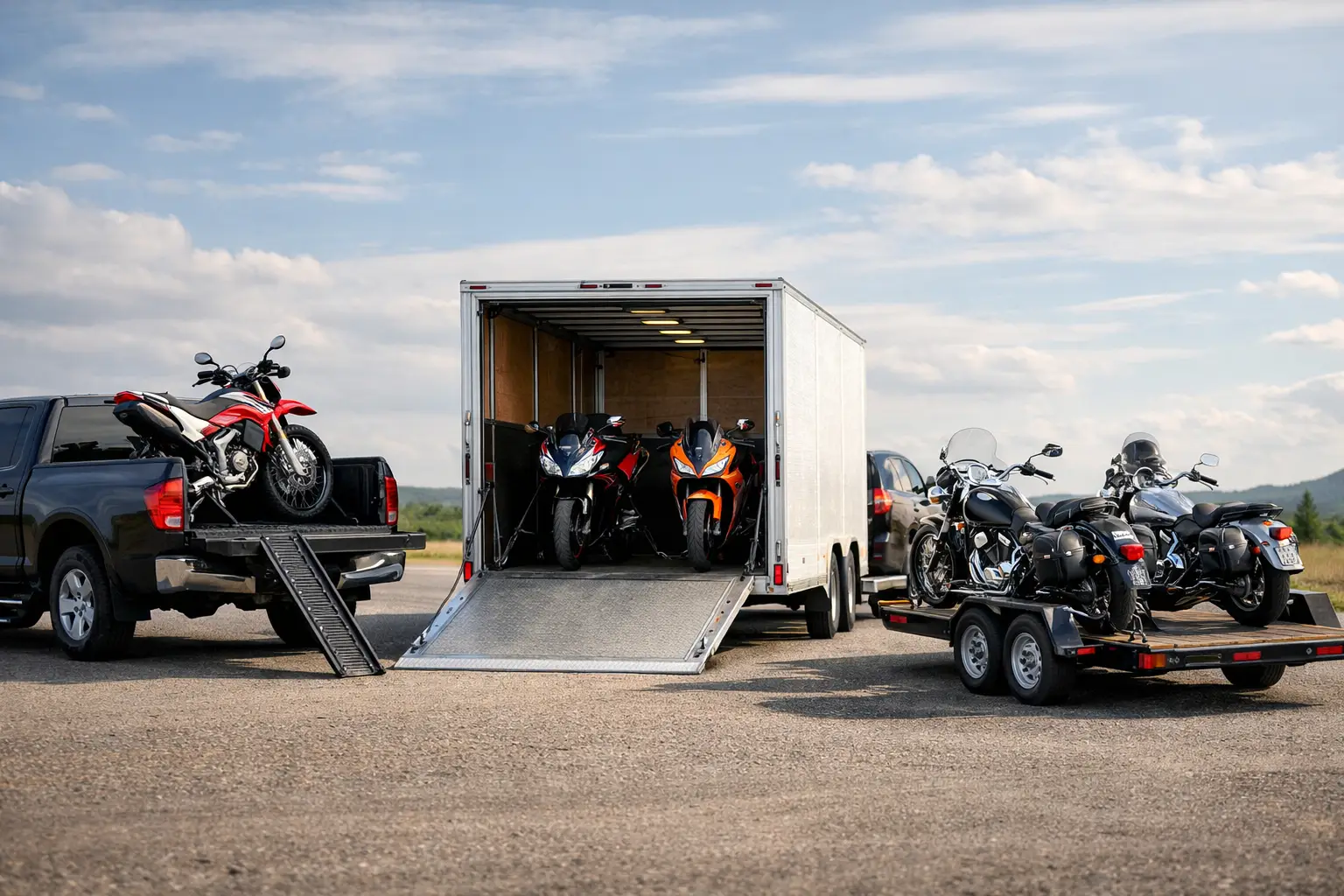
A motorcycle can look secure right up until the first hard stop, sharp turn, or rough patch of highway. The best ways to haul motorcycles are the ones that match your bike’s weight, your tow vehicle’s limits, and the distance you need to travel. A little planning before loading saves a lot of expensive trouble on the road.
For a short move across town, a pickup bed or hitch carrier may be enough. For a larger cruiser, multiple bikes, or a longer run through Arizona wind and grades, a properly sized trailer is usually the safer and less stressful choice. The goal is simple: keep the bike upright, balanced, and firmly attached without damaging the suspension, handlebars, or bodywork.
Start With the Bike and Tow Vehicle
Before choosing how to haul your motorcycle, know the real numbers. Find the bike’s wet weight, which includes its normal fluids, then add the weight of ramps, wheel chocks, tie-downs, and any riding gear or cargo you plan to carry. A loaded touring bike can weigh far more than people expect.
Next, check your tow vehicle’s owner’s manual for its towing capacity, hitch rating, payload limit, and tongue-weight limit. These are different ratings, and the lowest applicable number matters. A vehicle may be able to pull a trailer’s total weight but still be limited by the weight pressing down on the hitch.
Do not guess based on what a truck or SUV “looks like it should handle.” The right setup is based on ratings, not appearances. If you are renting, have the bike’s make, model, and approximate weight ready when you call. It makes choosing the right trailer much easier.
Best Ways to Haul Motorcycles for Different Jobs
There is no single setup that works best for every rider. These are the most common options, along with the situations where they make sense.
1. A Dedicated Motorcycle Trailer
A dedicated motorcycle trailer is often the easiest option for one or two bikes. These trailers are low to the ground, generally easier to load, and may include a front wheel chock or built-in tie-down points. A chock helps hold the front wheel straight while you secure the bike.
This is a strong choice for riders heading to a repair shop, track day, rally, or weekend ride. It also works well when the tow vehicle is capable but you do not want the bike inside a truck bed. Make sure the trailer has enough capacity for the motorcycle and that its deck length and width fit the bike comfortably.
2. An Open Utility or Car Hauler Trailer
An open utility trailer or car hauler can be a practical answer when you need more deck space. It is especially useful for a large motorcycle, two or more bikes, or a move that includes tools, bins, or parts. A wider deck gives you room to walk around the bike while loading and tying it down.
The trade-off is that not every open trailer comes with motorcycle-specific wheel chocks or tie-down locations. You may need to use a removable chock and confirm that the trailer’s anchor points are strong, accessible, and positioned correctly. A car hauler can be a dependable option, but the bike still needs a proper motorcycle tie-down setup.
3. A Pickup Truck Bed
Hauling a motorcycle in a pickup bed can work well for one bike when the bed is long enough and the truck has suitable anchor points. It avoids towing a trailer, which some drivers prefer for short trips. However, loading is often steeper than it is with a low trailer, and a heavy motorcycle can be difficult to maneuver in a narrow bed.
Use a ramp rated for the motorcycle’s weight, and make sure it is secured to the truck before loading. Never try to ride up a narrow ramp. Walk the bike up with help, keep it centered, and use a spotter when possible. Once loaded, secure the front wheel against the front of the bed or in a wheel chock, then tie down the bike from both sides.
4. A Hitch-Mounted Motorcycle Carrier
A hitch carrier can be convenient for lightweight motorcycles, dirt bikes, and smaller dual-sport bikes. It keeps the setup compact and avoids a trailer altogether. But it is not the right answer for every vehicle or every bike.
The combined weight of the carrier and motorcycle must stay within the hitch’s tongue-weight rating. The vehicle also needs enough payload capacity to handle that weight behind the rear axle. Carriers can make the vehicle feel less stable, reduce rear visibility, and place the bike close to traffic. For heavy cruisers, baggers, and many adventure bikes, a trailer is generally the better route.
5. An Enclosed Trailer
An enclosed trailer gives a motorcycle protection from weather, road debris, and curious eyes during overnight stops. It can be a good fit for valuable bikes, long-distance travel, or moves that require hauling additional equipment.
The trade-off is more trailer weight, more wind resistance, and less visibility while loading. Enclosed trailers also need proper interior anchors and enough height and width for the motorcycle. If the trailer has a smooth floor without clear tie-down points, do not assume it is ready for a bike.
Load the Motorcycle With a Plan
Most hauling problems begin before the straps ever go on. Park on level, firm ground whenever possible. Keep the trailer connected to the tow vehicle while loading so it cannot shift or tip. Set the parking brake on the tow vehicle and chock trailer wheels if needed.
Inspect ramps before using them. They should be wide enough for the motorcycle, rated for the load, and securely attached. A helper is worth having, especially with a heavy bike or a steep ramp. One person can control the handlebars while the other steadies the bike and watches wheel placement.
Center the motorcycle over the trailer axle area according to the trailer maker’s loading guidance. Too much weight behind the axle can cause sway. Too much weight far forward can overload the hitch or rear of the tow vehicle. Keep the bike upright while tying it down. Leaning it on the side stand during transport is not a secure hauling method.
Tie It Down Without Beating Up the Bike
Quality ratchet straps or purpose-built motorcycle tie-downs are worth using. Avoid worn straps, frayed webbing, bent hooks, or cheap hardware that does not latch securely. Use soft loops around approved strong points on the bike so metal hooks do not scrape paint, pinch wiring, or damage controls.
In most setups, use two straps pulling forward and outward from the front of the motorcycle. Secure the rear with additional straps to keep the bike from walking sideways or bouncing. The exact attachment points depend on the motorcycle. On many bikes, the lower triple clamp is a better front attachment point than the handlebars, but consult the owner’s manual when you are unsure.
Compress the front suspension slightly to keep tension on the straps, but do not crank it down until the forks are fully bottomed out. The bike should stand firmly on its own with the straps tight and balanced. After securing it, shake the motorcycle from the seat area. The trailer should move slightly before the bike does.
Do not rely on the kickstand, a single strap, or the transmission being in gear. Those are backups at best, not the system holding the bike in place.
Check It Again Before You Get Far
Walk around the trailer before leaving. Confirm the coupler is latched, safety chains are connected correctly, electrical lights work, tires look properly inflated, and the ramp or gate is fully secured. Remove loose items from the trailer deck or tie them down separately.
After the first few miles, pull into a safe area and inspect every strap. Tie-downs can settle as the suspension moves and the bike finds its position. Check them again at fuel stops, after rough roads, and whenever the weather changes.
Drive like you have valuable cargo behind you, because you do. Leave extra following distance, brake early, take turns slowly, and give yourself room when changing lanes. Crosswinds around Sedona, Camp Verde, and open stretches of the Verde Valley can be hard on a light trailer, especially if the load is not balanced.
When Renting a Trailer Makes More Sense
Owning a trailer is not always practical if you only haul a motorcycle a few times a year. Renting lets you choose a trailer that fits the job without storing, maintaining, and registering equipment you may rarely use. It is also a smart option when your usual setup is too small for a bigger bike or an extra passenger’s motorcycle.
For riders and working folks in the Verde Valley, Monsoon Trailer Rental can help match a dependable trailer to the load, whether you are moving one motorcycle, hauling a couple of bikes, or taking on a larger transport job. Bring the key details, ask direct questions, and make sure you understand the loading and towing plan before pickup.
The best haul is the one you barely have to think about once you are on the road. Use equipment sized for the job, take your time with the straps, and stop to recheck the load. Your motorcycle should arrive ready to ride, not ready for a repair bill.

