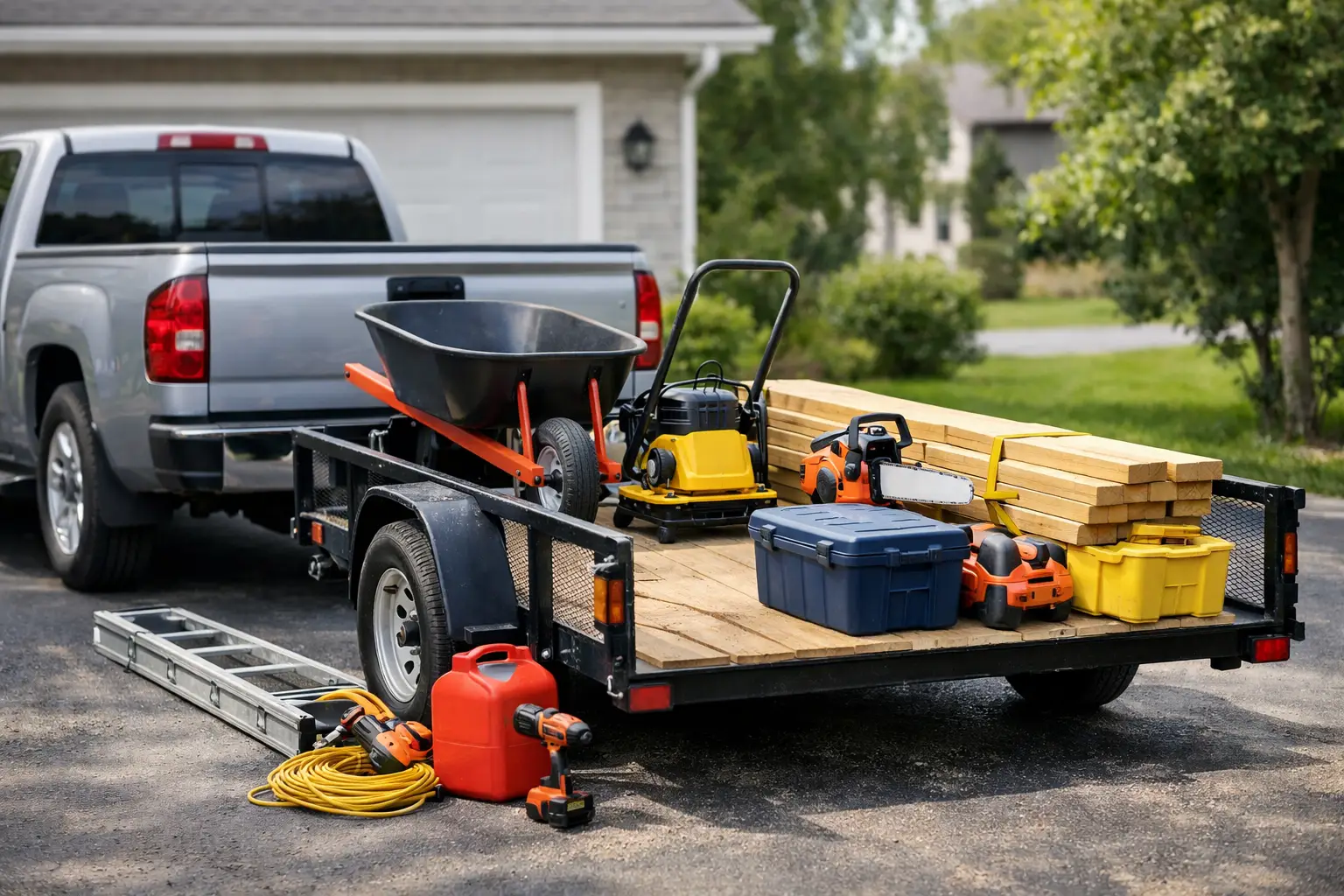

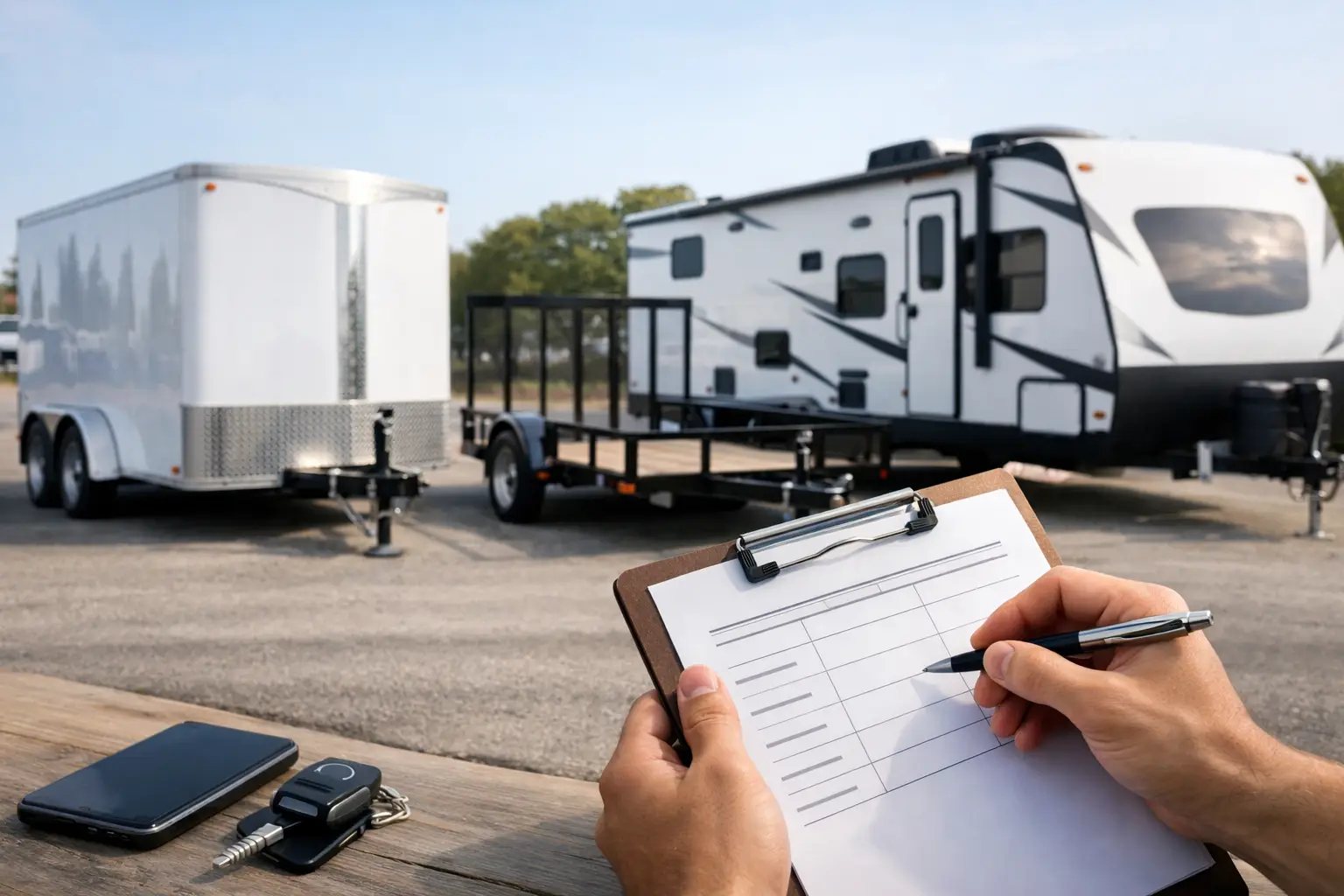
A truck bed fills up fast when you are clearing a yard, moving a vehicle, hauling job materials, or picking up a load that cannot sit through the weekend. A short term trailer rental comparison helps you avoid the two mistakes that cost people most: renting too little trailer for the job or paying for capacity they will never use.
The right rental should be simple. You need equipment that fits the load, works with your tow vehicle, and is available for the time you actually need it. Price matters, but it is only one part of the decision. A lower posted rate is not much of a bargain if the trailer is not ready, the terms are unclear, or nobody answers when you have a question.
Start With the Load, Not the Trailer
Before comparing rental options, get clear on what is going on the trailer. That sounds obvious, but it changes everything from trailer style to required tie-downs.
For a vehicle move, you need a car hauler with a deck length, ramps, and weight rating that match the vehicle. A compact car, a side-by-side, and a full-size pickup may all require different setups. Measure the vehicle if you are unsure, including overall length and width. Do not assume that because it can be driven onto a trailer, it will fit safely.
For cleanup, landscaping, construction materials, furniture, or equipment, think about both weight and shape. A load of brush can take up a lot of room without being especially heavy. Gravel, pavers, and machinery can reach a trailer’s capacity long before they fill the deck. Ask for the trailer’s payload capacity, not just its overall size.
A good local rental provider should be willing to talk through the job. That is especially useful for first-time renters. A quick phone call can prevent a wasted trip, a bad fit, or an overloaded trailer.
Short Term Trailer Rental Comparison: What to Check
When rental listings look similar, compare the details that affect your actual day of hauling. Do not stop at the daily rate.
Trailer type and usable size
An open utility trailer is often a practical choice for general hauling, yard work, and equipment that can be secured from multiple points. A car hauler is designed for vehicles, with a flat deck and loading ramps. The trailer type should match the job rather than simply offering the biggest footprint.
Look at usable deck length and width, ramp setup, and the placement of fenders or rails. A trailer can look large in a photo yet be too narrow for your equipment or too short for a vehicle. If you are hauling something with low ground clearance, ask about ramp angle as well.
Payload rating and tow vehicle limits
Every trailer has a weight limit, and your tow vehicle has limits too. The tow rating is not the only number that matters. You also need to account for trailer weight, cargo weight, hitch capacity, tongue weight, and the combined weight of the entire setup.
Do not guess on a heavy load. Check the owner’s manual or manufacturer information for your truck or SUV. Make sure your hitch receiver and ball mount are properly rated. If the load is near the limit, a smaller tow vehicle may not be the right tool for the job, even if it can physically pull the trailer down the road.
Weight distribution matters as much as total weight. Load heavier items low and slightly forward of the trailer axle to maintain stable tongue weight. Too much weight in the rear can cause sway. Too much weight at the front can overload the rear of the tow vehicle and make steering less responsive.
Rental period and timing
Short-term rentals are usually priced by a set time window, such as several hours, a day, or a weekend. Compare the pickup and return times, not just the label on the rental period. A job that starts late in the afternoon may need an overnight rental even if the actual hauling only takes a few hours.
Ask what happens if you return late and whether extensions are available. Arizona weather, a delayed loading crew, traffic through Sedona, or one extra dump run can stretch a simple project. Knowing the policy ahead of time is better than watching the clock all day.
Contactless pickup and dropoff can make a real difference when your schedule does not line up neatly with regular business hours. It is a practical option for contractors starting early, homeowners finishing after work, and anyone trying to get a job done over a weekend.
Included equipment and tie-down needs
A trailer is only useful if the load can be secured correctly. Confirm what comes with the rental and what you need to bring. For a vehicle, that may include wheel straps, chains, or other approved securement equipment. For equipment and materials, you may need ratchet straps, tarp coverage, or additional tie-down points.
Never rely on light-duty rope for a heavy load. Use rated straps or chains in good condition, inspect them before leaving, and stop to recheck the load after the first few miles. Loads settle, straps can loosen, and a five-minute check can save a long day.
Condition and local support
Rental equipment takes real-world use, so condition matters. Look for trailers with sound tires, working lights, usable ramps, secure couplers, and a clean deck. A reliable provider should make the pickup process clear and make it easy to reach a real person if something is not right.
This is where local service often beats a large, impersonal counter. If you are hauling around Cottonwood, Clarkdale, Camp Verde, or the rest of the Verde Valley, a nearby team understands that your rental is tied to a specific job and a limited window. You need straight answers, not a call center runaround.
Compare the Total Cost, Not Just the Posted Rate
The cheapest advertised rental is not always the lowest-cost choice. Compare the full price after considering the rental window, required deposit, mileage rules if they apply, late-return fees, cleaning expectations, and damage coverage options. Ask what is included before booking.
There is also a cost to inconvenience. Driving far out of the way for pickup, waiting in line, or dealing with unclear instructions can eat into a workday. For a one-day job, easy booking and a dependable pickup process may be worth more than saving a few dollars on a rate that comes with headaches.
That does not mean you should pay more without a reason. It means you should compare like for like. A fair price with equipment that is ready to haul, clear terms, and responsive service is usually the better value.
Choose the Rental That Fits the Job Window
A short rental is a smart choice when you have one defined move, cleanup, delivery, or equipment haul. It keeps you from paying for storage, maintenance, registration, tires, and repairs that come with owning a trailer. For many homeowners and small businesses, renting when needed is the cleanest way to handle occasional hauling.
Ownership may make sense if you haul every week and have secure space to store a trailer. But for an occasional vehicle move, renovation project, landscaping load, or jobsite run, rental gives you the flexibility to choose the right trailer each time.
At Monsoon Trailer Rental, the goal is straightforward: help local customers get dependable hauling equipment without getting soaked by high rates. Tell the team what you are moving, when you need it, and what you are towing with. The right questions upfront make the rest of the haul a lot easier.
Before you book, take two minutes to confirm the load weight, dimensions, tow vehicle capacity, rental timing, and tie-down plan. That small bit of preparation is what turns a trailer rental from another chore into the part of the job that simply gets done.