
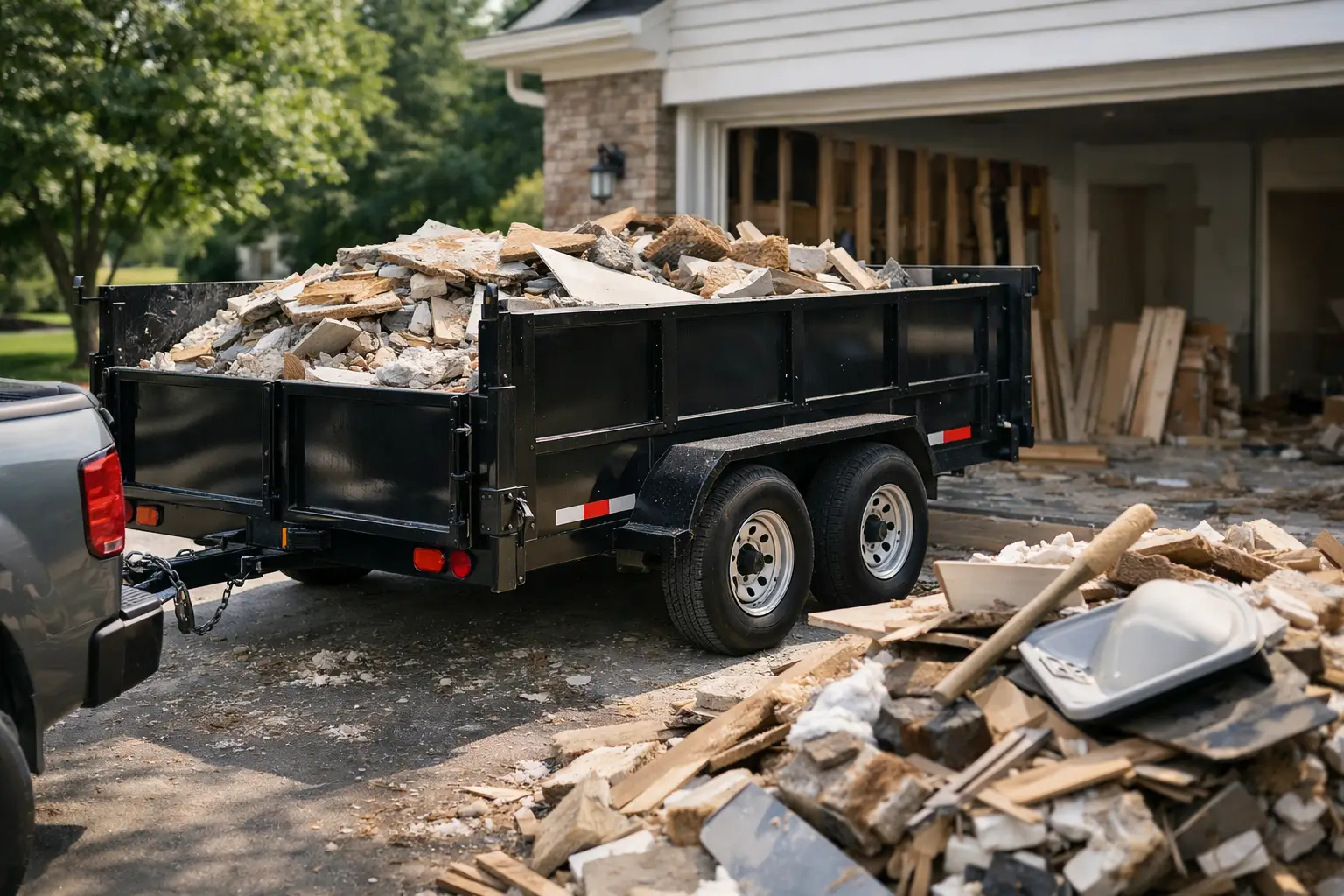
That old bathroom floor, torn-out cabinets, drywall, lumber, and boxes of broken tile can fill a pickup bed faster than most people expect. Hauling renovation debris with rental trailer equipment gives you the room to make fewer trips, keep the jobsite cleaner, and avoid cramming sharp, dirty material into the back of your daily driver.
A trailer is a practical answer for Verde Valley homeowners and contractors tackling a remodel, but only when the trailer, tow vehicle, and load all match the job. The goal is not to pile on as much as possible. The goal is to haul safely, stay within weight limits, and get everything unloaded without a mess on the road.
Start With the Debris You Actually Have
Renovation debris is not all the same, and that matters when choosing a rental trailer. Demolition from a small bedroom may be mostly light material: carpet, trim, insulation, empty boxes, and a few boards. A kitchen or bathroom project can be a different story. Tile, concrete backer board, countertops, old appliances, wet drywall, and cabinets add weight in a hurry.
Before booking, make a rough pile-by-pile estimate. Look at what needs to go and separate bulky material from heavy material. A trailer that has plenty of floor space can still be overloaded if it is filled with dense debris. Broken concrete, dirt, gravel, roofing shingles, and tile are common troublemakers because they do not look like much until they are all in one place.
If your debris includes hazardous or restricted material, do not assume it can go in with regular construction waste. Paint, chemicals, batteries, propane cylinders, asbestos-containing material, and some electronics often require separate handling. Check the disposal facility’s current rules before loading the trailer. It is a lot easier than arriving at the gate and being turned away with a full load.
Choose a Rental Trailer That Fits the Job
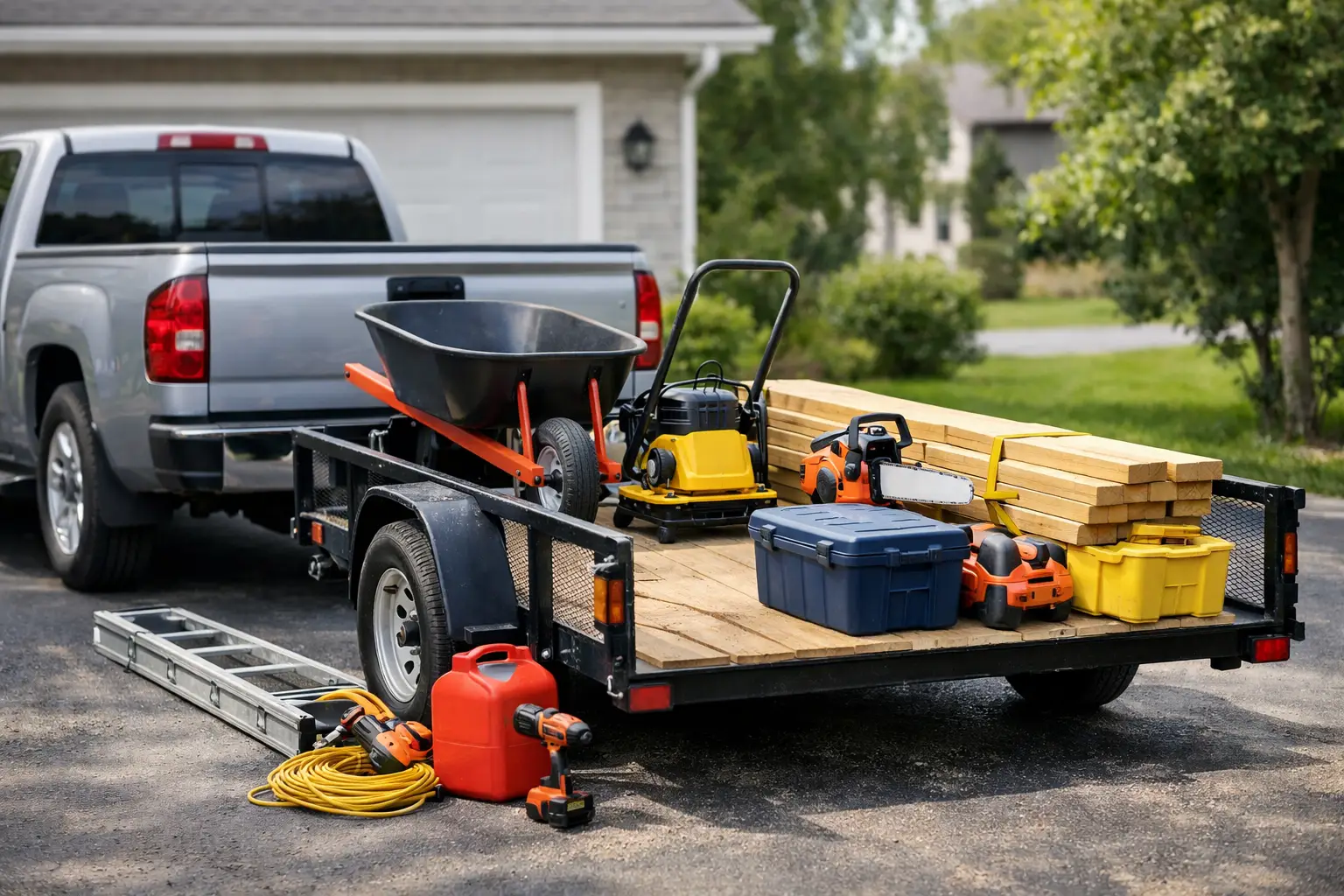
The right rental trailer depends on volume, weight, and how you plan to unload. An open utility trailer is often a solid choice for lumber, cabinets, bagged debris, old fencing, and general remodel cleanup. It is easy to load from the sides and lets you see what you are doing.
For loose or dusty material, high sides or a trailer setup that can be fully covered may be a better fit. Drywall scraps and insulation can blow around if they are not contained. A tarp is not optional for a load that can shed dust or debris. It protects other drivers and keeps you from leaving a trail between the jobsite and the disposal yard.
Do not choose based on size alone. Ask about the trailer’s payload capacity and make sure your tow vehicle is rated to pull the trailer plus the expected load. Your vehicle’s towing capacity is not just a suggestion. It also does not mean every load will feel comfortable or handle the same on Verde Valley roads, especially on grades, curves, or in gusty weather.
Know the Difference Between Trailer Weight and Payload
Every trailer has its own empty weight. That is the weight of the trailer before you load a single board or bag. Payload is the amount of debris it can safely carry. Combined weight is the trailer plus everything loaded onto it.
Your tow vehicle also has limits for towing, tongue weight, passengers, cargo, and hitch equipment. If you are carrying tools, several passengers, or supplies in the truck, those count too. When in doubt, make two disposal runs rather than gambling on one overloaded trip. A second run costs less than damaged equipment, a citation, or a dangerous towing situation.
Load Heavy Material Low and Forward
How you load the trailer affects how it tows. Heavy debris should sit low on the trailer floor and slightly forward of the axle, not stacked at the back. This helps maintain proper tongue weight and keeps the trailer from becoming unstable.
Too little weight on the hitch can cause sway. Too much tongue weight can make the rear of the tow vehicle squat, reduce steering control, and put extra strain on the hitch. You do not need to make it complicated. Keep the heaviest material low, centered from side to side, and positioned forward of the trailer axle without loading everything against the front rail.
Spread the weight instead of building one tall mountain in the middle. Put flat materials such as plywood, doors, or drywall sheets on the bottom when possible. Place bagged debris in manageable layers. Keep sharp metal, broken glass, and nails contained in sturdy bins or bags so they do not puncture a tire or work loose during transport.
Do not overload the trailer walls. Side rails are helpful, but they are not designed to hold a leaning pile of demolition debris that shifts with every turn. If the load is taller than the rails, it needs extra attention, proper tie-downs, and full coverage.
Secure Every Load Before You Leave
A few tie-down straps are not a substitute for thoughtful loading. Use rated straps to secure larger items such as cabinets, doors, appliances, bundled lumber, and metal pieces. Tie the load to proper anchor points on the trailer, and avoid running straps over sharp edges without protection.
Then cover the entire load with a tarp when there is any chance material can blow out. That includes lightweight debris, dust, leaves, insulation, cardboard, and loose trash. Secure the tarp at multiple points so wind cannot get underneath it. A tarp that flaps loose at highway speed can tear apart quickly.
Before pulling out, do a simple walk-around. Check that the coupler is locked on the ball, safety chains are crossed and connected, the breakaway cable is attached if equipped, and trailer lights work. Confirm the jack is fully raised, the tires look properly inflated, and the load has not shifted while you were tying it down.
This is not busywork. Most hauling problems are caught in the driveway.
Plan the Disposal Run Before Loading
A full trailer is the wrong time to figure out where you are going. Confirm the disposal site accepts the material you have, know its hours, and ask whether it charges by weight, volume, or load type. Some facilities separate green waste, metal, appliances, clean concrete, and standard construction debris. Sorting at home can save time at the site and may reduce disposal costs.
Think about unloading, too. A load that is easy to pile can be hard to remove. If you put loose junk behind a heavy appliance or stack boards crosswise over everything else, you may spend an extra hour climbing around in the trailer. Load with the unloading process in mind. Keep tools handy, wear gloves and sturdy shoes, and bring a broom or rake for the last scraps.
If you are working around Cottonwood, Clarkdale, Sedona, or Camp Verde, factor in your route. Avoid tight parking lots, steep shortcuts, and crowded times if you are new to towing. Give yourself more stopping distance than usual, take turns wider, and back up slowly. There is no prize for rushing a loaded trailer.
Avoid the Most Common Renovation Hauling Mistakes
The biggest mistake is treating a trailer like a bottomless bin. Overloading is easy with renovation debris because weight hides in small pieces. Ten bags of tile mortar or a stack of old countertop sections can change the load more than expected.
Another common mistake is mixing every kind of waste together. Sorting demolition material takes a little time, but it makes disposal simpler and keeps reusable or recyclable material from being buried under trash. Clean lumber, metal, cardboard, and appliances may have different disposal options than mixed construction debris.
Finally, do not skip the return trip check. After unloading, inspect the trailer for nails, glass, straps, and remaining debris. Sweep it out, check the tires, and make sure nothing was damaged during the job. Returning clean equipment is good practice and helps keep the rental process easy for everyone.
A rental trailer can turn a drawn-out cleanup into a manageable part of the renovation. Book the size that matches your debris, load it with care, and take the extra few minutes to secure it right. If you need straightforward guidance for a local haul, Monsoon Trailer Rental is the kind of team that actually picks up the phone and helps you choose equipment for the job.