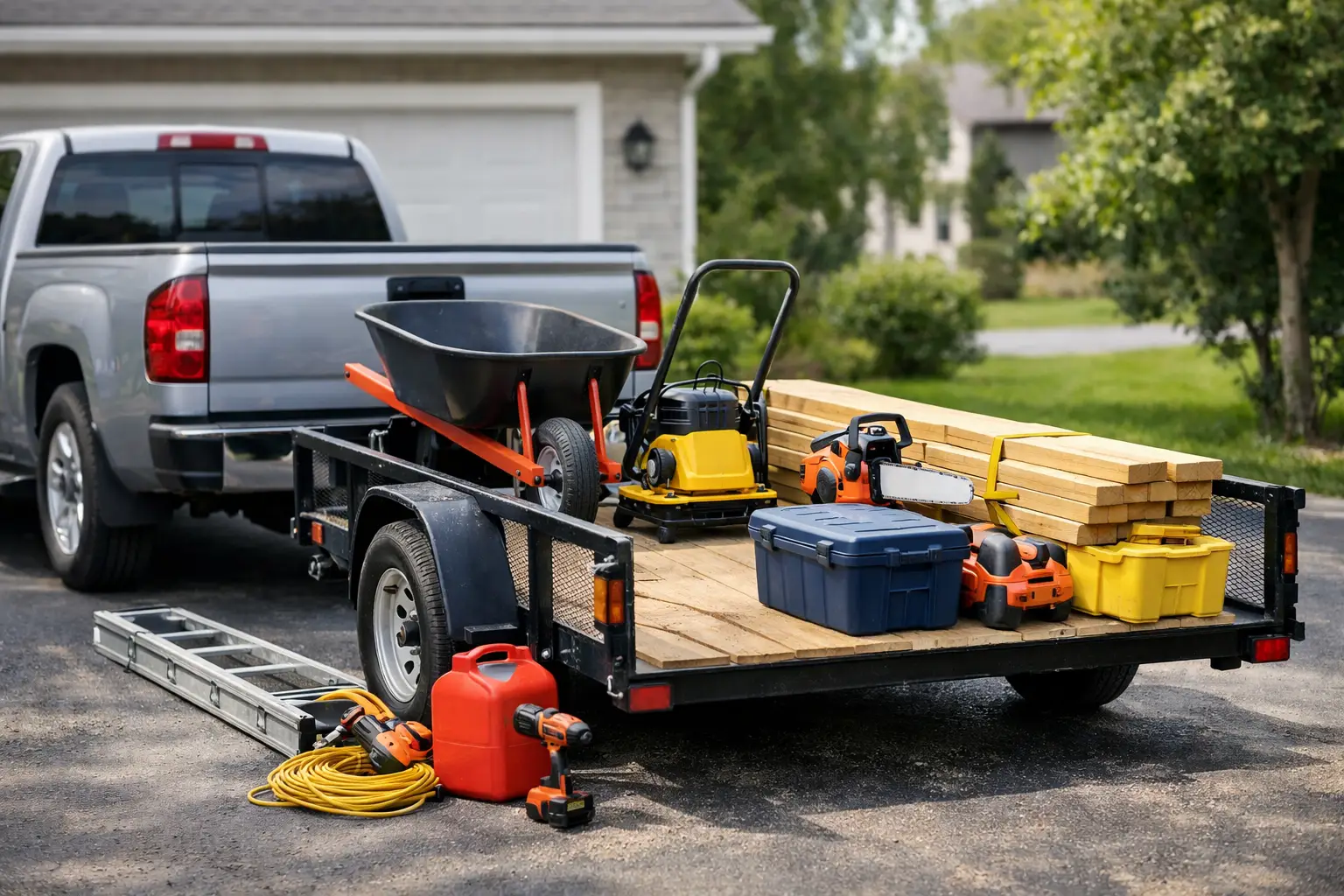

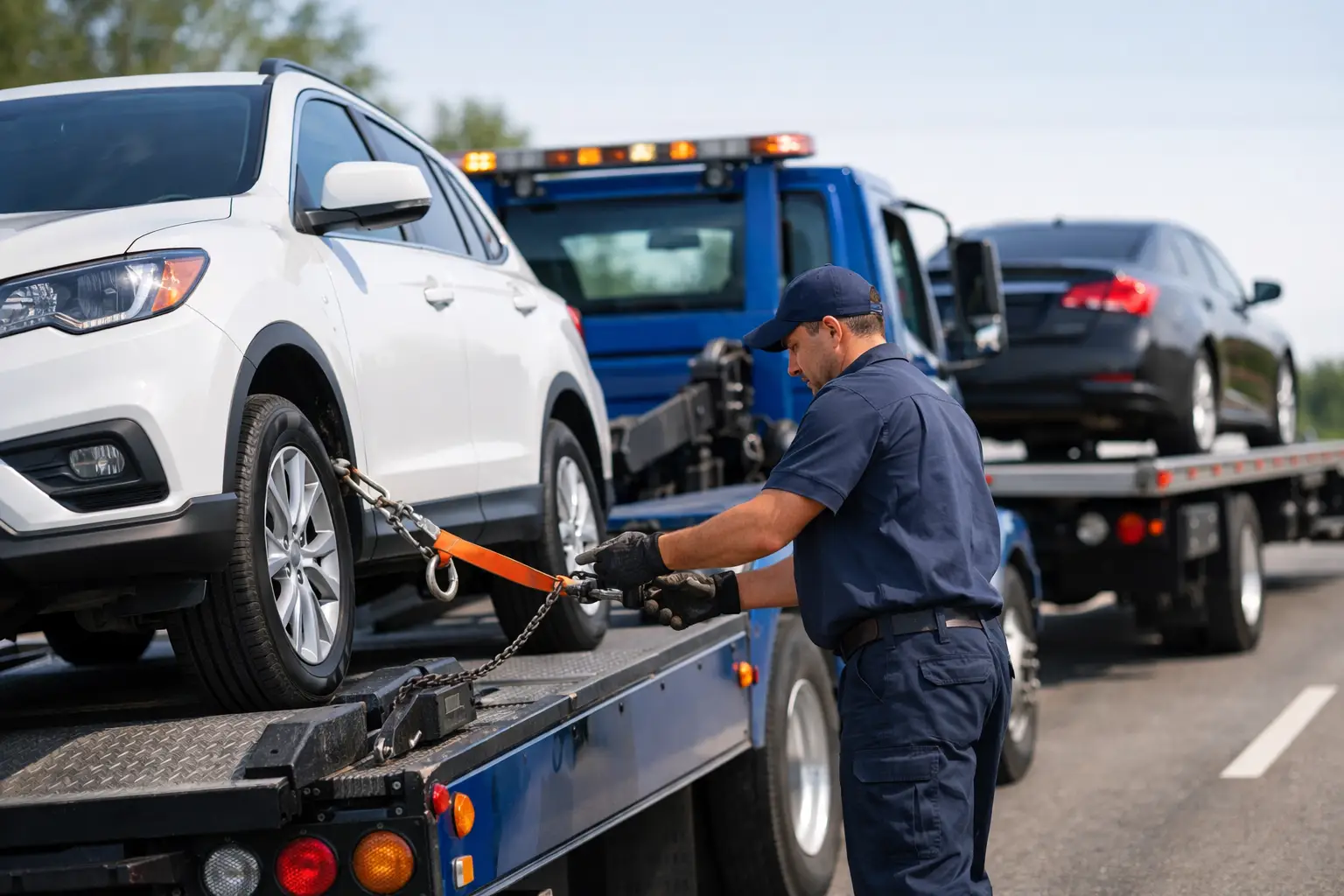
You usually find out how to tow a vehicle when something is already inconvenient. Maybe a car will not start. Maybe you bought a project vehicle and need to get it home. Maybe you are moving equipment across town and do not want to risk a bad setup. Whatever the reason, towing is one of those jobs that goes smoothly when the basics are right and gets expensive fast when they are not.
How to tow a vehicle starts with the right setup
The first question is not how far you are going. It is what you are towing with, and what you are towing on.
A lot of people assume any truck can pull any car if the distance is short enough. That is where trouble starts. Your tow vehicle needs enough towing capacity for the combined weight of the trailer and the vehicle being loaded. It also needs the right hitch, a working wiring connection, proper tire pressure, and brakes that are in good shape. If your truck is already at its limit before you even load the car, that is not a small detail. That is the whole job.
The trailer matters just as much. For most disabled vehicles or vehicle moves, a car hauler trailer is the safer choice than trying to improvise with something not designed for the load. A proper car hauler gives you ramps, tie-down points, and a platform built for vehicle weight distribution. That means better control, less sway, and less chance of damaging the vehicle you are trying to move.
There is also a difference between towing a rear-wheel-drive car, a front-wheel-drive car, an all-wheel-drive vehicle, and a heavier truck or SUV. Some vehicles can be damaged if they are pulled with the wrong wheels on the ground. If you are not completely sure what the manufacturer allows, a full trailer is the safer route.
Choose the right way to tow a vehicle
There is more than one way to tow, and the best option depends on the vehicle, the tow rig, and how much margin for error you want.
A tow dolly lifts one axle off the ground and leaves the other axle rolling. It can work well in some situations, especially with certain front-wheel-drive vehicles. But it is not the best fit for every vehicle, and loading can be less forgiving if you are new to towing.
A flatbed or car hauler trailer puts the whole vehicle off the road. That usually gives you better stability and avoids a lot of drivetrain concerns. It is often the cleanest option for non-running vehicles, project cars, low-mileage vehicles you do not want to risk, or anything all-wheel-drive.
If the vehicle is large, lifted, very low, or has body damage, clearances become important. Ramps that are too steep can scrape a bumper or hang up underneath. Tire size and track width matter too. This is why matching the trailer to the job is not overthinking it. It is just doing it once instead of doing it twice.
Before loading, check the simple things
Most towing problems start before the vehicle ever moves. A few basic checks save a lot of stress later.
Make sure the hitch ball matches the trailer coupler size. Confirm the coupler is fully seated and latched. Cross the safety chains under the tongue. Plug in the trailer wiring and test the running lights, brake lights, and turn signals. If the trailer has brakes, confirm the brake connection is working correctly.
Then check tires on both the tow vehicle and the trailer. Underinflated trailer tires are a common cause of poor handling and blowouts. Look at the straps, ratchets, and anchor points before you start loading. If something is frayed, bent, or questionable, do not talk yourself into using it anyway.
A flat, level loading area helps more than people realize. Trying to load on a slope or loose dirt makes a routine job harder than it needs to be.
Loading the vehicle without creating new problems
If the vehicle runs, drive it slowly onto the trailer with a spotter if possible. If it does not run, use a winch and take your time. Fast loading usually means crooked loading.
The goal is to center the vehicle on the trailer and place enough weight forward for stable towing, without overloading the hitch. Too much weight on the rear of the trailer can cause sway. Too much tongue weight can overload the back of the tow vehicle and hurt steering and braking.
In plain terms, the trailer should sit level or close to level when loaded. If the rear of the tow vehicle is squatting hard or the trailer tongue is obviously nose-heavy or nose-light, stop and adjust.
Set the parking brake on the loaded vehicle if appropriate, put the transmission in park for automatics or in gear for manuals, and then secure it with proper wheel straps or axle straps according to the trailer setup. Four-point securement is the standard you want to aim for. One strap doing all the work is not a plan.
After the straps are tightened, check that nothing is rubbing against brake lines, body panels, or sharp edges. Then check again. A five-minute double check in the lot beats a roadside problem every time.
How to tow a vehicle safely on the road
The biggest shift for new drivers is accepting that towing changes everything. You do not accelerate the same, brake the same, turn the same, or stop the same.
Give yourself more room than feels necessary. Then give yourself a little more. Braking distances are longer with a trailer, especially on downhill grades or in traffic. Gentle inputs are better than quick corrections. Sudden steering, sudden braking, and sudden lane changes are how sway starts.
Keep your speed reasonable, even if the road feels wide open. A stable trailer at moderate speed can become a nervous trailer when you push it too fast. If sway starts, do not jerk the wheel or slam on the brakes. Ease off the accelerator and keep the tow vehicle straight while the combination settles down.
Turns need extra space because the trailer tracks inside the tow vehicle. Corners that are easy in a pickup alone can clip curbs, signs, or gas station posts when you have a car hauler behind you. Backing up is also slower and less intuitive. If you are not confident, stop, reset, and use a spotter.
In areas around Cottonwood, Clarkdale, and the Verde Valley, you also need to account for grades, tighter roads, and summer heat. Heat puts extra demand on tires, brakes, and transmissions. Long downhill stretches demand patience. Drop speed early and avoid riding the brakes.
Common mistakes that cost people money
The most expensive towing mistakes are usually the boring ones.
One is overestimating the tow vehicle. Another is using worn straps or the wrong tie-down points. People also get in trouble by loading too far back, skipping light checks, or assuming a short trip means the setup does not matter much. Short trips are still trips. A loose strap does not care whether you are going two miles or two hundred.
Another common mistake is forgetting to recheck the load after the first few miles. Straps can settle. Tires can reveal an issue once they are under full load. Pull over in a safe spot, walk around, and put your hands and eyes on everything.
There is also the simple reality that not every towing job should be improvised. If the vehicle is unusually heavy, has clearance issues, or you are not confident in the match between trailer and tow rig, getting the right trailer is the safer and cheaper move. That is exactly why local renters use car hauler rentals for one-off vehicle moves instead of trying to make a utility trailer do a job it was never built for.
When renting a car hauler makes more sense
If you only tow a vehicle once in a while, owning specialized equipment rarely pencils out. You still have to store it, maintain it, and trust that it is ready when you need it. Renting gives you the right tool for the job without carrying that cost year-round.
That matters even more if you are moving a vehicle for a home project, bringing back a repairable car, hauling for a small business, or helping family with a breakdown. In those cases, you usually want straightforward equipment, a fair rate, and a team that actually picks up the phone if you have a question.
A good car hauler rental also keeps the job simple for first-time towers. You are not piecing together a setup from borrowed gear and crossed fingers. You are starting with equipment meant for vehicle transport.
Towing does not need to be complicated, but it does need to be respected. If you match the trailer to the vehicle, load it correctly, and drive like you are hauling real weight – because you are – the whole job gets a lot more manageable. And when you are not fully sure, the smart move is not to guess. It is to get the setup right before the wheels ever start turning.