
A yard cleanup gets expensive fast when the hauling part goes sideways. The brush is cut, the weeds are piled, the old fencing is stacked by the driveway – and then you realize your pickup bed is too small, your trash service will not take the load, and you do not want to spend all weekend making dump runs. That is where trailer rental for yard waste makes a lot more sense than trying to force the job into a vehicle that was never meant for it.
If you are cleaning up a property, trimming trees, pulling out shrubs, or clearing storm debris, the right trailer saves time in a very simple way. You load more in fewer trips. You keep the mess contained. And you avoid beating up your own truck, SUV, or driveway plan with a setup that is too small or poorly balanced.
When trailer rental for yard waste is the smart move
Not every yard project needs a trailer. If you have a couple bags of clippings and one broken patio chair, your regular trash service may be enough. But once the job turns into branches, brush, weeds, old landscaping timbers, or piles of loose debris, the math changes.
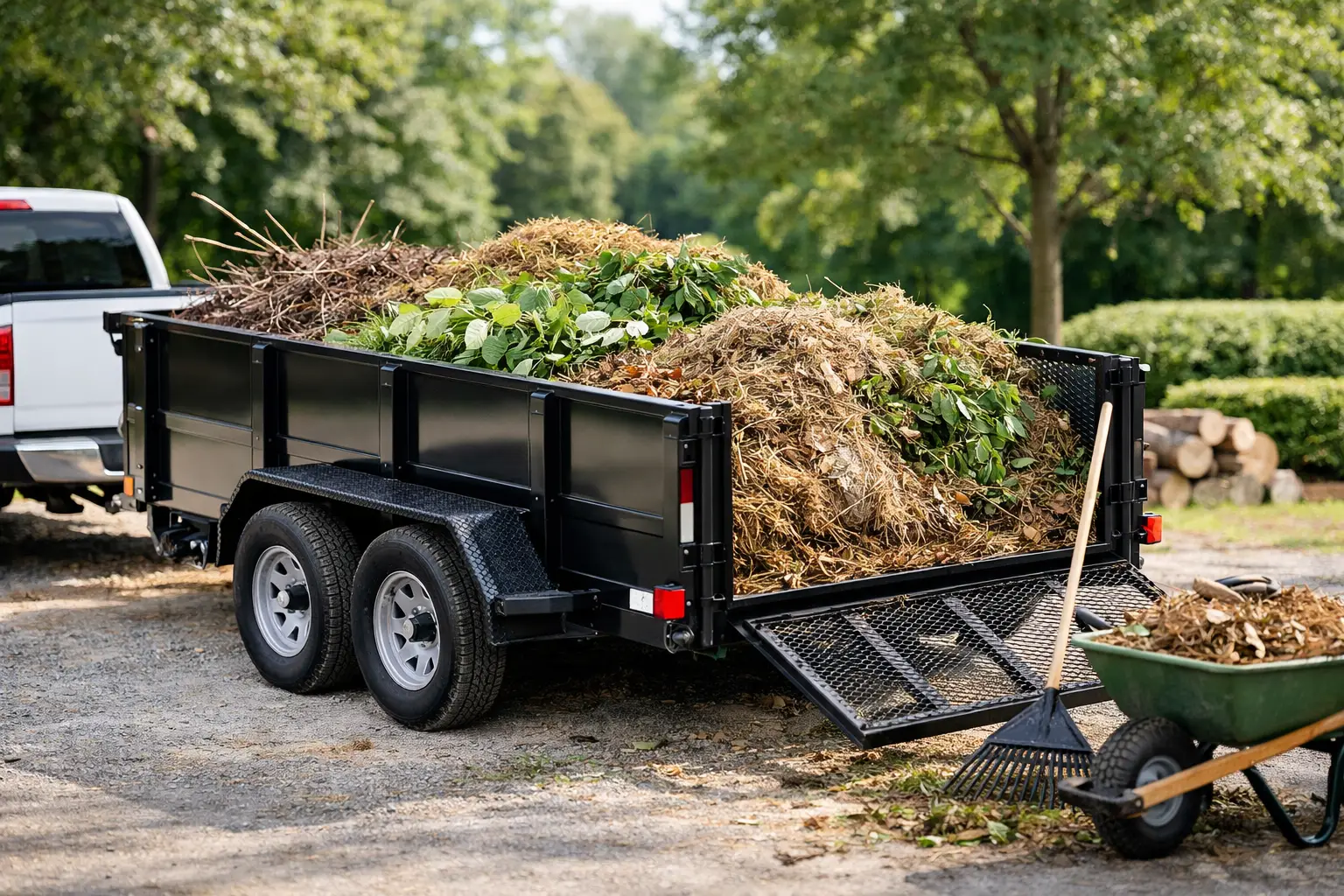
A trailer becomes the practical choice when the volume is awkward, not just heavy. Yard waste takes up space quickly. Tree limbs do not stack neatly, brush springs back, and root balls are bulky even when they are not especially dense. A truck bed fills up long before the work is done, and loose material tends to blow around unless it is secured well.
For homeowners, that usually happens during seasonal cleanup, monsoon storm cleanup, move-out prep, or a backyard overhaul. For landscapers and contractors, it happens all the time. Renting a trailer for the day or weekend can be cheaper than tying up labor on repeated dump runs with undersized equipment.
Choosing the right trailer for yard waste
The best trailer is not always the biggest one on the lot. Bigger can help, but only if your tow vehicle can handle it and the waste you are hauling actually benefits from extra space.
For light but bulky material like brush, trimmings, palm fronds, and weeds, an open utility trailer is often the better fit. It gives you easy loading access and enough room to stack material without fighting side walls that are too high. If the job is mostly branches and bagged debris, this is usually the straightforward choice.
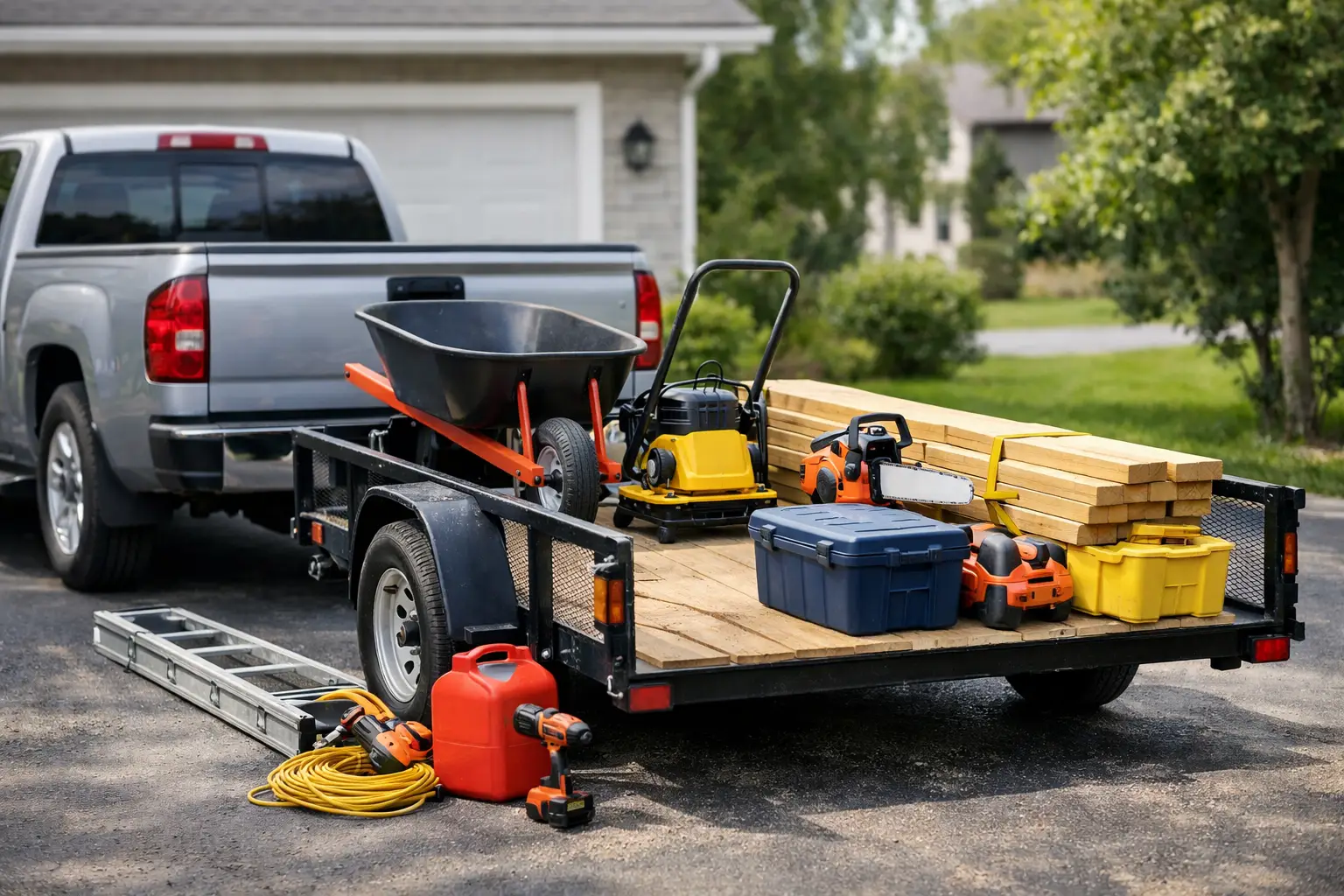
If your cleanup includes heavier materials mixed in with the yard waste, like broken concrete edging, wet dirt, rock, or sections of old fencing, capacity matters more. At that point, the question is not just how much fits, but how much your vehicle can tow safely. A trailer that is perfect for brush may not be the right call for dense debris.
That is why it helps to think about the actual load, not just the project name. People say they need a trailer for yard waste, but what they really have might be half brush, half old landscape block, plus a mower that needs to come along. Those details matter.
What to think about before you book
Your tow vehicle comes first. A trailer is only useful if your vehicle can pull it safely and stop it with confidence. Check your tow rating, hitch setup, electrical connection, and whether you are comfortable backing and maneuvering with a trailer attached. If you have hauled before, this is routine. If you have not, it is worth asking a few questions before pickup instead of figuring it out in a tight driveway.
The next thing is disposal. Yard waste rules vary depending on where you plan to dump. Some facilities separate green waste from mixed debris. Some will take brush but not treated lumber. Some care whether material is bagged, while others prefer it loose. If your pile includes more than organic waste, make sure the trailer you rent matches the way you need to sort and haul it.
Access also matters more than people expect. If you are clearing a large lot with room to stage a trailer near the work area, loading goes quickly. If you are working in a narrow alley, sloped driveway, or tight side yard, a trailer that looks good on paper can be annoying in practice. The right size is the one you can actually use without turning the job into a parking exercise.
How to load yard waste without creating a problem
A lot of hauling headaches come from loading, not towing. Brush gets tossed in loosely, long limbs hang out the back, and the load looks fine until the first turn. Yard waste is messy by nature, but it still needs to be packed with some thought.
Start with the heavier, denser items low and centered over the axle area when possible. Then build out with lighter brush and clippings. Keep the load balanced from side to side. If one side is stacked much higher, the trailer can feel unstable on the road, especially in wind or on rough pavement.
Long branches should be cut down if they extend too far beyond the trailer. That extra five minutes with a saw usually saves much more trouble later. Loose material should be secured with a tarp or net when needed, especially if you are hauling dry leaves or light debris that can blow out. A trailer full of yard waste is not just your problem if it starts coming apart on the road.
Do not assume that because yard waste feels light, you can pile it endlessly. Wet brush, stumps, and root balls can add up fast. Green waste fresh from irrigation or rain is much heavier than it looks.
Why renting often beats owning for this kind of work
A trailer is useful, but for many people it is not useful often enough to justify owning one. It takes up space, needs tires and lights maintained, and still has to be registered and stored somewhere. If you are doing major property cleanup every week, ownership can pencil out. If you are doing two big jobs a year, it usually does not.
That is where a local rental option makes sense. You get the trailer when you need it, return it when the job is done, and skip the rest. For a lot of Verde Valley homeowners and small crews, that is the sweet spot – enough equipment to handle the work, without adding another thing to maintain.
There is also the issue of fit. The right trailer for spring pruning may not be the right one for hauling away storm-damaged limbs or clearing out an overgrown rental property. Renting lets you match the equipment to the job instead of making one trailer do everything badly.
Common mistakes people make with yard waste hauling
The first mistake is underestimating volume. People look at a brush pile on the ground and think it will take one trip. Once it is cut, fluffed, and loaded, it takes two or three. Renting a trailer that is too small can erase the savings if it adds extra time and dump fees.
The second is mixing materials without a plan. Green waste, lumber, metal, and broken landscaping materials do not always belong in the same load. If the disposal site separates them, you can end up unloading and sorting by hand. That is a rough way to finish a long day.
The third is treating towing like an afterthought. Even a short local haul deserves proper tie-downs, lights that work, and a realistic look at your vehicle’s limits. Safe hauling is not complicated, but it does require paying attention.
A good local rental experience should feel simple
If you are renting a trailer for yard waste, the process should not be harder than the cleanup itself. You should be able to ask what trailer fits your load, get a clear answer, and book without a lot of back-and-forth. Contactless pickup and dropoff can make a big difference when you are trying to start early or finish after a long workday.
It also helps to work with a company that actually answers the phone and understands local hauling needs. In places like Cottonwood, Clarkdale, Sedona, and the surrounding area, yard projects are not all the same. Some are tight residential cleanups. Some are larger rural property jobs with rougher access and bigger piles. A local rental business should know the difference and help you choose accordingly.
Monsoon Trailer Rental is built around that kind of straightforward service – dependable equipment, fair pricing, and a process that does not waste your time.
If your yard cleanup has outgrown your trash cans and your truck bed, renting the right trailer is usually the fastest way to get the work behind you and move on to the part you actually wanted – a cleaner property and one less job hanging over the weekend.