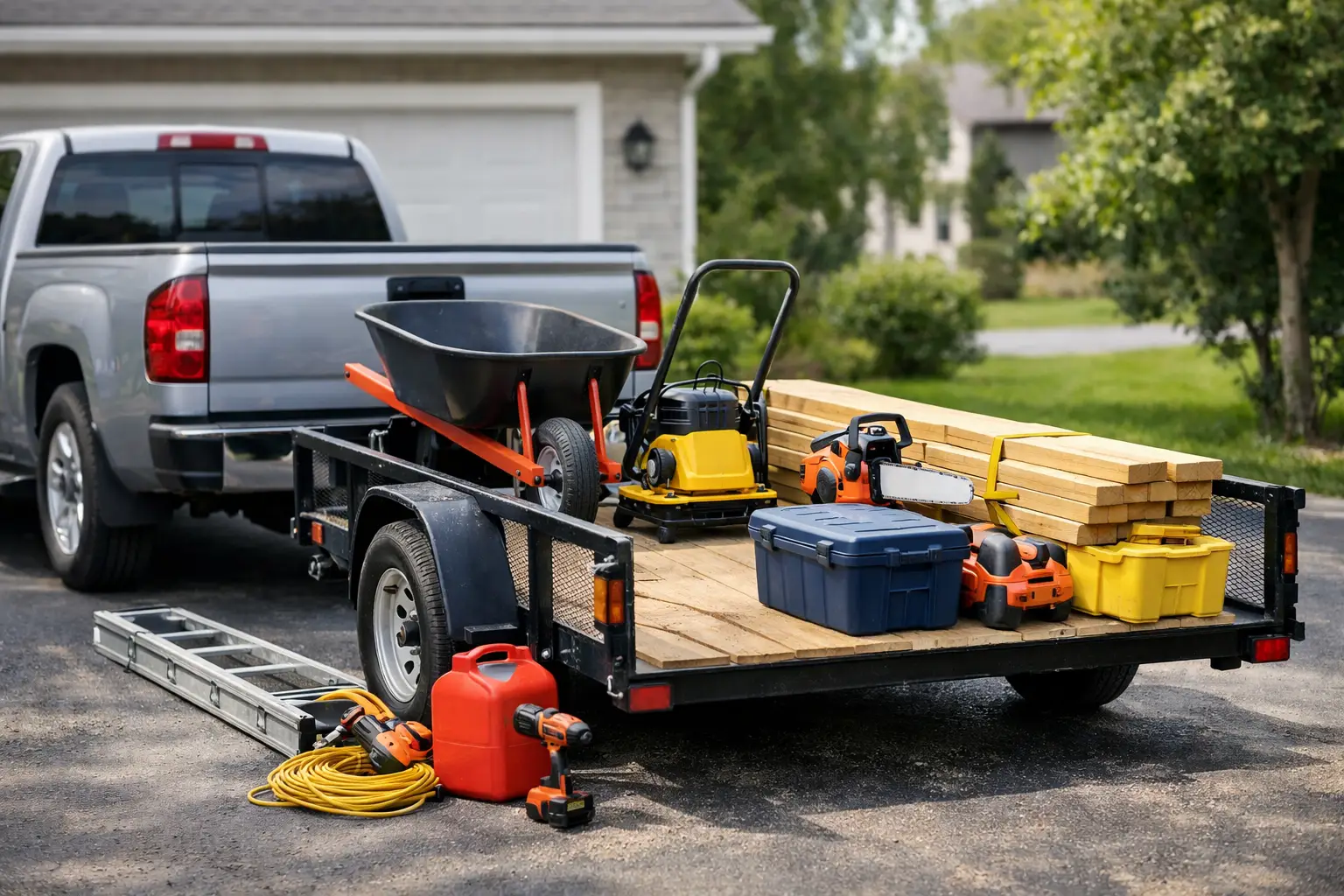

A trailer can feel fine when it’s empty, then turn into a problem the second the weight is loaded wrong. Most hauling trouble does not start on the highway. It starts in the driveway, at the jobsite, or in the storage lot when someone guesses their way through how to load a rental trailer.
If you want the trip to go smoothly, loading matters just as much as the hitch, the lights, and the route. A well-loaded trailer tows straighter, brakes better, and puts less stress on your vehicle. A poorly loaded one can sway, bounce, drag, or shift when you hit a turn or stop sign. The good news is that the basics are simple once you know what to look for.
Start with the right trailer for the job
Before you load anything, make sure the trailer actually fits the job. That sounds obvious, but a lot of trouble comes from trying to make the wrong trailer work. A utility trailer for yard debris loads differently than a car hauler, and a low, wide trailer behaves differently than a tall enclosed one.
Think about the size of the cargo, the total weight, and how low or high the center of gravity will sit. If you are hauling a mower, ATV, furniture, appliances, or a vehicle, each one puts weight on the deck in a different way. If the load barely fits, you lose room to balance it correctly. If the trailer is much bigger than what you need, it’s easier for smaller items to spread out unevenly.
It also helps to know your tow vehicle’s limits before you start. Payload, towing capacity, hitch rating, and tongue weight all matter. Loading the trailer properly cannot fix an overloaded truck or SUV.
How to load a rental trailer without causing sway
The biggest loading mistake is putting too much weight at the very back of the trailer. That takes weight off the hitch and makes the trailer more likely to fishtail. On the other hand, putting too much weight too far forward can overload the tongue and make steering and braking feel heavy.
The goal is balanced weight with a slight forward bias. In plain terms, most of the load should sit over the axle area or just a little forward of it, not piled against the rear gate and not slammed all the way against the front rail unless the item is supposed to sit there.
For many trailers, you want enough tongue weight to keep the trailer tracking properly, but not so much that the rear of the tow vehicle squats hard. You do not need to turn this into a math project for every small load, but you do need to pay attention to how the trailer sits once it’s coupled. If the tongue feels too light or the back of the trailer looks heavy, stop and reposition the cargo.
With heavier equipment, load one major item first, then check the balance before adding smaller pieces around it. With loose materials or mixed cargo, spread the weight evenly side to side. A trailer that is heavier on one side can pull strangely and put extra stress on the tires.
Load heavy items low and centered
The safest load is usually the one that stays low. Heavy items stacked high raise the center of gravity and make the trailer less stable in curves, uneven pavement, and sudden lane changes. If something weighs a lot, keep it on the deck, not on top of lighter items.
Center heavy cargo from left to right whenever possible. That means the load should not lean toward one fender or one rail. If you’re hauling appliances, pallets, tool chests, or landscaping equipment, place the heaviest pieces first and use the lighter pieces to fill in around them.
This is where taking an extra five minutes pays off. It is much easier to adjust placement before everything is strapped down than after.
Different cargo needs different placement
A car on a car hauler is not loaded the same way as furniture in a utility trailer. With a vehicle, axle placement matters, and small shifts forward or backward can change tongue weight fast. With furniture or jobsite materials, the challenge is usually preventing movement and keeping the load from becoming top-heavy.
If you are loading long items like lumber, pipe, or ladders, keep them straight and supported. Do not let one end hang out in a way that changes the trailer’s balance or creates a hazard in turns.
Secure the load like it will try to move
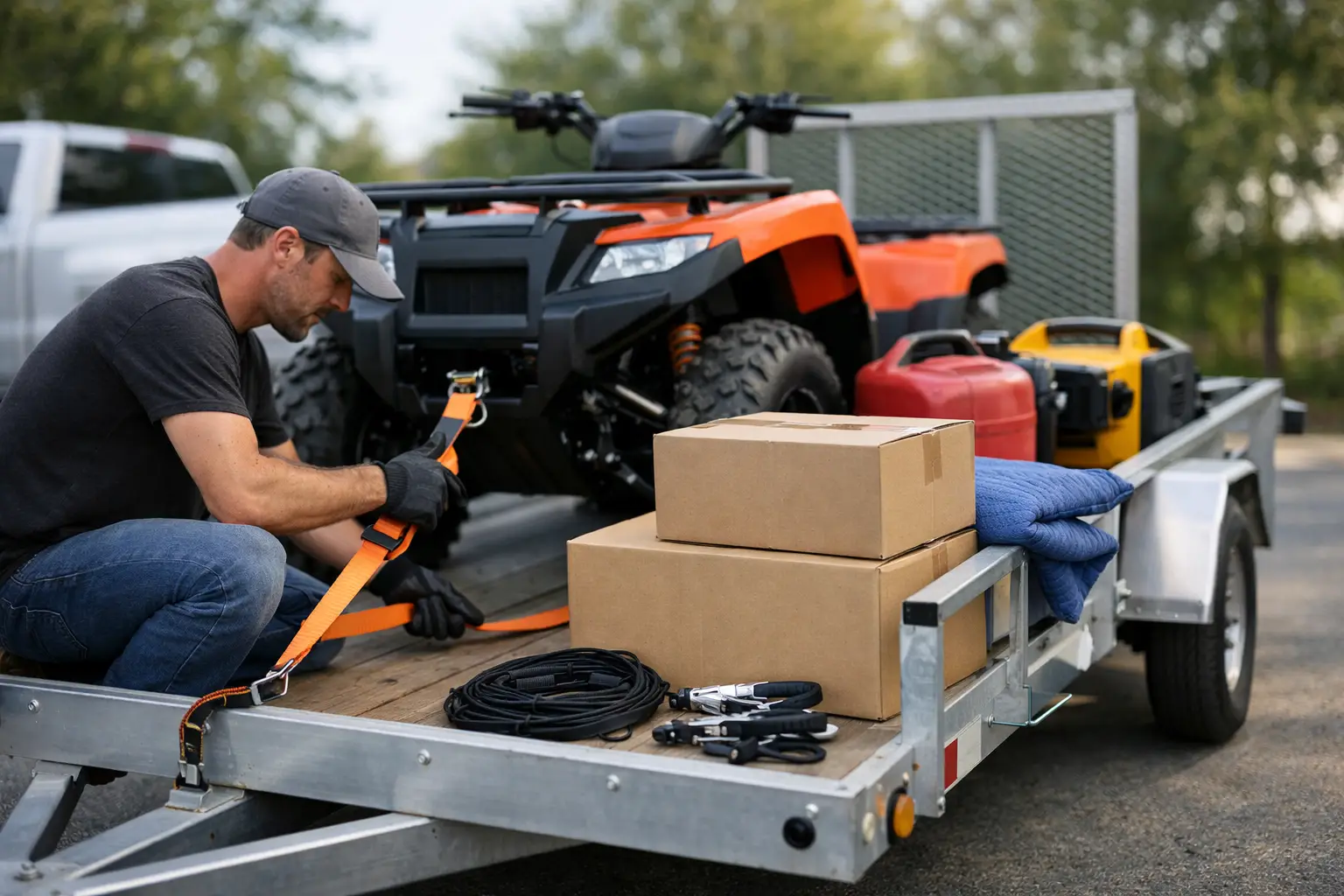
Even a perfectly balanced load is not safe if it is loose. Every trailer load should be secured for braking, turning, bumps, and wind. A tarp thrown over the top is not a tie-down. Rope can work in some situations, but ratchet straps, chains, and proper anchors are usually the better call for heavy or valuable cargo.
The key is to secure the load in more than one direction. Forward, backward, and side-to-side movement all need to be controlled. One strap across the top is rarely enough. You want the cargo held down and held in place.
For equipment with wheels, use tie-down points designed for that machine when possible. For furniture and appliances, protect corners and surfaces so straps do not cut in or slip off. For loose debris, use sidewalls, nets, or tarps as needed, but do not treat a cover as the only thing keeping the load in place.
After a few miles, stop and recheck everything. Straps can loosen once the load settles. That quick check can save you a much bigger problem later.
Watch the ramp, the gate, and the floor capacity
A lot of loading mistakes happen before the cargo even reaches its final spot. Ramps and gates have limits, and so does the trailer floor. If you are driving equipment onto a trailer, go slow and stay centered. Sudden throttle changes can shift the trailer or damage the ramp.
With hand-loaded cargo, do not stack everything at the tail just because it is convenient. People often set item after item near the back while they organize, then forget to move the weight forward. That is one of the fastest ways to create sway.
Also pay attention to the condition of the deck. Wet boards, loose gravel, or uneven loading surfaces can make ramps slick and cargo hard to control. A careful loading plan matters more when you’re working alone.
Common mistakes when loading a rental trailer
Most bad trailer loads come down to a few repeat problems. The first is guessing on weight. If you do not know roughly what your cargo weighs, it is easy to overload the trailer or the tow vehicle.
The second is rear-heavy loading. It might feel easier to keep cargo close to the gate, especially when you’re in a hurry, but that setup often causes the worst towing behavior. The third is forgetting that cargo can shift. A stack of boxes that looked stable in the driveway can lean hard after a few turns.
Another common issue is using too few tie-down points. Heavy cargo needs restraint from multiple angles, not just one strap thrown over the middle. And finally, people skip the test check. Once the trailer is loaded, stand back and look at it. Is it level? Is the tow vehicle sagging too much? Does the load look centered? If anything looks off, fix it before you leave.
What to do if the trailer feels wrong on the road
If the trailer starts swaying, do not speed up and do not jerk the wheel. Ease off the accelerator and keep the steering straight and steady. Then pull over when it is safe and inspect the load. Most of the time, sway points back to a loading issue, too little tongue weight, or cargo that has moved.
If braking feels poor, the trailer seems to push the tow vehicle, or one side feels heavier than the other, stop and check the load again. Those are not things to ignore and hope they sort themselves out.
A simple loading routine that works
If you want a practical system, use the same routine every time. Check your weight limits first. Load the heaviest item low and near the axle area with a slight forward bias. Balance the sides. Secure everything with proper tie-downs. Then walk around the trailer and look at the whole setup before you pull out.
For first-time renters, this routine takes a lot of guesswork out of the process. For experienced haulers, it keeps small shortcuts from turning into expensive ones. Whether you’re moving a car, hauling yard waste, or getting materials home for a project in Cottonwood or Clarkdale, the rules stay pretty much the same.
If you are ever unsure, ask before you load. A local rental team that actually picks up the phone can save you a lot of hassle with the right trailer and a few straight answers. A little care at the start makes the whole haul easier once the tires start rolling.