
That first trailer rental usually starts the same way – you know what needs to move, but you are not sure what kind of trailer to get, what your vehicle can handle, or what questions to ask before you book. This trailer rental guide for beginners is built for that moment. If you are hauling a car, picking up landscaping material, clearing out a property, or moving equipment across the Verde Valley, a little planning saves time, money, and stress.
What beginners usually get wrong
Most first-time renters do not have trouble with the driving part. The real problems start earlier, when they rent the wrong trailer, assume their vehicle can tow more than it should, or load everything in a way that makes the trip unstable.
A trailer is simple equipment, but it still has to match the job. A small utility trailer may be perfect for a few runs to the dump or a load of tools. It is not the right answer for a vehicle move. A car hauler may be exactly what you need for transporting a disabled car, but it is overkill for yard waste or furniture. The right fit depends on weight, dimensions, tie-down needs, and how far you are going.
That is why beginners do better when they start with the load instead of the trailer. Think about what you are hauling, how much it weighs, whether it rolls or has to be lifted, and how often you need to stop along the way.
Trailer rental guide for beginners: start with the job
The easiest way to choose a trailer is to describe the job in plain terms. Are you moving an ATV, hauling a project car, picking up construction material, or cleaning up after a remodel? Once the job is clear, the trailer choice usually gets easier.
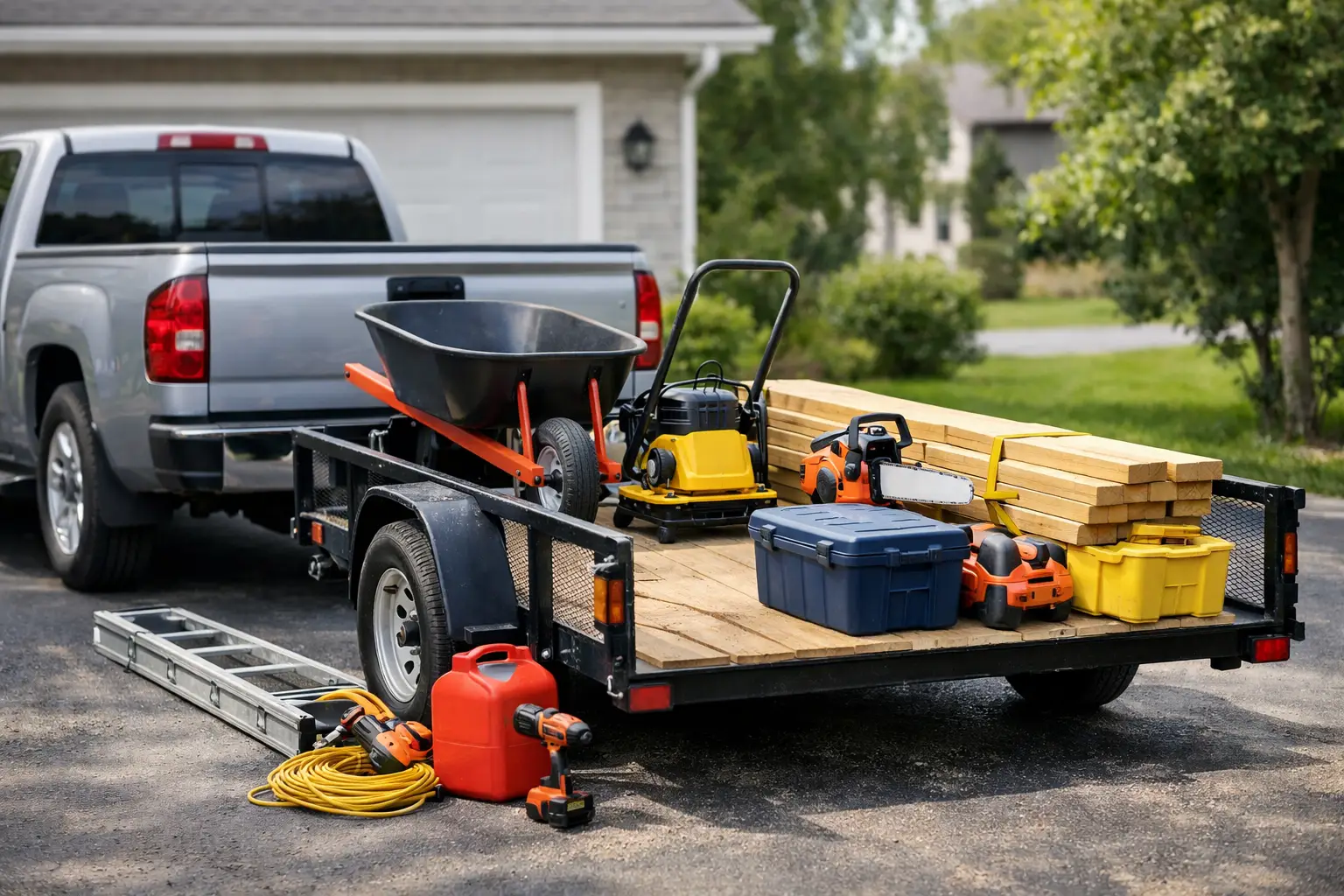
For general hauling, a utility trailer often makes the most sense. It works well for furniture, yard debris, tools, small equipment, and building supplies. It is also more forgiving for beginners because loading is usually simpler and visibility is often better than with larger enclosed options.
For vehicle transport, you need a car hauler. This is where guessing can cost you. The trailer has to be sized correctly for the vehicle, and your tow vehicle needs enough capacity for both the trailer and the car on it. If you are moving a sedan, small SUV, or project vehicle that does not run, a car hauler is usually the right call, but the exact setup still matters.
If your job falls somewhere in between, ask about the actual cargo, not just the trailer category. A good local rental company can usually tell pretty quickly whether you are headed in the right direction.
Know your tow vehicle before you book
This is the part too many renters skip. Your truck or SUV may have a hitch, but that does not automatically mean it is ready to tow every trailer on the lot.
You need to know your vehicle’s tow rating and payload limits. You also want to confirm the hitch class, trailer ball size, and electrical connection. The trailer can only be as safe as the vehicle pulling it. Even if the trailer itself is available, it is not a good rental if your vehicle is undersized for the load.
The owner’s manual is the best place to check towing capacity. If you are not sure what any of the numbers mean, ask before pickup instead of figuring it out in the parking lot. This is especially important with car haulers, because the combined weight adds up fast.
There is also a difference between what a vehicle can technically tow and what feels comfortable for a beginner. If you have never pulled a trailer before, a setup that is near the top of your capacity may not be the smartest choice. Sometimes the better move is making two smaller trips or renting equipment that is easier to manage.
Size matters, but weight matters more
Beginners often focus on trailer length first, which makes sense because size is easy to picture. But weight is usually the bigger issue.
A load can fit on a trailer and still be wrong for it. Pavers, gravel, concrete bags, and equipment get heavy fast. So do vehicles, especially older trucks and SUVs. You need enough trailer capacity for the cargo, plus a towing setup that can handle the total safely.
Dimensions still matter, of course. Your cargo needs to fit between the rails or on the deck without hanging off in a way that creates a problem. But when in doubt, always verify weight before anything else.
Loading is where safety starts
A trailer that is loaded badly will not tow well, even if everything else is technically correct. Weight distribution matters more than many beginners expect.
Too much weight at the rear can cause sway. Too much weight at the front can overload the hitch and affect steering or braking. The goal is a balanced load with proper tongue weight, secured so it cannot shift during the trip.
With general cargo, place heavier items low and centered, then secure them tightly. With a vehicle on a car hauler, positioning is even more specific. The car needs to sit in the right spot on the deck, and the tie-down points need to be correct for the vehicle and trailer.
Do not rely on one strap and good intentions. Use proper tie-downs, check them before you leave, and stop after a short distance to inspect them again. Loads settle. Straps loosen. That first recheck matters.
Driving with a trailer for the first time
The good news is that towing is usually less complicated than people fear. The bad news is that small mistakes get bigger faster when a trailer is involved.
Give yourself more room for turns, more distance for braking, and more time for lane changes. Take corners wider than usual and avoid sudden inputs. Smooth is better than fast. If you are backing up for the first time, practice somewhere open before you get into a tight driveway or crowded lot.
Speed is another place where beginners get into trouble. Even if the road feels easy, towing at a moderate, controlled pace is usually the better move. You are not just managing your vehicle anymore. You are managing the load behind it, road conditions, crosswinds, and braking distance.
If the trailer starts to sway, do not try to steer aggressively out of it. Ease off the accelerator and stay steady. Sway usually points back to speed, loading, or a mismatch between trailer and tow vehicle.
What affects the price
Rental cost matters, but the cheapest option is not always the least expensive in real life. If the trailer is wrong for the job, you can lose time, make extra trips, or create a safety issue that costs more than the rental ever did.
Price usually depends on trailer type, rental length, and sometimes the season or demand. A car hauler will typically cost more than a basic utility trailer because it is built for a more specific job. Daily rates may make sense for short hauls, while weekend or multi-day rentals can be better for larger projects.
It also helps to ask what is included. Things like ramps, tie-down availability, or required equipment can affect the total. Clear pricing and straightforward answers matter, especially if you are renting for the first time and just want to get the job done without surprises.
Questions worth asking before pickup
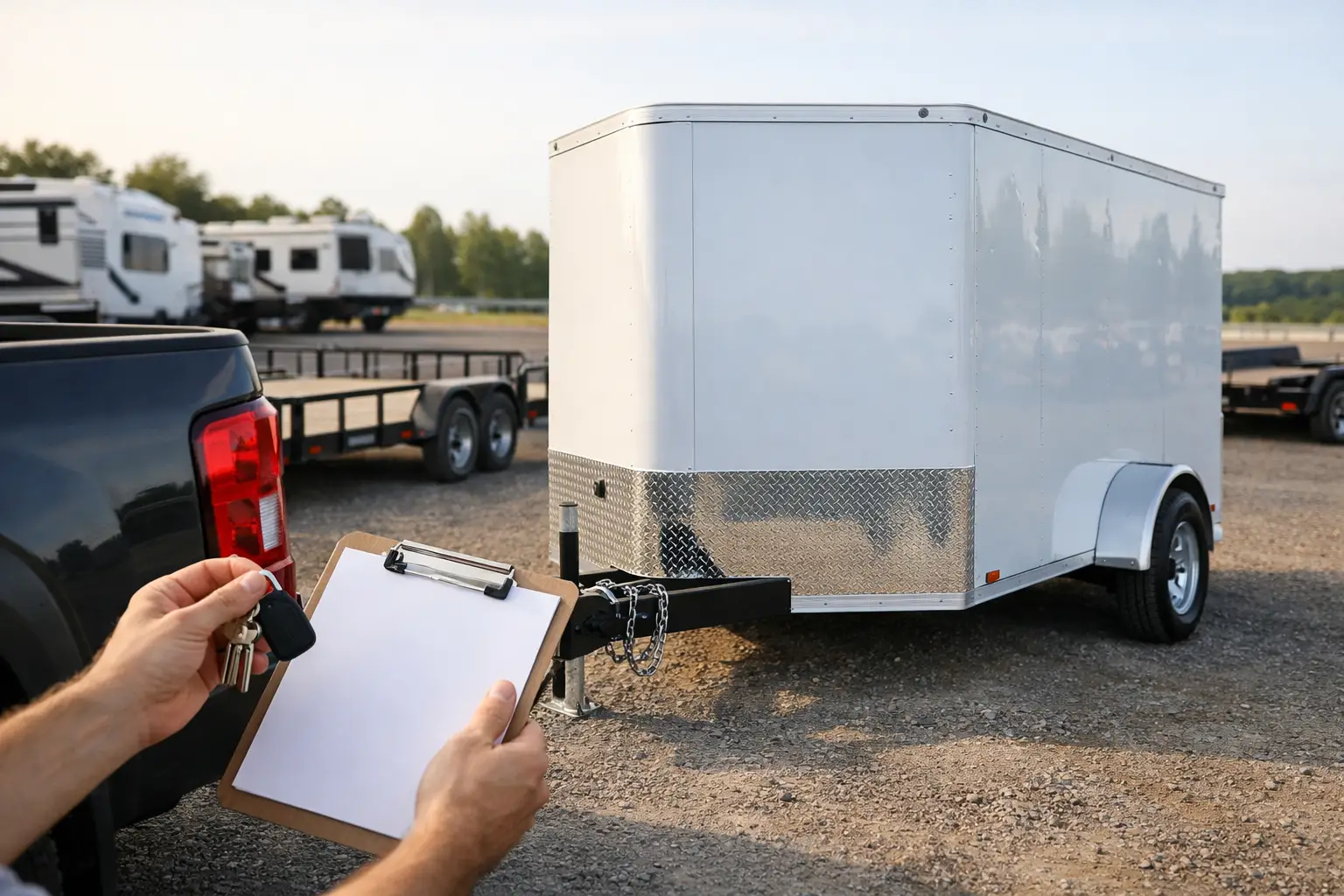
A beginner does not need to know everything, but a few smart questions go a long way. Ask whether your vehicle is a good match for the trailer, what hitch and plug you need, and whether there are loading tips specific to your cargo.
If you are hauling a vehicle, ask about deck size, weight limits, and how the car should be positioned. If you are hauling materials or equipment, ask whether the trailer floor, sides, and gate setup fit the job. A local company that works with real customers every day should be able to answer these questions plainly, without talking around them.
In places like Cottonwood, Clarkdale, Sedona, and the surrounding area, road conditions can vary from easy in-town driving to steeper grades and tighter turns. That makes the right trailer match even more important. A team like Monsoon Trailer Rental that actually picks up the phone can save you from renting the wrong thing in the first place.
The best first rental is the one you can handle confidently
There is no prize for renting the biggest trailer. For beginners, the best choice is usually the trailer that covers the job safely without pushing your vehicle or your comfort level to the edge.
If you are between two options, explain the load, the route, and the tow vehicle. That usually leads to a better answer than picking by price or guessing based on photos. Trailer rentals are supposed to make work easier, not add a new problem to the day.
A good first experience comes down to a few basics: know what you are hauling, know what your vehicle can tow, load it correctly, and ask questions before you leave the lot. Once you do that, renting a trailer starts feeling less like a gamble and more like what it should be – a practical tool that helps you finish the job and get home without hassle.