
A pallet of concrete board, a stack of lumber, or a load of block can go wrong fast if it is tossed onto the wrong trailer and hauled without a plan. If you are figuring out how to tow construction materials, the job starts before the trailer ever moves. The right setup saves time, protects your truck, and keeps your load from shifting halfway down the road.
Most hauling problems are not caused by bad luck. They usually come from one of three things: too much weight, poor balance, or weak securement. If you get those three right, the rest of the trip gets a lot easier.
How to tow construction materials without creating problems
Construction materials are not all heavy in the same way. Drywall is awkward and wind-sensitive. Gravel is dense and settles. Lumber can be long, flexible, and uneven. Equipment like compactors or small skid steers adds point-load weight that can stress the trailer deck if it is not positioned correctly.
That is why there is no one-size-fits-all answer. How to tow construction materials depends on what you are moving, how far you are going, what tow vehicle you have, and whether you need side rails, a flat deck, ramps, or extra tie-down points. A load of mulch for a yard job is one thing. A mixed load of tile, cement, and framing material is another.
Start by looking at the total weight, then look at the shape of the load. People tend to focus only on pounds, but dimensions matter too. A light load that catches wind or hangs too far off the trailer can be just as annoying and unsafe as a heavy one.
Match the trailer to the material
The trailer should fit the material, not just the budget. If you are hauling loose material like gravel, sand, or demolition debris, a dump-style trailer often makes more sense because unloading is easier and cleaner. If you are moving lumber, sheet goods, or bundled materials, a utility or flatbed-style trailer may give you better access and more usable deck space.
Low deck height helps when loading heavy items by hand or with equipment. Side rails help contain loose or stacked material, but they can also get in the way when loading palletized products. Ramps matter if you are loading machines, but they are less important if everything is being placed by forklift.
This is where local service actually helps. A good rental company can tell you quickly whether your load belongs on a utility trailer, equipment trailer, or car hauler-style setup. That saves you from renting something too small, too light-duty, or just plain wrong for the job.
Know your real weight, not your guess
A lot of people underestimate construction material weight because the load does not look that big. That is how axles get overloaded and tow vehicles start feeling loose on the road.
You need to account for the material itself, the trailer weight, tools or equipment riding with the load, and anything else in the truck bed. Payload and towing capacity are not the same thing. Your truck may be rated to pull a certain amount, but that does not mean every hitch, axle, tire, and brake component is happy doing it with a poorly balanced trailer.
If you are hauling concrete, pavers, block, mortar, or wet soil, the weight climbs fast. Lumber and roofing can fool people too, especially when you are loading multiple units. When in doubt, ask for the material weight at pickup and build in some margin. Close enough is not a great strategy once you are on a two-lane road with traffic behind you.
Load placement matters more than most people think
A properly loaded trailer should feel planted, not twitchy. The goal is steady tongue weight and even support across the trailer axles. Too much weight to the rear can lead to sway. Too much weight on the tongue can overload the hitch and squat the rear of the tow vehicle.
For most material loads, heavier items should sit low and centered over or slightly forward of the trailer axles, depending on the trailer type. Keep the load compact when possible. Spreading material too far front to back makes it harder to control balance and may increase bounce.
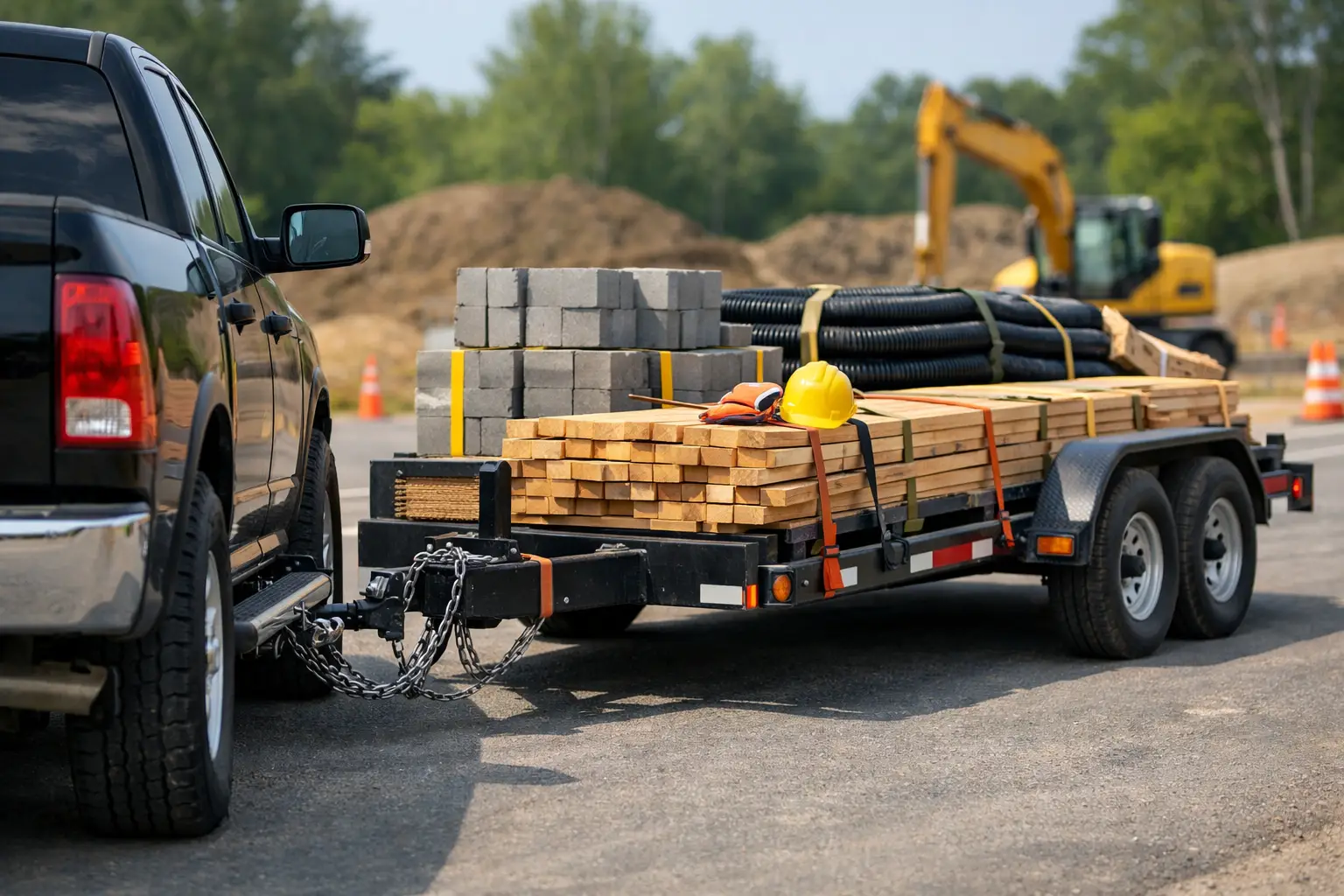
With long materials like lumber, pipe, or trim, make sure overhang is managed properly and the bundle is not able to flex or shift. With pallets, set them where the trailer can carry the load evenly instead of dropping all the weight at one end. If the load is mixed, place the densest material first, then build around it with lighter items.
Secure the load like you expect rough roads
Tie-downs are not just there to satisfy common sense. They are what keep your trip from turning into a cleanup job. Construction materials shift from vibration, braking, potholes, wind, and cornering. Even a neat stack can loosen up once the road starts working on it.
Use straps, chains, or binders that match the weight and type of material. Sharp-edged loads can cut cheap straps. Loose items may need a tarp or containment. Sheet goods should be strapped flat and supported well enough that they do not bow or lift. Small stacked items like brick, pavers, or bagged material should be packed tight and restrained so they cannot walk across the deck.
After the first few miles, stop and check everything. Straps settle. Lumber compresses. Pallets shift. A quick re-tighten early in the trip is one of the easiest ways to avoid trouble later.
Check the tow vehicle before you leave
Even the right trailer and a well-loaded deck can still tow badly if the vehicle is not ready. Tires should be in good shape and inflated correctly for the load. Lights need to work. Mirrors need to give you a clear view down both sides of the trailer. Your hitch ball, coupler, safety chains, and wiring should all be checked before pulling out.
Trailer brakes matter too, especially with dense building materials. If the trailer has brakes, make sure the brake controller is adjusted correctly. Too little braking makes stopping sloppy. Too much can cause jerking or wheel lockup.
This is also where honesty matters. If your half-ton truck is already loaded with tools and crew, it may not be the right vehicle for a heavy material haul. Sometimes the better call is making two trips or renting a trailer that fits your vehicle instead of pushing the limit.
Drive like you are carrying weight, because you are
Towing construction materials is not the same as towing an empty utility trailer. You need more stopping distance, wider turns, and smoother steering. Fast lane changes and hard braking can start trailer sway or move the load, especially if the material is stacked high.
Take corners slower than you think you need to. Brake early. Let the transmission and trailer brakes help manage downhill grades. Watch for crosswinds if you are carrying sheet goods, insulation, or light but bulky material.
If the trailer starts to sway, do not try to steer your way out of it with sudden corrections. Ease off the accelerator, keep the wheel steady, and let the trailer settle. Sway is usually a sign that something is off with speed, balance, or both.
Different materials need different handling
Lumber is easier to haul than many people expect, but only if it is stacked evenly and strapped in more than one place. Long boards can bounce and shift if only secured at the ends. Drywall and plywood need broad support so they do not crack or flex. Roofing shingles, tile, and cement products are compact but very heavy, so trailer capacity becomes the main concern fast.
Loose aggregate like sand or gravel behaves differently. It settles during transit, which can slightly change balance. Covering the load is often smart, especially on longer drives. Bagged material like concrete mix should be kept dry and packed tightly so individual bags cannot slide or tear.
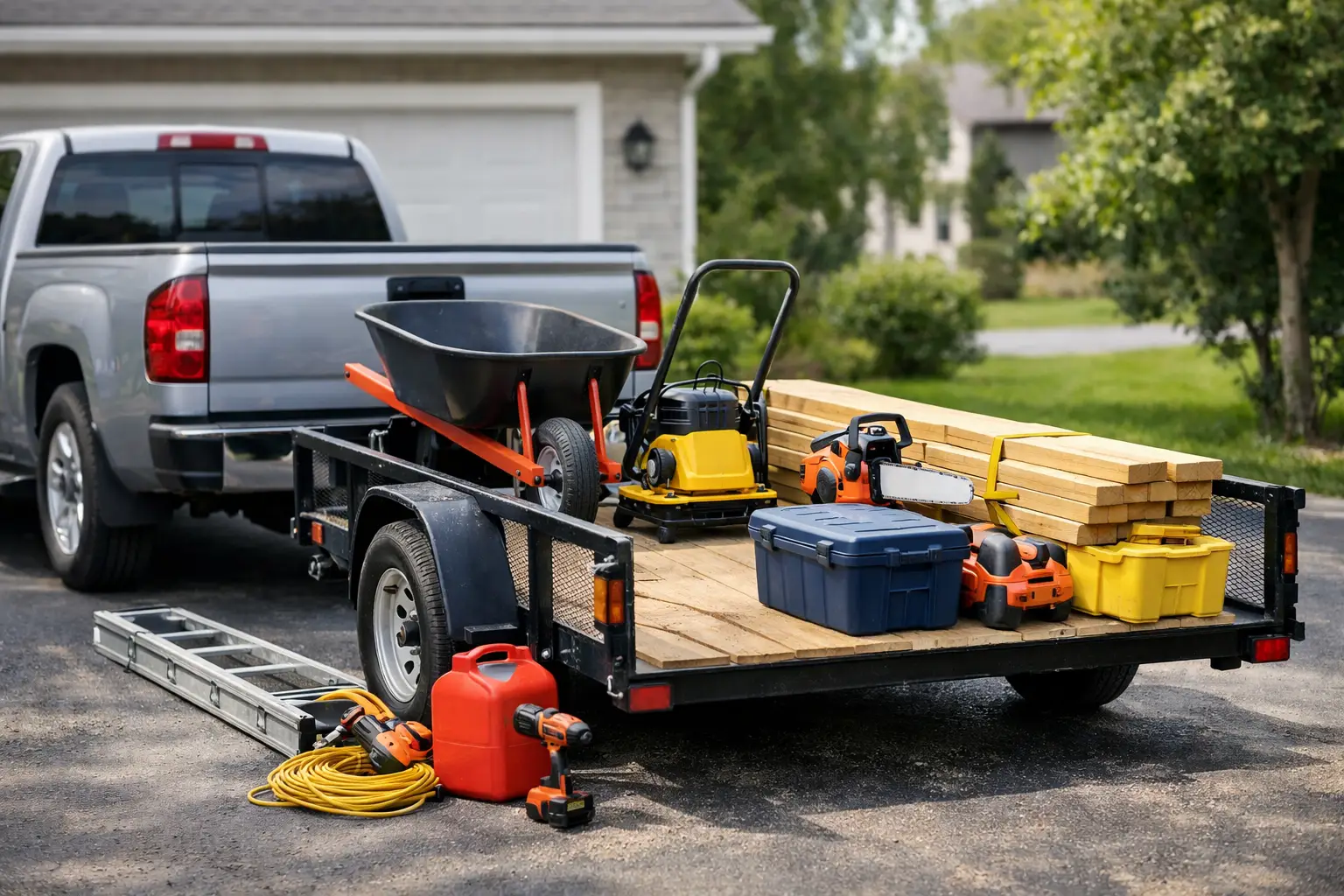
Small equipment adds another layer. If you are hauling a compactor, mixer, or mini skid along with materials, secure each item separately. Do not assume one big strap over everything counts as a proper hold.
Renting the right trailer can save the whole job
If you do not haul construction materials every week, renting usually makes more sense than trying to force the job onto whatever trailer happens to be available. The right trailer saves loading time, reduces risk, and makes unloading less of a mess. It also helps you avoid wear and tear on equipment that was never meant for heavier jobsite work.
For homeowners, remodelers, and small crews around Clarkdale, Cottonwood, Sedona, and the Verde Valley, that usually means talking to a local rental team that actually picks up the phone and asks the right questions. Monsoon Trailer Rental is built around that kind of practical help, with dependable trailers for real hauling jobs instead of one-size-fits-all guesses.
If you are ever unsure, the best move is to slow down and ask before you load. A few minutes spent matching the trailer, weight, and tie-down plan can save you a blown schedule, damaged material, or a very long drive home.