
A yard project can go sideways fast when you realize too late that mulch is bulkier, heavier, and messier than it looked at the supplier. If you’re figuring out how to haul mulch with trailer, the job gets a whole lot easier when you match the trailer to the load, load it correctly, and keep cleanup in mind before you leave the yard.
Mulch is one of those materials that fools people. A few scoops can look light and fluffy, but once it’s piled high and packed down, it takes up real space and adds weight faster than expected, especially if it’s damp. That matters whether you’re freshening up flower beds at home or hauling material for a landscaping job.
How to haul mulch with trailer without making a mess
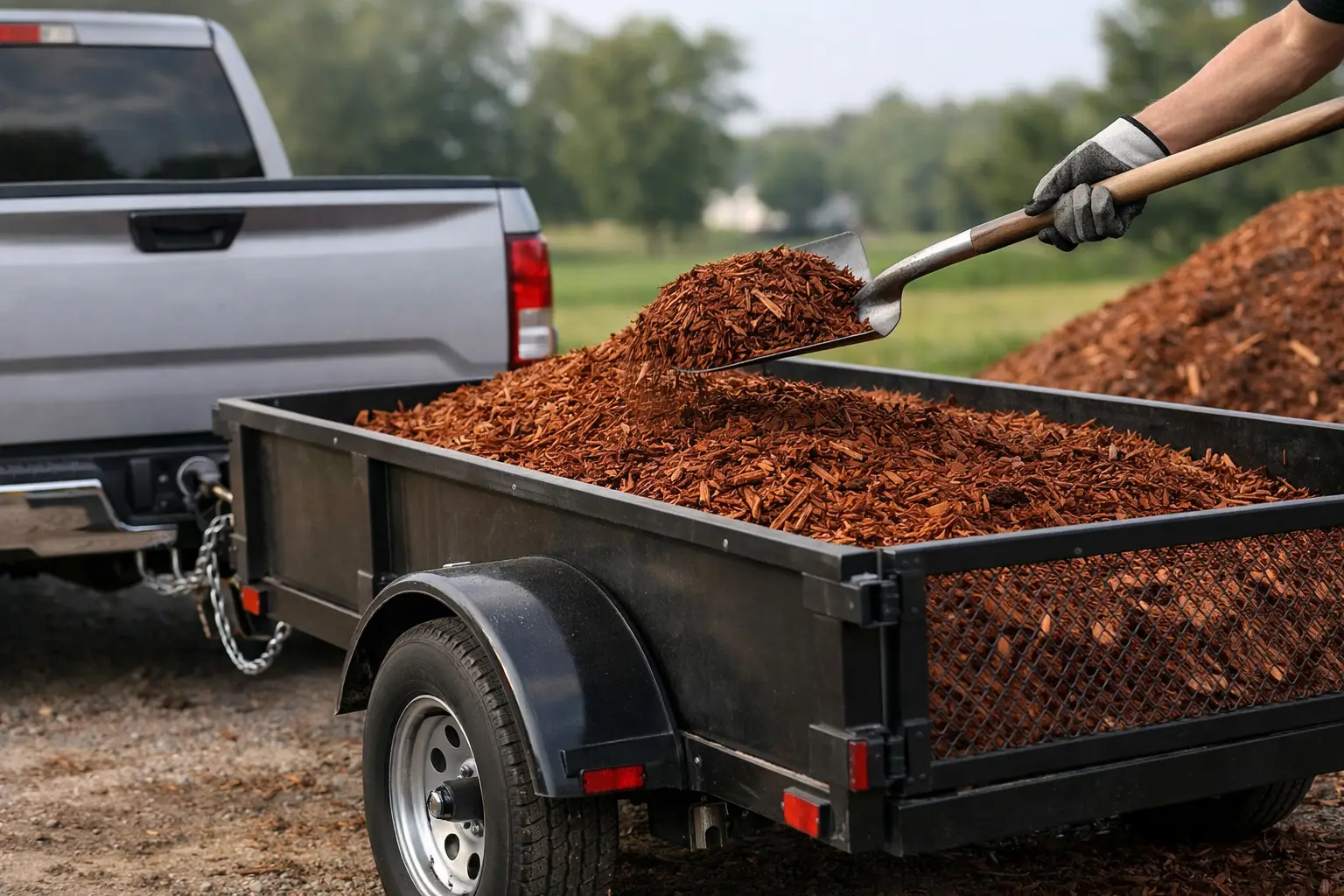
The first thing to get right is the trailer itself. For mulch, an open utility trailer usually makes the most sense because it’s easy to load with a skid steer or loader and easy to unload by hand at home. You don’t need anything fancy, but you do need enough trailer space so you are not stacking mulch into a mountain that wants to blow out on every bump.
Trailer size depends on how much mulch you’re buying and what your tow vehicle can handle. A lot of homeowners think in bags because that’s what they see at big box stores, but bulk mulch is usually sold by the cubic yard. One cubic yard of mulch can weigh anywhere from roughly 400 to 800 pounds depending on the type and moisture level. Dry wood mulch is lighter. Wet mulch is another story.
That means volume usually becomes the first limit with mulch, but weight can still sneak up on you. A small trailer may physically hold a yard or two, but your vehicle’s towing capacity, the trailer’s payload rating, and the tongue weight still have to be respected. If you’re unsure, it is better to make two shorter trips than to overload once.
Before pickup day, confirm four things: your vehicle’s tow rating, your hitch rating, your trailer’s payload capacity, and how many cubic yards the mulch yard plans to drop in. Those numbers matter more than guesswork.
Pick the right trailer for bulk mulch
For most residential mulch runs, a utility trailer with low sides is the practical choice. Low sides make loading easy and save your back when you unload with a shovel. Higher sides can help contain loose material, but they also make unloading slower unless the trailer is set up for dumping.
A dump trailer is even better if you’re moving a larger amount or doing repeat landscaping jobs. It costs more to rent than a basic utility trailer, but it saves time and effort at the other end. If you’re hauling several yards or working alone, that trade-off is often worth it.
A trailer that is too large is not always the best answer either. Bigger trailers invite bigger loads, and bigger loads can push a half-ton truck or SUV past what it should tow. For a simple weekend project, a properly sized utility trailer is often the sweet spot.
If you’re in the Verde Valley and dealing with a local mulch supplier or landscape yard, ask how they load trailers. Some yards use a loader bucket that drops bulk material fast and not always evenly. A trailer that is easy to access from all sides gives you a better chance of correcting the load before you hit the road.
Use a tarp before loading
If you want cleanup to be easier, lay a heavy tarp in the trailer before the mulch is loaded. This is one of the simplest tricks and one of the most overlooked.
The tarp helps in two ways. First, it keeps fine mulch and moisture off the trailer deck, which cuts cleanup time later. Second, when you’re unloading by hand, you can pull sections of the tarp to shift leftover material toward the tailgate or rear opening instead of scraping every last bit with a shovel.
Make sure the tarp is large enough to cover the floor and come up the sides a little. If it hangs too far over the edges while driving, tuck it in so it does not flap loose.
Load low and balanced
When the yard loads your trailer, pay attention to where the pile lands. You want the load centered from left to right and balanced so you have proper tongue weight. Too much weight behind the axle can make the trailer sway. Too much weight too far forward can overload the hitch and squat the rear of your tow vehicle.
With mulch, the temptation is to heap it high in the middle because it’s loose and the loader operator wants to get you moving. That can work for a short drive, but a lower, flatter load is safer. If needed, take a minute and shovel it into a more even shape before you leave.
Mulch also needs to stay below or near the top rail unless you are covering it well. A tall mound catches wind, sheds material, and makes the trailer less stable. Arizona roads, side winds, and rough pavement are not the place to test your luck.
Cover the load before you leave
A loose load should be covered. Period. Mulch can blow out in chunks, chips, and dust, and what leaves your trailer can become someone else’s windshield problem.
Use a cargo net or a tarp secured tightly over the load. The key word is tightly. A loose tarp that balloons in the wind can be worse than no cover at all because it lifts material and shifts attention away from the road. Tie down all corners, secure the sides, and check again after driving a mile or two.
If the load is mounded above the trailer sides, flatten it first. Covering a peaked pile is harder to do safely, and the cover is more likely to tear or come loose.
Drive like you have a trailer full of loose material
Mulch does not behave like a stack of lumber or a pallet of pavers. It shifts, settles, and can move more than you think. Take turns slower, leave extra braking distance, and avoid quick lane changes.
If this is your first time towing, the main thing is to stay smooth. Smooth starts, smooth stops, and wide turns. Backing a trailer full of mulch into a driveway is easier if you stop once and plan the angle instead of trying to fix a bad approach halfway through.
Check the load when you stop for fuel or after the first few miles. Mulch can settle, and tie-downs can loosen once the trailer starts bouncing down the road.
Unloading mulch at home or on the job
Unloading depends on the trailer type and where the mulch needs to go. If you rented a dump trailer, place it where you want the pile, make sure the ground is stable, and dump slowly. Keep people clear of the sides and rear while the bed rises.
With a utility trailer, unloading is more manual. A square shovel or mulch fork works best depending on the material. If you used a tarp underneath, leave a thin layer in place, then pull the tarp toward you to gather the last of it without beating up the trailer floor.
Think about placement before you start unloading. Dropping the pile close to the beds saves a lot of wheelbarrow trips. At the same time, do not block your garage, gate, or walkway if the job will take more than one day.
If rain is possible or you’re buying damp mulch, unload sooner rather than later. Wet mulch left sitting in a trailer is heavier, harder to shovel, and tougher to clean out.
Mistakes people make when hauling mulch with a trailer
The biggest mistake is assuming mulch is too light to worry about. Dry mulch may not weigh as much as gravel, but bulk volume adds up, and wet material changes the equation. The second mistake is overfilling the trailer because the material looks harmless. Loose loads still need proper weight distribution and secure covering.
Another common issue is forgetting the trailer deck. If you’re hauling mulch in a borrowed or rented trailer, protect it with a tarp and clean it out when you’re done. That is just good practice, and it makes the next job easier.
People also underestimate unloading time. Loading at the yard might take five minutes. Unloading at home with a shovel can take an hour or more, especially in the heat. Plan for that.
Renting a trailer for mulch makes sense more often than buying one
If you only haul mulch a few times a year, owning a trailer can be more hassle than help. Storage, registration, tires, lights, maintenance, and space in the driveway all come with the package. Renting lets you get the right trailer for the job instead of making one trailer do everything.
That matters when one project calls for a simple utility trailer and another calls for something heavier-duty. A local rental outfit like Monsoon Trailer Rental can also help first-time renters avoid the usual mistakes by matching the trailer to the load and tow vehicle, which is often where problems start.
For mulch, the best setup is usually the one that keeps things simple: the right trailer size, a tarp under the load, a secure cover on top, and enough patience not to overload just to save one trip. Get those parts right, and the rest of the job feels a lot less like a chore.