
If you are asking, “do I need trailer brake lights,” the short answer is yes – if you are towing on public roads, your trailer needs working brake lights and other required lighting. That is not just a nice extra. It is a basic safety item, and in most situations it is part of what makes your trailer road legal.
A lot of people mix up brake lights with trailer brakes, and that is where the confusion starts. Brake lights are the red lights on the back of the trailer that get brighter when you hit the brakes. Trailer brakes are the actual braking system on the trailer itself. Those are two different things, and one does not replace the other.
If you are hauling a side-by-side to camp, moving a car across the Verde Valley, or picking up materials for a job, working trailer lights matter every time you tow. They help the drivers behind you see when you are slowing down, turning, or stopping. On a busy road or coming down a grade, that can be the difference between a normal drive and a rear-end collision.
Do I need trailer brake lights on every trailer?
For practical purposes, yes. If the trailer is being used on the road, it should have functioning rear lights, including brake lights and turn signals. Small utility trailers, enclosed trailers, car haulers, and equipment trailers all need proper lighting when they are out on the street.
The exact legal details can vary by state and by trailer size, but the safe answer is simple: if you are towing, your trailer should have brake lights that work. Even if someone tells you their little trailer has “never needed them,” that does not make it a good idea, and it definitely does not make it safer.
Arizona towing laws cover lighting requirements, and law enforcement can stop a vehicle with missing or nonworking trailer lights. Beyond the ticket, the bigger issue is liability. If someone hits your trailer from behind and your brake lights were not working, that can become a much bigger problem than a quick wiring fix would have been.
Brake lights vs. trailer brakes
This is where many renters and first-time haulers get tripped up.
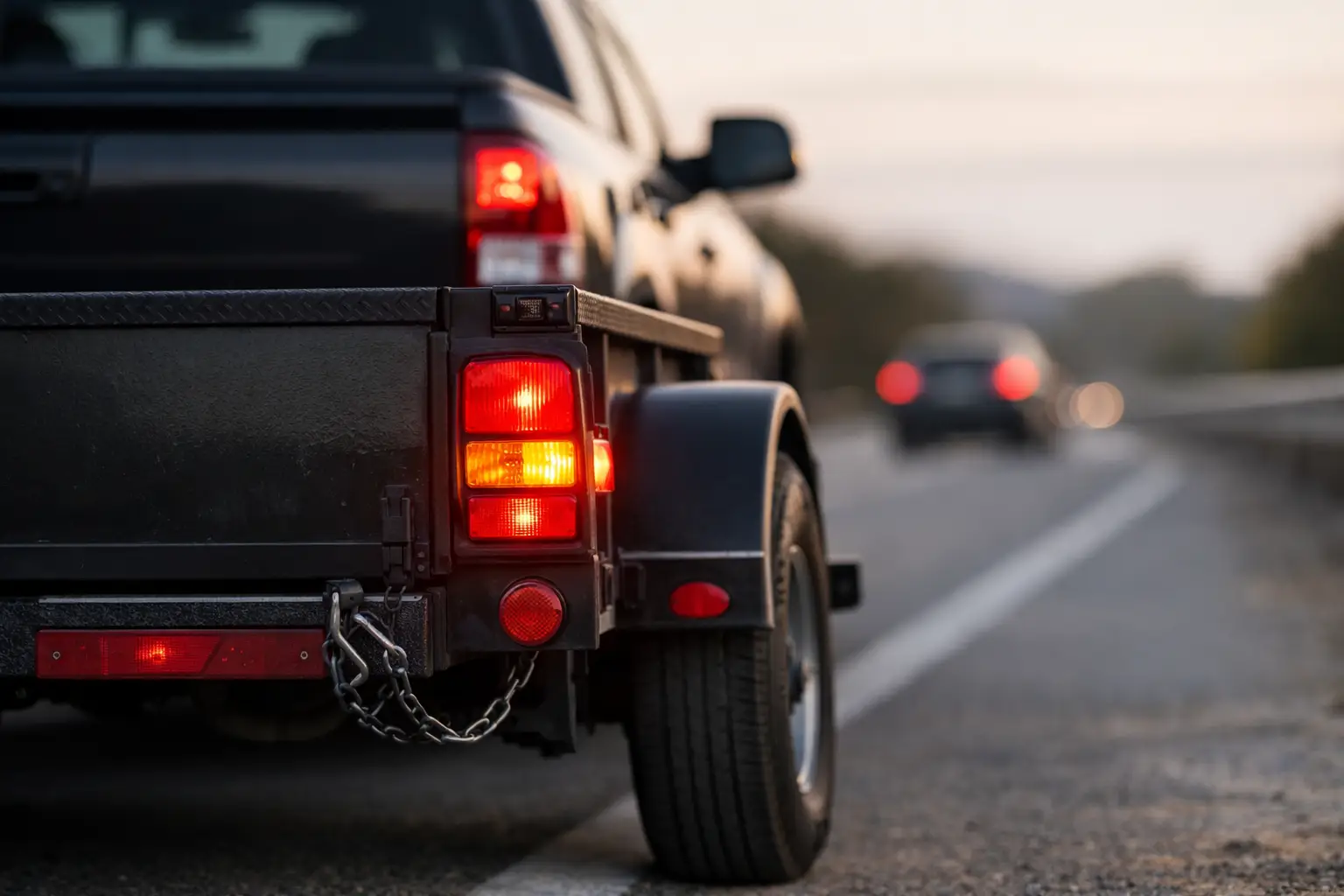
Brake lights are part of the trailer lighting system. They come on when your tow vehicle brakes. They warn the drivers behind you that you are slowing down.
Trailer brakes are mechanical or electric brakes built into the trailer axle system. Those actually help stop the trailer. Heavier trailers often need them by law, and they also make towing much safer.
So if your real question is, “Do I need trailer brake lights or trailer brakes?” the answer may be both, depending on the trailer and the load. Brake lights are a basic requirement. Trailer brakes depend more on weight, trailer type, and state rules.
Why trailer brake lights matter more than people think
A trailer changes how your vehicle looks and moves on the road. Drivers behind you may not be able to clearly see your truck or SUV brake lights once a trailer is attached, especially if the trailer is wide, tall, or loaded high.
That means the trailer has to communicate for itself. When you tap the brakes, the lights at the rear of the trailer need to light up right away. If they do not, the driver behind you may not realize you are slowing down until it is too late.
This matters even more at dawn, dusk, in rain, or on roads with curves and elevation changes. Around northern Arizona, those conditions are not unusual. A trailer with poor or dead lighting is harder to see, harder to predict, and a lot more likely to cause trouble.
What lights should a trailer have?
Most road-going trailers need more than just brake lights. In plain terms, your trailer lighting setup should usually include tail lights, brake lights, turn signals, and often side markers and reflectors. Larger trailers may need additional clearance lights.
The exact setup depends on size and width, but the basic point stays the same: the trailer must be visible and clearly show your intentions to other drivers. If the left turn signal does not work, or the brake lights are dim, that is not a small issue.
A lot of towing problems start with a simple plug connection or worn wiring. That is why it is smart to test every light before pulling out.
How to know if your trailer brake lights are working
The easiest method is to hook up the trailer, turn on the vehicle, and test each function before you leave. Have another person stand behind the trailer while you check running lights, left signal, right signal, and brake lights.
If you are by yourself, you can still test them with a reflective surface, a light tester, or a simple check pattern if your vehicle supports it. What matters is not guessing. A quick walk-around can save you a roadside stop or a bad accident.
If the lights do not work, the problem is often one of a few common issues. The trailer plug may be loose or dirty. The ground wire may be weak. A fuse may be blown. A bulb may be out, or the wiring may have been pinched or damaged. None of those should be ignored.
Common situations where people ask this question
People usually do not ask, “do I need trailer brake lights,” when everything is going smoothly. They ask when they are borrowing a trailer, fixing up an old one, or trying to tow something quickly.
An old utility trailer sitting behind a shed may still roll fine, but that does not mean it is ready for the road. Homemade trailers are another common example. Just because a trailer was built strong does not mean the lighting is legal or safe.
The same goes for short trips. A lot of folks think a few miles across town does not matter. It does. If you are on a public road, other drivers still need to know when you are stopping.
What if the tow vehicle lights are visible?
Sometimes drivers think they can skip trailer brake lights if the lights on the towing vehicle are still visible around the trailer. That is a risky assumption.
Even if part of the vehicle lights can still be seen, the trailer itself changes your footprint on the road. Other drivers judge distance and braking based on the rear-most part of what they are following. That rear-most point is the trailer, not your bumper.
So from a safety standpoint, and usually from a legal one too, the trailer should have working lights of its own.
Renting a trailer makes this easier
One reason people choose a rental instead of dragging out an older trailer is that road-ready equipment takes some of the guesswork out of the job. Good rental trailers should have lighting systems that are maintained, checked, and matched to real towing use.
That does not mean you skip your own pre-trip check. You still want to confirm the connector fits, the lights respond correctly, and your tow vehicle is set up properly. But starting with dependable equipment is a lot better than chasing electrical issues in your driveway the night before a move.
If you are renting locally for a car move, landscaping job, or cleanup haul, it helps to work with a place that actually answers questions and makes sure you leave with the right setup. That is part of the value. At Monsoon Trailer Rental, that straightforward approach matters because most customers just want equipment that works and a team that actually picks up the phone.
A few practical checks before you tow
Before any trip, make sure the trailer plug is fully connected, the wiring is not dragging, and every rear light works the way it should. Check the coupler, safety chains, tires, and load securement too. If your trailer has electric brakes, confirm the brake controller is working as well.
This does not have to be complicated. It just needs to be done every time. Towing gets a lot safer when you treat the little stuff like it matters.
So, do I need trailer brake lights?
Yes. If you are towing on public roads, you need working trailer brake lights. In real-world terms, there is not much gray area there. They help keep you legal, help other drivers react in time, and help protect your load, your vehicle, and everyone around you.
If you are ever unsure whether a trailer is properly equipped, do not guess and do not hope for the best. Ask before you haul, test the lights before you leave, and fix problems before they become expensive ones. A safe trailer setup is not about bells and whistles. It is about making sure the people behind you know exactly when you are stopping.