
A skid steer that barely fits is a problem before you even leave the yard. So is a mower with the wrong ramp angle, or a mini excavator that puts too much weight on the tongue. Picking the right flatbed trailer for equipment is less about grabbing whatever is available and more about matching the trailer to the job so the haul is safe, legal, and not a headache.
Around the Verde Valley, equipment hauling tends to be practical and time-sensitive. You might be moving a compact tractor to a property in Cornville, taking a scissor lift to a job in Cottonwood, or hauling a zero-turn mower across town for maintenance. In all of those cases, the right trailer matters because loading, balance, braking, and tie-down points all change depending on what you are moving.
What a flatbed trailer for equipment does well
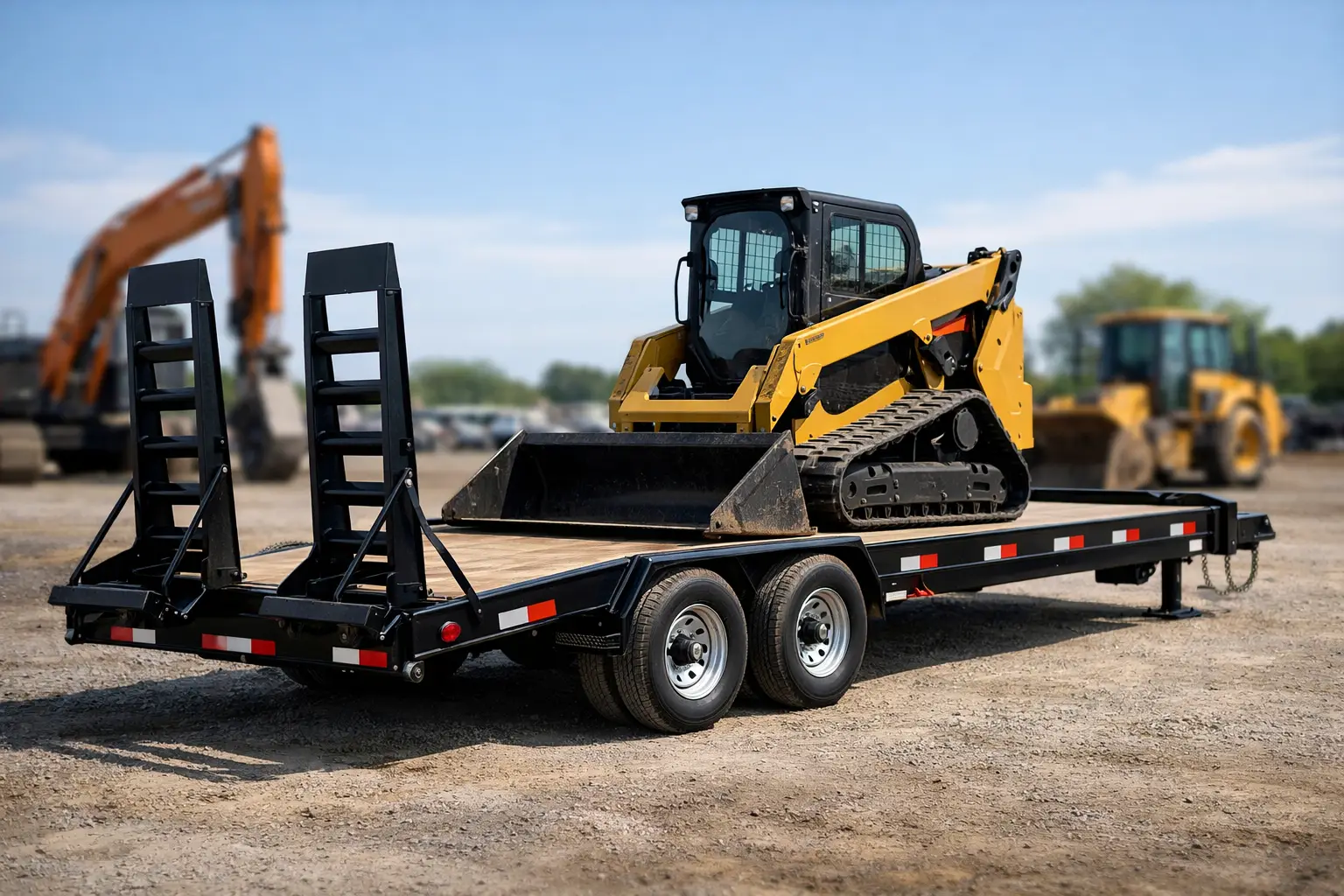
A flatbed trailer for equipment is built for cargo that is heavy, awkward, or easier to load from the rear with ramps. Unlike enclosed trailers, a flatbed gives you open deck space, better flexibility for machine dimensions, and simpler loading when you have buckets, attachments, or wider tires to deal with.
That open design is a real advantage for equipment rentals, landscaping tools, construction machines, and farm or property maintenance gear. You can see your load, access tie-down points more easily, and work with equipment that does not fit cleanly inside walls or under a low roof. For many local jobs, that simplicity saves time.
The trade-off is exposure. Your equipment is out in the weather, and your securement has to be done right because there is nothing enclosing the load. A flatbed is practical, but it asks for more attention from the driver.
Size is not just about whether it fits
The first thing most renters look at is deck length. That makes sense, but length alone can fool you. A trailer can be long enough and still be wrong if the axle rating, deck width, or ramp setup does not match the machine.
A compact tractor with an attachment may need more usable deck than the tractor itself. A small excavator may fit by length, but its weight concentration can create loading and balance issues. A side-by-side or mower may seem easy to haul, but if the deck sits too high or the ramps are too steep, loading gets risky fast.
That is why the better question is not, “Will it fit?” It is, “Will it fit with proper weight distribution and room to secure it?”
You want enough deck space to position the machine so the tongue weight stays in a safe range. You also need room for buckets, implements, or spare materials if they are riding on the trailer too. Tight loading jobs usually create tie-down problems later.
Pay attention to GVWR and payload
This is where people get into trouble. Trailer size and trailer capacity are not the same thing. A larger deck does not automatically mean the trailer can carry more weight.
GVWR is the maximum total weight the trailer is designed to handle, including the trailer itself and the load. Payload is what you can actually put on it after subtracting the trailer’s empty weight. If your equipment weighs 5,500 pounds and the trailer only allows 4,800 pounds of payload, you are overloaded even if the machine physically fits.
For equipment hauling, this number matters more than almost anything else. Overloading affects brakes, tires, bearings, and handling. It also puts you on the wrong side of safety if you have to stop quickly or make a tight correction on the road.
The deck, ramps, and axle setup matter more than people think
Not all equipment trailers load the same way. Some jobs are easy on a low deck with full-width ramps. Others work better with stand-up ramps or a deck design that gives you better approach angles for machines with low ground clearance.
If you are hauling a scissor lift, trencher, or mower, loading angle can make a big difference. A machine that bottoms out on the ramp transition can become a problem in a hurry. For heavier gear, axle placement and trailer stability matter just as much, especially if the machine’s center of gravity is not where you expect it.
A tandem-axle trailer is common for equipment because it spreads the load better and generally tracks more steadily than a single axle under heavier weight. But even then, the trailer still has to be matched to the machine. A light-duty tandem is not the same as a heavier-rated equipment hauler.
Brakes and towing setup are part of the trailer decision
People often focus on the trailer and forget the tow vehicle. The trailer has to work with the truck or SUV that is pulling it. That means hitch rating, brake controller, towing capacity, and the right ball size all need to line up.
If the trailer has electric brakes, your vehicle needs to be equipped to use them properly. If your tow vehicle is already near its towing limit, adding a heavier equipment trailer can push things into unsafe territory. The trailer decision is never separate from the tow vehicle decision.
For first-time renters, this is one place where a local rental team helps. It is easier to ask a few simple questions up front than show up with the wrong hitch or a vehicle that is not set up for the load.
Choosing the right flatbed trailer for equipment by job type
The best trailer depends on what you are hauling and how often you do it. A homeowner moving a compact machine for a weekend project does not need the same setup as a contractor moving equipment every few days.
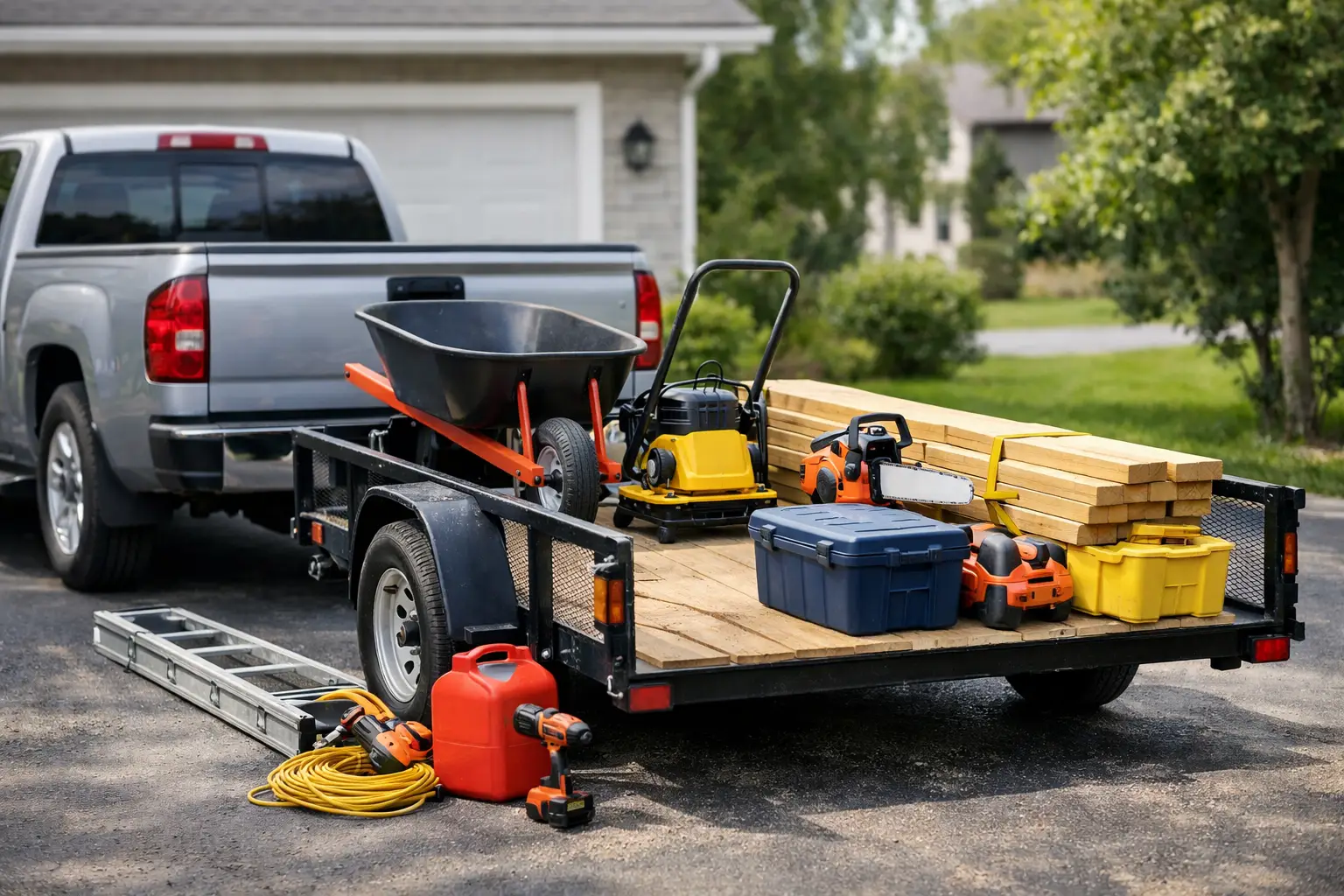
For smaller property jobs, a flatbed may be ideal for zero-turn mowers, compact tractors, small attachments, and general utility equipment. These loads usually benefit from easier ramp loading and enough deck space to secure the machine without crowding it.
For construction and trade work, the focus shifts toward payload, braking, and durability. Mini excavators, skid steers, and heavier compact equipment need a trailer that is rated for the actual machine weight, not a rough guess. Add a bucket, fuel, or an attachment, and the total goes up fast.
For vehicle-adjacent hauling, it depends on what is being moved. Some jobs call for a dedicated car hauler. Others fit better on a flatbed trailer if the load is equipment rather than a standard vehicle. The key is not forcing one trailer type to cover a job it was not meant to do.
Tie-down points and load security are not extras
A trailer is only as useful as its securement setup. Strong tie-down points, usable rail access, and enough space around the load all matter. If the machine is loaded so tightly that you cannot secure it correctly, the trailer is not really a fit.
Different equipment also needs different securement methods. Wheeled machines, tracked machines, and attachments each behave differently in transit. The trailer should make it easy to anchor the load where it needs to be anchored, not force awkward strap angles or weak connection points.
This is another reason open-deck flatbeds are popular. They give you better access. But that only helps if the trailer was designed with real hauling in mind.
Renting makes sense when the job is occasional or variable
Owning a trailer sounds good until you factor in storage, maintenance, tire replacement, registration, and the fact that one trailer rarely fits every job. A lot of people only need equipment hauling a few times a year. Others need different trailer capacities depending on the project.
That is where renting is the practical move. You can match the trailer to the machine instead of buying one trailer and hoping it covers everything. You also avoid paying year-round for something that spends most of its time parked.
For local customers, that flexibility matters. A dependable rental company like Monsoon Trailer Rental can help match the trailer to the load without turning the process into a hassle. That means less guessing, fewer wasted trips, and a better chance of getting the job done on schedule.
Questions worth asking before you book
Before renting, know the weight of the equipment, including attachments. Know the outside width, overall length, and whether the machine has any loading quirks like low clearance or uneven weight distribution. Also confirm your tow vehicle’s rating and whether you have the correct hitch and brake controller.
It also helps to think through the route. If you are hauling through tighter roads, uneven jobsite access, or hilly stretches, trailer stability and braking matter even more. A trailer that seems fine on paper may feel very different once it is loaded and moving.
If you are not sure, ask. A good rental provider should be able to talk through the equipment, the tow vehicle, and the job without making it complicated.
The right trailer does not need to be fancy. It needs to fit the machine, work with the tow vehicle, and let you load and secure everything without second-guessing the haul. That is what makes the day go smoother from the first ramp approach to the last unload.