
If you have ever come down a long grade with a loaded trailer pushing behind you, you already know how to choose trailer brakes is not some small detail. The right brake setup affects stopping distance, control, tire wear, and how confident you feel every mile of the trip. The wrong setup can leave you fighting sway, overheating components, or paying for more brake than your trailer actually needs.
For most people, the best choice comes down to four things: trailer weight, what you are hauling, how often you tow, and what your tow vehicle can support. That sounds simple, but there are a few trade-offs that matter, especially if your hauling changes from one job to the next.
How to choose trailer brakes for real-world hauling
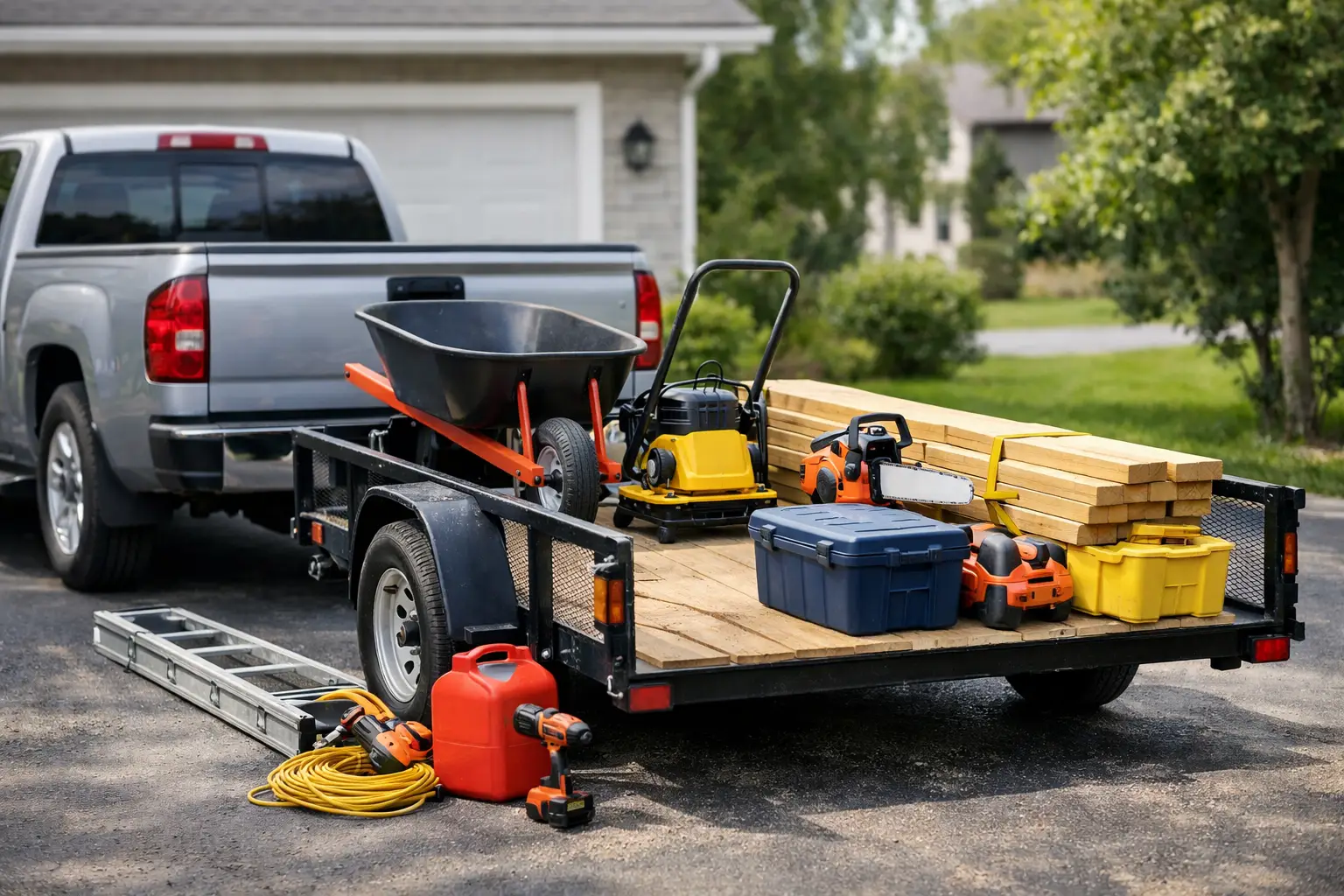
Start with the trailer’s gross vehicle weight rating, not just what it weighs empty in the driveway. A light utility trailer used for the occasional furniture run is one thing. A car hauler carrying a vehicle, a landscaping trailer loaded with equipment, or a trailer full of building material is another.
As weight goes up, the margin for error gets smaller. You need trailer brakes that can help the tow vehicle stop smoothly without relying only on the truck or SUV brakes. Even if your state requirements set a minimum threshold for when brakes are required, smart brake selection should be based on safety and control, not just the legal minimum.
If you regularly tow in hilly areas, that matters too. Around places with steep grades and winding roads, brakes do more than shorten stopping distance. They help keep the trailer settled and predictable. A setup that feels fine on flat roads can feel underbuilt when you hit a downhill stretch with a load behind you.
The main trailer brake types
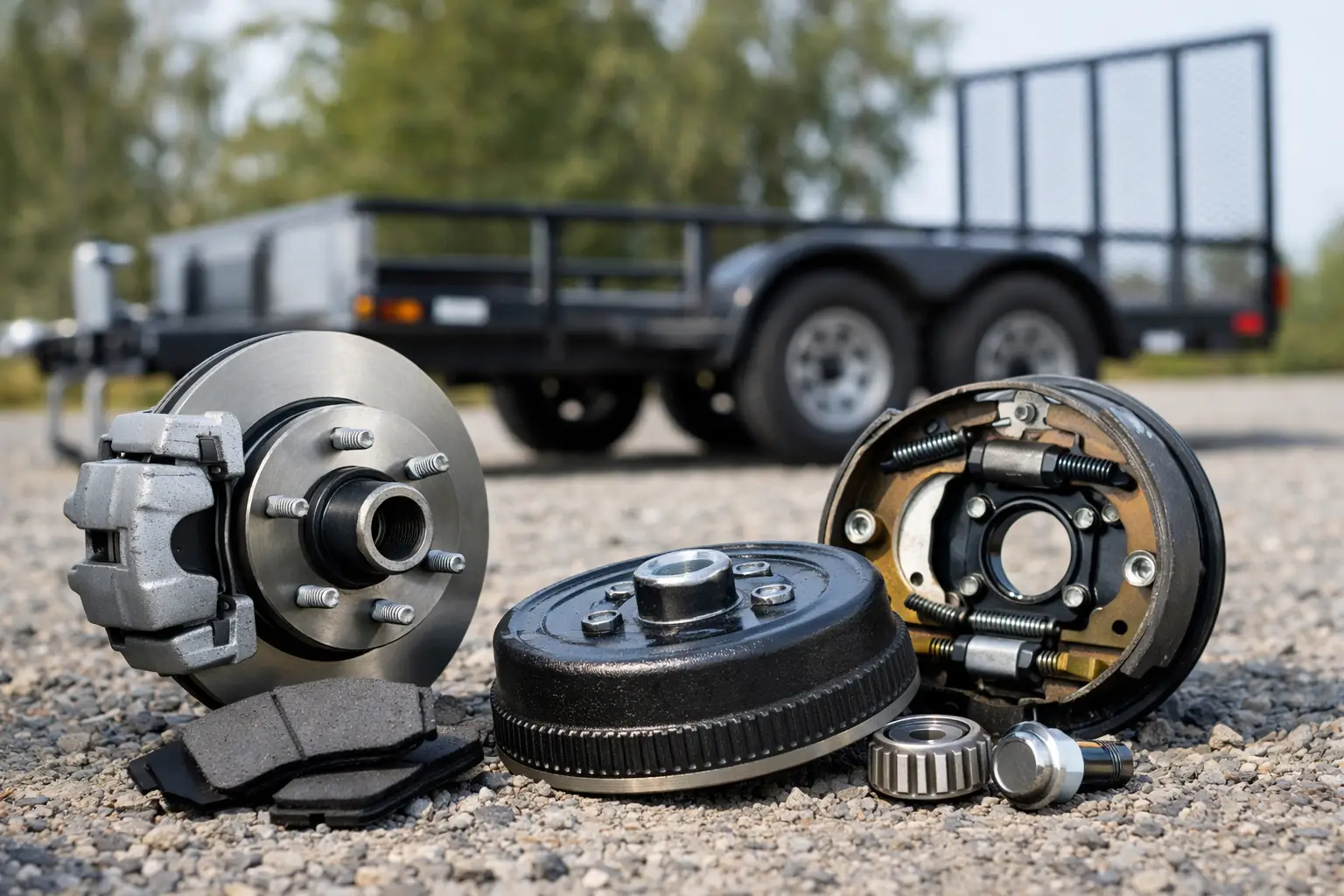
Most renters and trailer owners will run into two common options: electric brakes and surge brakes. A third option, electric-over-hydraulic, is usually more relevant for heavier or more specialized trailers.
Electric trailer brakes
Electric brakes are common because they give the driver more control. They work through a brake controller installed in the tow vehicle, which sends power to the trailer brakes when you slow down. Most controllers also let you adjust braking force based on load and road conditions.
That adjustability is the big advantage. If you are towing an empty trailer in the morning and a loaded one in the afternoon, you can fine-tune how aggressively the trailer brakes come on. Electric brakes also let you manually apply trailer braking through the controller, which can help if the trailer starts to sway.
The trade-off is that your tow vehicle needs the right wiring and a compatible brake controller. If your vehicle is not set up for it, that adds cost and a little complexity.
Surge trailer brakes
Surge brakes are hydraulic and activate when the trailer pushes forward against the hitch during deceleration. They do not need an in-cab brake controller, which makes them appealing for some drivers and some tow vehicles.
They are often seen on boat trailers, but they show up elsewhere too. The appeal is simplicity. Hook up the trailer and go, without worrying about a controller setting.
The downside is less direct control. You cannot adjust them from the cab the way you can with electric brakes, and they can be less ideal in stop-and-go situations or backing scenarios unless the system includes the proper lockout. For some users, they are perfectly fine. For others, especially those hauling heavier loads often, electric brakes are the better fit.
Electric-over-hydraulic brakes
This setup combines an electric brake controller with hydraulic braking at the trailer. It can deliver strong, smooth braking performance, but it is usually more system than the average homeowner or occasional renter needs.
If you are hauling heavier loads on a regular basis and want stronger performance with a hydraulic feel, it may be worth considering. If your hauling is occasional and practical, it may be more brake system than the job calls for.
Match the brakes to the trailer’s actual job
This is where people often overcomplicate things. Think less about buying the fanciest brake system and more about the work the trailer actually does.
A light utility trailer used for dump runs, furniture pickups, and yard debris may only need a straightforward brake setup on one axle, depending on weight and local requirements. A car hauler is a different story. Vehicles add real weight quickly, and balanced braking matters a lot more when you are transporting something valuable and heavy.
If you haul equipment for landscaping or contracting work, think about your heaviest normal day, not your lightest one. A trailer that usually carries a mower, compact equipment, or material pallets needs brakes sized for that routine use. Choosing based on an empty trailer leads to disappointment once the load is on.
You should also think about frequency. If you tow once or twice a year, simplicity may matter more than fine-tuning. If you tow every week, the ability to adjust braking response from the driver’s seat becomes more valuable.
Axles, brake coverage, and stopping balance
One of the biggest questions is whether the trailer needs brakes on one axle or both. The answer depends on total trailer weight, axle count, and intended use.
For lighter trailers, brakes on a single axle may be enough. For heavier tandem-axle trailers, brakes on both axles often make more sense. That gives you better stopping balance and reduces the chance that one axle is doing too much of the work.
This is not just about raw stopping power. Balanced braking helps with control. It can reduce pushing, improve straight-line stopping, and lower wear on tires and suspension parts. If a trailer is set up to carry substantial loads, full axle coverage is usually the safer long-term call.
Don’t forget the tow vehicle
The trailer brake system has to work with the vehicle pulling it. That means checking your tow rating, wiring harness, brake controller compatibility, and connector type.
A half-ton pickup with a factory tow package is usually ready for a wider range of trailer brake setups than a midsize SUV with minimal towing equipment. Some vehicles have integrated brake controllers. Others will need an aftermarket unit. Either way, the system should be set up correctly before the trailer ever hits the road.
This is one reason rentals can be easier than ownership for some people. If you only need a trailer now and then, it helps to work with a local rental team that can tell you what brake setup the trailer uses and what your vehicle needs before pickup. That avoids guessing in the parking lot.
How to choose trailer brakes without overspending
More expensive is not always better. Better means appropriate for the trailer, the load, and the way you tow.
If you choose too little brake, you get poor stopping and extra strain on the tow vehicle. If you choose too much system for a basic hauling job, you may spend money on features you will rarely use. The smart move is to buy or rent for your real workload.
Look at maintenance too. Electric brakes are common and practical, but they do need inspection for magnets, wiring, and wear items. Hydraulic systems have their own maintenance points. The cheapest system up front is not always the lowest-cost option over time if it is harder to service or less suited to how you use the trailer.
A few signs you may need a different brake setup
If the trailer feels like it is pushing the tow vehicle through stops, if braking feels uneven, or if you cannot get smooth control with the load you normally carry, your current setup may not be right. The same goes for frequent brake overheating, unusual tire wear, or poor confidence on downhill grades.
Good trailer brakes should feel controlled and predictable. You should not be white-knuckling every stoplight or hoping your truck brakes can do all the work.
The simplest way to make the right call
If you want the shortest version of how to choose trailer brakes, here it is: size the brakes for the trailer’s loaded weight, match them to your tow vehicle, and choose the level of control that fits how often and where you tow.
For occasional local hauling, a simple and properly matched setup is usually enough. For heavier loads, frequent towing, or routes with hills and longer grades, more braking control is worth it. Most people are not looking for the most advanced brake system on the market. They are looking for one that works every time, without drama.
If you are unsure, ask questions before you hook up. A good rental yard or trailer provider should be able to walk you through brake type, vehicle compatibility, and what makes sense for your job. Around the Verde Valley, where a short trip can turn into a climb or descent pretty quickly, that kind of practical guidance goes a long way.
The best trailer brake choice is the one that lets you haul your load, make your stops, and get home without second-guessing the setup.