
That first mile tells you a lot. If the trailer feels unsettled, the straps look loose, or your tow vehicle is working harder than expected, something needs attention before you get too far. A good car hauler rental safety guide starts there – not after a problem shows up on the road.
Renting a car hauler is a smart move when you need to transport a vehicle without owning specialized equipment. It can also go wrong fast if the basics get skipped. Most towing problems come from a few preventable issues: the wrong tow vehicle, poor loading, weak securement, or driving like there is no extra weight behind you. If you handle those parts right, the job gets much safer and a whole lot less stressful.
Before you rent, make sure your setup actually fits
The safest trailer in the world will not help if the tow vehicle is undersized. Start with your vehicle’s tow rating and payload capacity, then compare that against the loaded trailer weight, not just the empty trailer weight. A car hauler plus the vehicle you’re moving adds up quickly, especially with trucks, older cars, or anything carrying tools or spare parts inside.
You also need the right hitch, the correct ball size, and a wiring connection that matches the trailer. If any of those pieces are questionable, stop there and sort them out first. Guessing with towing equipment is how couplers pop loose, lights fail, and small issues become dangerous ones.
Trailer brakes matter too. Many car haulers use electric brakes, which means your tow vehicle may need a brake controller. If your vehicle does not have one and the trailer requires it, that is not a detail to work around. It is a hard stop until the setup is correct.
Car hauler rental safety guide: the inspection that matters
When you pick up a rental trailer, do not treat the walkaround like paperwork with tires. Take a few minutes and really look it over. Check tire condition and tire pressure first. A trailer tire that looks fine at a glance can still be underinflated, and heat on Arizona roads is not forgiving.
Look at the coupler, safety chains, breakaway cable, ramps, fenders, deck, and lights. Make sure the jack works properly and stows securely. Check that the ratchets, straps, or chains provided for the vehicle are in solid condition with no cuts, bent hooks, or damaged hardware.
Then connect everything and test it. Brake lights, turn signals, running lights, and trailer brakes should all work before you leave. If something is off in the lot, it will not improve out on the highway.
For first-time renters, this is where working with a local rental company helps. A straightforward handoff and a team that actually picks up the phone can save you from learning hard lessons in a gas station parking lot.
Loading is where most mistakes start
A car hauler needs balanced weight. Too much weight to the rear invites sway. Too much weight on the tongue can overload the rear of the tow vehicle and hurt steering and braking. In plain terms, the vehicle being hauled needs to sit in the right spot on the trailer, not just somewhere it fits.
Drive or winch the vehicle on slowly and keep it centered. If the car is low, watch your approach angle so you do not scrape the front bumper or undercarriage. Once it is on the deck, check the tongue weight visually. The trailer and tow vehicle should sit level or close to it. If the rear of the tow vehicle is sagging badly or the trailer looks tail-heavy, adjust before securing anything.
Some vehicles load better facing forward. Others may need special consideration because of weight distribution, ground clearance, or drivetrain concerns. That is one of those it-depends situations. The safe answer is to follow the vehicle manufacturer’s transport guidance when available and the trailer provider’s instructions for securement and placement.
Secure the vehicle like you expect a panic stop
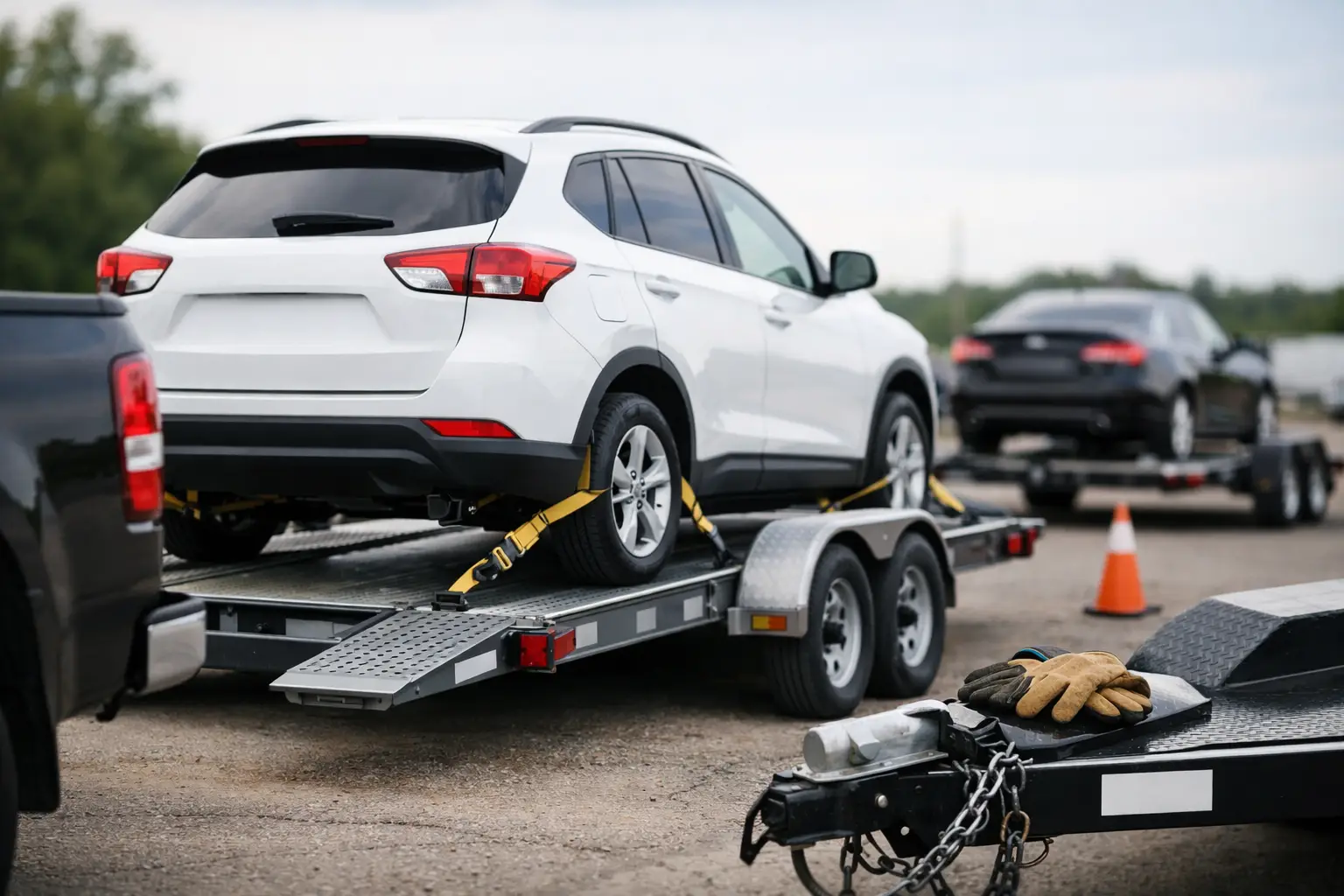
If the vehicle shifts, everything else gets worse. Use the proper tie-down points, not random suspension parts or anything that looks strong enough. Ratchet straps or chains should be rated for the load and placed in a way that keeps the vehicle from rolling forward, backward, or sideways.
After tightening, look at the strap angle. Straight-down tension is not enough by itself. You want the securement to resist movement in multiple directions. If you are using wheel straps, make sure they sit correctly on the tires and are not rubbing sharp edges. If you are using axle straps or chains, be careful around brake lines, wiring, and body panels.
Now do the part people skip: recheck everything after the first few miles. Straps settle. Tires flex. A load that looked perfect at pickup can loosen slightly once it is moving. Pull over in a safe spot and inspect the coupler, chains, lights, and all tie-downs.
Driving with a car hauler is different, even if you tow a lot
A loaded car hauler does not forgive rushed driving. Acceleration will be slower, braking distances will be longer, and lane changes need more room than usual. Leave extra following distance and make your moves earlier than you think you need to.
Speed is one of the biggest troublemakers with trailers. The faster you go, the less time you have to react and the more unstable a bad load can become. Even if road conditions seem fine, towing safely usually means driving below the speed you would normally choose without a trailer.
Take turns wide enough to protect the trailer tires and fenders from curbs. On downhills, use lower gears when appropriate so you are not riding the brakes. In crosswinds, keep both hands on the wheel and resist the urge to make sudden corrections. Small, steady inputs work better.
If the trailer starts to sway, do not accelerate and do not jerk the wheel. Let off the gas, keep the steering straight, and brake carefully as needed. Then stop when it is safe and figure out why the sway started. Usually it comes back to loading, securement, tire issues, or speed.
Braking, backing, and parking take more planning
Braking with a trailer is less about force and more about timing. Start sooner and press smoothly. Hard late braking can unsettle both the trailer and the vehicle on it, especially if the load is not balanced as well as it should be.
Backing up is where confidence gets expensive. If you are not used to backing a trailer, take your time and use a spotter when you can. Small steering corrections are better than big ones. If it starts going wrong, pull forward and reset instead of trying to save a bad angle.
When parking, choose level ground whenever possible. Set the tow vehicle’s parking brake, chock the trailer wheels if needed, and think through how you will unload before you shut everything down. A rushed unload at the end of a long day is when people miss one strap, one pin, or one slope they should have noticed.
What to watch for on longer trips
Short local moves and longer hauls share the same basics, but longer trips raise the stakes. Heat builds in tires and hubs. Straps can loosen over time. Traffic conditions change, and fatigue affects judgment.
Plan regular stops to inspect the setup. Put your hand near the wheel hubs to check for unusual heat, look for tire wear, and verify all tie-downs are still tight. Make those checks normal, not something you only do when the trailer feels odd.
If you are towing through the Verde Valley or heading in and out of hill country, grades and curves add another layer. Give yourself more room, use lower speeds, and avoid letting downhill momentum build. The trailer may be rated for the job, but that does not mean every road should be handled the same way.
Common mistakes that are easy to avoid
A lot of towing trouble starts with people being in a hurry. They assume the vehicle weight is close enough, skip checking tire pressure, or use worn straps because the trip is only a few miles. Short trips are not safer by default. Plenty of damage happens close to home.
Another common mistake is loading extra gear into the hauled vehicle without thinking about the total weight. Tools, parts, and cargo all count. So does fuel. The difference between barely within limits and over the line is sometimes smaller than people think.
Then there is the habit of trusting experience a little too much. If you tow utility trailers all the time, a car hauler still deserves its own checklist. Vehicle transport has different balance points and securement needs. Familiarity helps, but it should not replace inspection.
A few final checks before you head out
Before pulling onto the road, ask yourself four plain questions. Is the tow vehicle rated for the load? Is the trailer coupled and wired correctly? Is the hauled vehicle centered and secured properly? Are you ready to drive like you are towing, not commuting?
If any answer feels uncertain, fix it first. That is cheaper than replacing a bumper, a fender, a trailer tire, or someone else’s vehicle.
A safe haul usually looks boring from the outside, and that is exactly the point. Take your time, check the basics, and let the trailer do the job it was built to do.