

You usually figure out the difference between local rental versus national chains when something goes sideways. Maybe the trailer size online was not what you expected. Maybe pickup took longer than it should have. Maybe you had one question and ended up talking to three departments and nobody could give you a straight answer. When you need hauling equipment, the real test is not the logo on the building. It is whether you get the right trailer, at a fair rate, from people who actually help.
For folks hauling a car, moving materials, cleaning up a property, or handling a jobsite run, that difference matters. A trailer rental is not a luxury purchase. It is a tool. If the tool is wrong, delayed, overpriced, or poorly maintained, your whole day gets more expensive.
Local rental versus national chains for real hauling jobs
On paper, national chains can look convenient. They have name recognition, bigger advertising budgets, and lots of locations. If all you need is a quick reservation and the equipment is exactly what you expected, that can work fine.
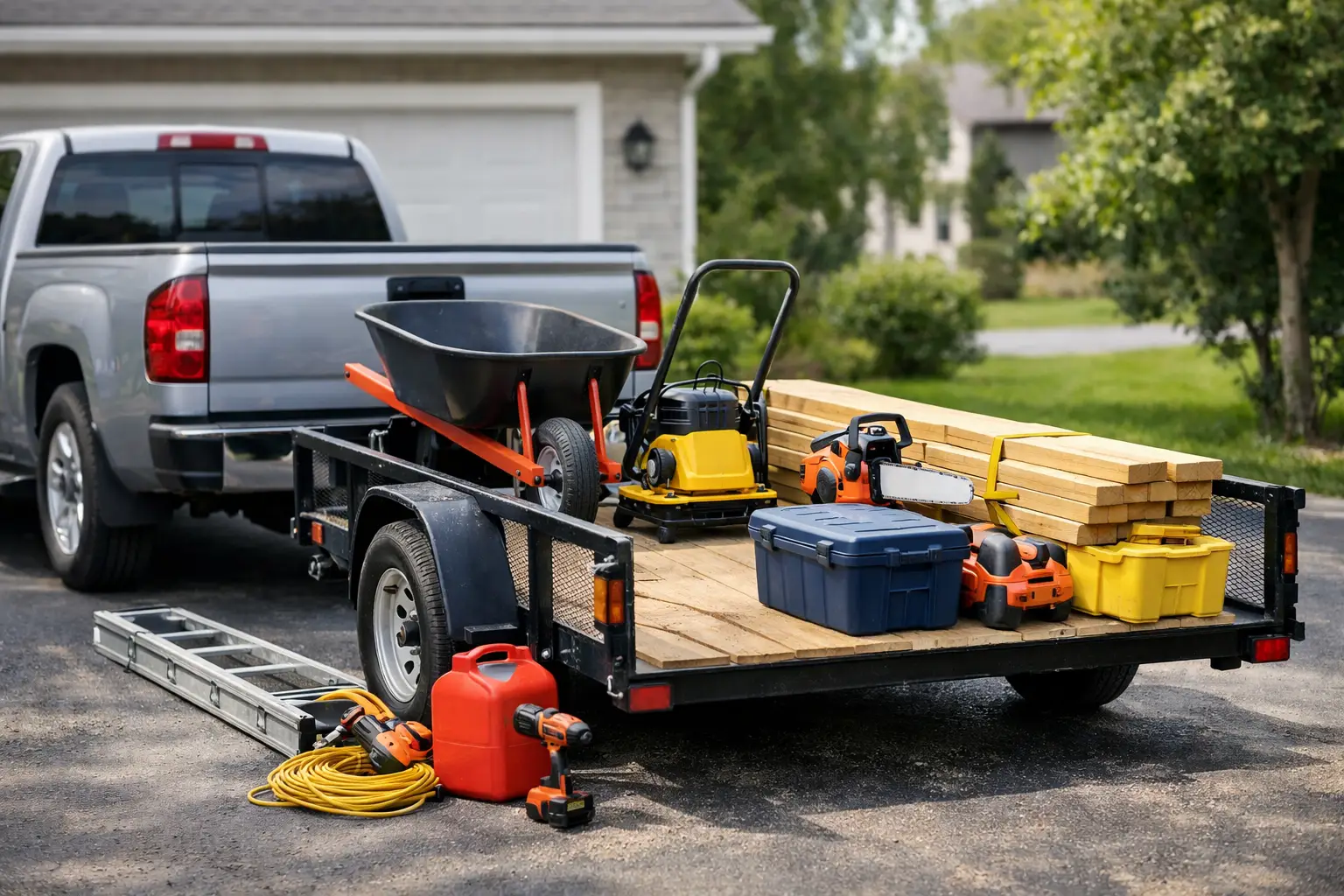
But hauling jobs are rarely that simple. People do not rent trailers because they are bored on a Saturday. They rent because they have lumber to move, a vehicle to transport, landscaping debris to dump, or equipment to haul across town. In those situations, details matter. Tongue weight matters. Deck size matters. Tie-down points matter. Pickup timing matters.
That is where local rental businesses often have the edge. A local provider is usually closer to the day-to-day reality of what customers are hauling and what roads, loads, and job conditions look like in the area. Instead of giving you a generic booking flow, they can help match the trailer to the actual job.
That does not mean every local company is automatically better, and it does not mean every national chain is a bad option. It means the better choice depends on what you value most – and how much support you want before you pull out of the lot.
Price is not always as simple as the first number
A lot of renters start with price, and that makes sense. If you are comparing local rental versus national chains, the advertised daily rate is probably the first thing you notice.
The problem is that the first number is not always the real number. Large chains sometimes lead with an attractive base price, then add fees, mileage rules, timing restrictions, or equipment add-ons that change the final total. That does not make them dishonest by default, but it does mean you need to read the details before assuming you found the best deal.
Local rental businesses often compete by keeping pricing more straightforward. If the operation is built around repeat customers, word of mouth, and people who live nearby, there is a strong reason to be clear about rates. Nobody wants to feel soaked by high rates on a simple hauling job.
That said, national chains can sometimes beat local pricing on a very short, basic rental, especially if they are running a promotion. On the other hand, if your job needs flexibility, specific equipment, or actual guidance, the cheaper headline rate can stop looking cheap pretty fast.
Service matters more when the rental is specialized
There is a big difference between renting a generic item and renting something that has to fit a load safely. Trailers are not one-size-fits-all. A homeowner hauling brush has different needs than a contractor moving a skid steer attachment. Someone transporting a car needs different equipment than someone taking yard waste to the dump.
A national chain may have volume, but volume can make service feel scripted. You might get a person who knows the system well but does not know much about your actual job. If your questions fall outside the usual checklist, the answers can get thin in a hurry.
A local rental business is more likely to talk through the job with you in plain language. That matters if you are a first-time renter, or if you have done this plenty of times but need to confirm a detail before you commit. Being able to call and reach a team that actually picks up the phone is not a small thing. It can save you from renting the wrong trailer, showing up unprepared, or losing half a day fixing a preventable problem.
Equipment fit and condition can make or break the day
When people compare rental companies, they often focus on availability. That is important, but fit matters just as much. The right trailer should match the weight, size, and type of cargo you are hauling. If it does not, you are either paying for more than you need or risking a load that is awkward, inefficient, or unsafe.
National chains may carry broader inventory across multiple categories, but that can cut both ways. Broader inventory does not always mean more attention to the specific trailer you are renting. In some cases, trailer rentals are only one part of a much larger operation.
A local trailer-focused business tends to live or die on whether the equipment is dependable and ready to work. Customers notice tire condition, lights, ramps, couplers, and tie-down points. They also notice whether the trailer was clearly maintained instead of just turned around for the next reservation.
This is one area where asking a few direct questions helps. Ask what trailer is best for your load. Ask about payload. Ask what towing setup you need. Ask how pickup and return work. A good rental company should answer clearly, without talking around the question.
Convenience is not just about location count
National brands like to win on convenience, and sometimes they do. If you are moving between cities or need a broad network for drop-off options, a larger chain may fit the job better.
But for many local hauling needs, convenience has more to do with speed, communication, and common sense than with the number of locations on a map. If you are in the Verde Valley and need a trailer for a home project, cleanup job, or vehicle move, the most convenient option is often the place that can tell you exactly what is available, when you can get it, and what you need to bring.
That is one reason local companies tend to earn loyal customers. They can move faster when your plans change. They may be more flexible about helping you sort out timing. They usually know the typical use cases in the area because they handle them every week.
For someone in Clarkdale, Cottonwood, or nearby communities, dealing with a local provider can feel less like processing a transaction and more like getting the job lined up correctly the first time.
When a national chain may still be the better choice
A fair comparison means saying this plainly: sometimes a national chain is the right call.
If you need a rental tied to a larger relocation, if your route crosses multiple regions, or if your company already uses a national account system, a chain may be easier to manage. The same goes for renters who are making a very simple equipment decision and care more about broad availability than personal service.
There is also the familiarity factor. Some customers like dealing with a brand they already know. That comfort has value, especially for people who do not rent often.
Still, that advantage fades if the process gets impersonal or the equipment does not match the job. Familiar branding does not pull a trailer any better.
How to decide without overthinking it
If you are choosing between local rental versus national chains, start with the job itself. Ask how specific your equipment needs are, how much guidance you want, and how costly a mistake would be. If renting the wrong trailer would only be annoying, either option may work. If renting the wrong trailer would wreck your schedule, damage your budget, or create a safety issue, service and fit should carry more weight.
Next, look beyond the advertised rate. Ask for the full cost. Ask what is included. Ask what happens if your timing changes. The right company should make those answers easy to get.
Then pay attention to responsiveness. A lot of rental decisions become obvious once you call. If one company gives you clear answers and the other makes you work for basic information, that tells you something before the rental even starts.
For trailer rentals especially, local businesses often win by being easier to reach, easier to work with, and more focused on the equipment itself. That is why many renters in this part of Arizona end up choosing a nearby company like Monsoon Trailer Rental when the job needs to get done without extra hassle.
The best rental choice is the one that helps you haul what you need, at a fair price, without turning a simple job into an all-day problem. If a company can do that and treat you like a person instead of a reservation number, that is usually the right place to start.