
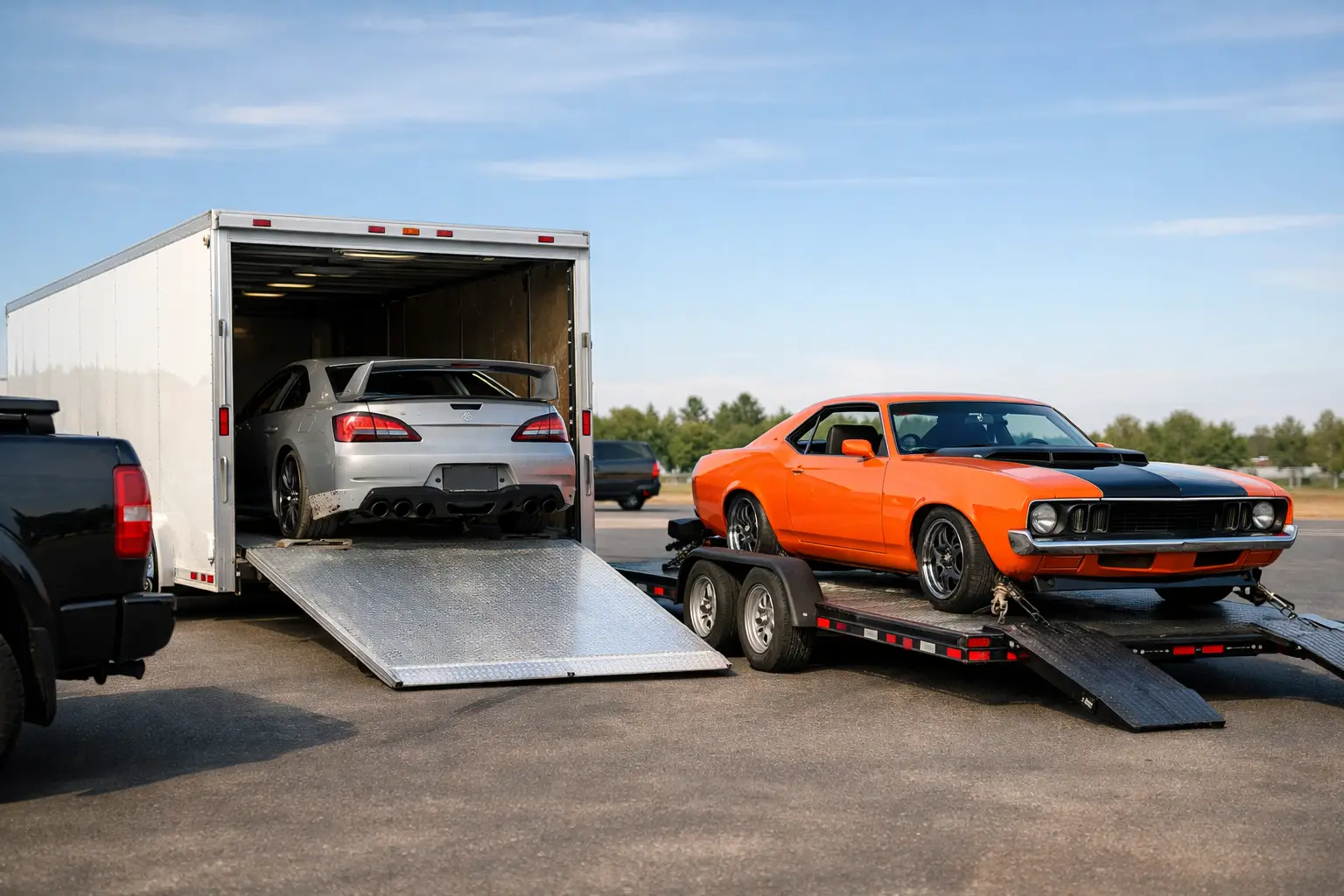
That “ran when parked” project car always sounds easy until it is time to move it. Flat tires, stuck brakes, missing keys, and unknown weight can turn a simple pickup into a long day fast. That is why car hauler rental for project cars makes sense for a lot of Arizona builders, flippers, and weekend wrenchers – you get the right equipment for the job without owning another trailer you have to store, maintain, and insure.
If you are buying a non-running Mustang, dragging a square-body home from a field, or taking a half-finished build to a body shop, the trailer matters just as much as the tow vehicle. The wrong setup can cost you time, money, and a lot of stress. The right one keeps the move simple.
Why car hauler rental for project cars is usually the smart move
Most project cars do not move under their own power when you need them to. Even if they do start, that does not mean they should be driven across town or down the highway. Old tires, weak brakes, bad wheel bearings, and electrical issues have a way of showing up at the worst possible time.
A rental car hauler gives you a controlled way to move the vehicle without gambling on parts you already know are questionable. It also gives you flexibility. Maybe you only need a trailer for one day to bring home a Craigslist find, or for a weekend to shuttle a car between your garage, paint shop, and storage unit. Renting fits that kind of work better than buying for most people.
There is also the cost side. Owning a trailer sounds good until you factor in registration, tires, lights, bearings, repairs, and the space it takes up. If you only haul a few times a year, renting is often the more practical choice.
What kind of project cars belong on a car hauler
A full car hauler is the right answer for more vehicles than people think. It is not just for total basket cases. It is often the best choice for unfinished builds, cars with low confidence in their roadworthiness, and anything valuable enough that you do not want to risk a breakdown during transport.
That includes non-running classics, drift projects, track cars, unfinished restorations, barn finds, and vehicles missing major components. It also includes cars with fresh paint, custom suspension, or new driveline work that has not been fully sorted out yet. If the car is unreliable, incomplete, or simply too important to risk, hauling it beats driving it.
There are some cases where a tow dolly can work, but project cars are full of exceptions. Rear-wheel drive versus front-wheel drive, locked transmissions, damaged suspension, and low ride height all change the equation. A full car hauler is usually the safer and simpler option.
How to choose the right trailer for the job
The first thing to check is weight. You need to know the approximate curb weight of the vehicle, then make sure the trailer and your tow vehicle can handle it together. A stripped-down compact project and a full-size vintage sedan are two very different loads.
Next, think about dimensions. Wheelbase, width, and ride height all matter. A car may technically fit by weight but still be a headache if it sits too low, has wide tires, or has bodywork that makes loading tricky. Approach angle matters more than a lot of first-time renters expect, especially with lowered cars or front air dams.
Then look at the condition of the car. Does it roll freely? Do the brakes drag? Is the steering locked? If the tires are dry-rotted or flat, loading may take extra care. If the car has no brakes, you will need to be even more deliberate about how it is winched or positioned.
This is where dealing with a local company helps. A team that actually picks up the phone can help you think through the real-world details before you show up on pickup day.
Make sure your tow vehicle is up to it
A good trailer cannot make up for the wrong tow vehicle. Before you book, check your vehicle’s tow rating, payload, hitch rating, brake controller setup if required, and connector type. Do not guess. The numbers matter.
A common mistake is focusing only on the vehicle weight and forgetting the trailer weight. Add them together, and make sure your setup can handle the total safely. You also want enough wheelbase and braking capability to stay comfortable on the road, not just barely legal.
If you are towing through the Verde Valley or heading in and out of hillier areas near Sedona or Jerome, that matters even more. Grades, curves, and heat put extra demand on both the tow vehicle and trailer. A setup that feels fine on flat ground can feel very different once the road gets steep.
Loading a project car without creating a bigger project
Loading day is where a lot of small mistakes become big ones. Start with level ground whenever possible. It is easier to align the car, manage ramps, and secure the load safely.
If the car runs, resist the urge to rush it up the trailer. Slow and steady is better. If it does not run, plan for how it will be winched or pushed into place. Make sure the path is clear, the tires will hold air long enough to load, and the steering can be controlled.
Watch low-clearance points closely. Project cars often sit lower than stock, and custom bumpers, splitters, and long headers do not like steep ramp angles. Sometimes the answer is as simple as taking extra time, adjusting the loading angle, or using the right approach method instead of forcing it.
Once the car is on, weight balance matters. Too far forward or too far back can make the trailer tow poorly. The load should sit where it gives proper tongue weight and stable tracking. If you are not sure, ask before you pull out.
Securing the car the right way
Straps and tie-down points are not the place to improvise. Project cars can have weak rusted areas, missing tow hooks, or suspension components that are not ideal tie-down spots. You want secure attachment points and a method that keeps the vehicle stable without damaging parts you are trying to save.
Check that the car is centered, the parking brake situation is understood, and the straps are tight and properly routed. Then stop after a short distance and check everything again. Straps can settle once the trailer starts moving.
It is also smart to think about loose parts. A project car may have spare panels, a hood that is not fully latched, or boxes of parts tossed inside. Those items need to be secured too. The trailer can only protect what is actually tied down.
Common mistakes people make with project car hauling
The biggest mistake is underestimating the condition of the car. People assume it rolls, steers, and loads like a normal vehicle, then find out one wheel is locked and the front tires are older than the internet.
Another common issue is choosing equipment based only on price. Saving a few bucks does not help if the trailer is not right for the car or your tow vehicle. Cheap gets expensive fast when loading takes twice as long or the trip feels sketchy the whole way home.
Timing is another problem. People line up the purchase but do not think through pickup access, daylight, weather, or what happens if the seller says, “It is behind the barn and the tires are flat.” Build extra time into the day.
Last, some renters skip the walkaround because they are in a hurry. Take the extra few minutes. Confirm lights, coupler, ramps, tires, and tie-down gear before you leave.
When local rental service makes the whole job easier
Project car hauling is rarely one-size-fits-all. One customer is moving a complete driver with a bad transmission. Another is hauling a shell with no interior, no glass, and questionable wheels. A local rental provider can help match the trailer to the actual job instead of treating every move the same.
That matters if you are trying to move a car across town, bring one home from a seller in the next community, or get a build to a shop without wasting half a day dealing with a giant chain. At Monsoon Trailer Rental, the goal is simple: dependable equipment, fair pricing, and service from people who know that hauling jobs do not always go exactly to plan.
Book for the move you actually have
The best trailer rental decisions start with honesty. Be clear about the car’s condition, your tow vehicle, and the route. If the brakes are stuck, say so. If the tires are dry-rotted, mention it. If the car is lowered or missing parts, that matters.
That kind of information helps you get the right setup the first time. It also saves you from showing up with a plan that only works on paper.
Project cars are supposed to be the challenge. Getting them home should not be. A good car hauler, the right tow setup, and a rental company that keeps things straightforward can make the transport part the easiest part of the build.