
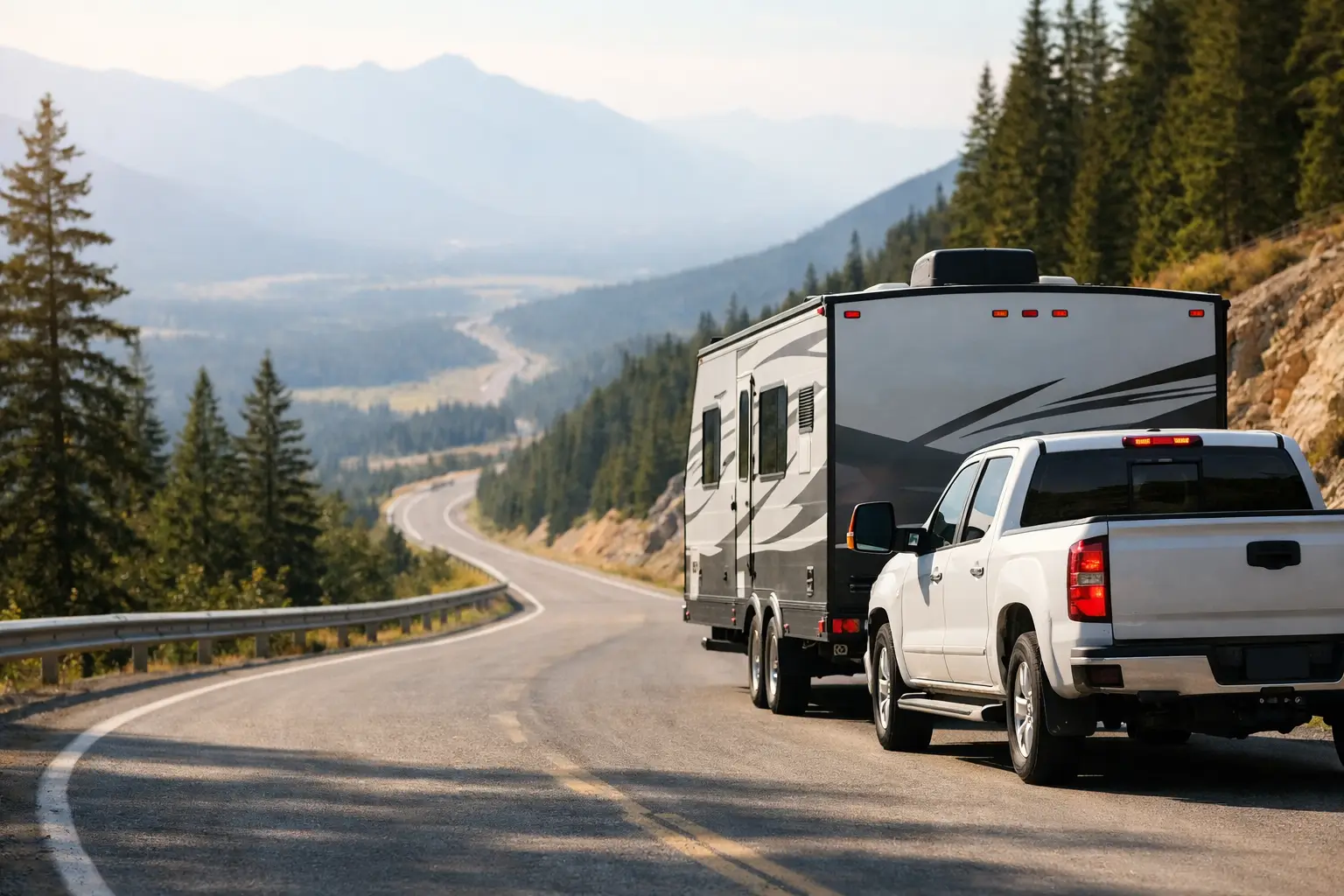
A downhill grade can turn a normal tow into a white-knuckle problem fast. If you want to know how to tow safely downhill, the big idea is simple: control your speed before the hill takes over, and never rely on your brakes alone to save the day.
That matters even more in Arizona, where short local trips can still put you on steep stretches, winding roads, or long descents that heat up brakes in a hurry. A loaded utility trailer, car hauler, or equipment trailer changes how your vehicle handles. Going down is often harder than going up.
How to tow safely downhill starts before the hill
Safe downhill towing begins before you move an inch. A lot of problems that show up on a grade actually started in the driveway, at the jobsite, or in the loading area.
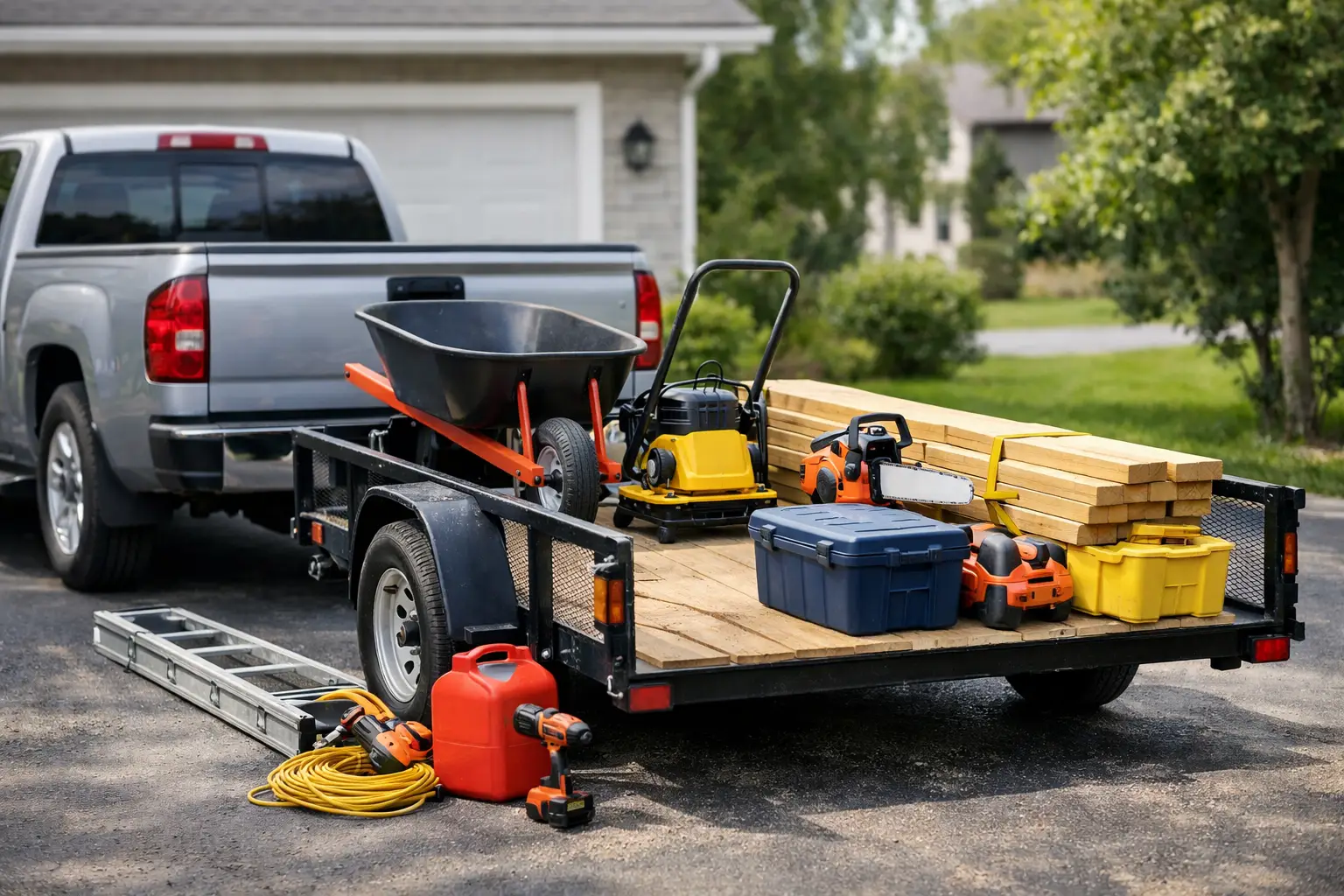
First, make sure the trailer is matched to the tow vehicle and the load. If the trailer is too heavy for the vehicle, no driving trick is going to fix that once gravity gets involved. Stay within your tow rating, hitch rating, and payload limits. If you are hauling equipment or a vehicle, confirm that the trailer itself is rated for that weight too.
Load balance matters just as much. Too little tongue weight can make the trailer sway. Too much can overload the rear of the tow vehicle and reduce steering control. The load should sit low, centered, and secured so it cannot shift forward on braking or roll to one side in a curve.
Before heading out, check tire pressure on both the tow vehicle and trailer. Underinflated tires build heat and can make handling sloppy. Also check the trailer coupler, safety chains, breakaway cable, lights, and trailer brake connection. If the trailer has electric brakes, make sure the brake controller is working correctly and adjusted for the load.
Pick your speed early, not halfway down
One of the most common towing mistakes on a grade is waiting too long to slow down. By the time the hill feels steep, the trailer is already pushing the tow vehicle, and the brakes are working harder than they should.
The better move is to reduce speed before the descent starts. That gives you room to settle the trailer, keep the rig straight, and avoid hard braking once you are committed to the hill. As a general rule, if a downhill road looks like it might require extra attention, it does.
This is where patience pays off. You are not trying to keep up with traffic at all costs. You are trying to keep the tow vehicle and trailer under control for the full descent. If that means going slower than the car behind you wants, so be it.
Use a lower gear and let the drivetrain help
If you are serious about how to tow safely downhill, this is one of the biggest habits to get right. Shift into a lower gear before you begin the descent and let engine braking do part of the work.
On many trucks and SUVs, tow/haul mode helps hold gears longer and reduces unnecessary shifting. Some vehicles also have manual gear selection or downhill assist features. Use them if your vehicle is equipped for it. The point is to keep the drivetrain engaged so your speed stays controlled without riding the brake pedal the whole way down.
A good rule of thumb is to descend in the same gear you would likely use to climb a similar grade. It is not a perfect rule in every situation, but it is a solid starting point. If the vehicle starts picking up speed too easily, you are probably in too high a gear.
Brake firmly, then release
A lot of drivers drag the brakes all the way down a hill because it feels smoother and less dramatic. The problem is heat. Continuous light braking can overheat the tow vehicle brakes and, in some cases, the trailer brakes too. Once brakes get too hot, stopping power drops off right when you need it most.
A better approach is controlled, deliberate braking. Slow the rig a few miles per hour below your target speed, then release the brakes and let the lower gear hold you back. If speed builds again, apply the brakes firmly enough to bring it back down, then release.
This method gives the brakes short working periods instead of constant heat buildup. It is not about stabbing the brakes or making sudden moves. It is about avoiding that long, lazy brake pedal pressure that cooks the system.
If you smell hot brakes, feel the pedal getting soft, or notice stopping power dropping, that is a warning sign. Find a safe place to pull over and let everything cool down. Pushing through is how a manageable problem becomes a dangerous one.
Trailer brakes need to be set right
If your trailer has electric brakes, the controller setting matters. Too little braking from the trailer means the tow vehicle does too much of the work. Too much trailer brake can make the trailer grab, jerk, or feel unstable, especially on loose surfaces.
That setting should be tested before the trip, not guessed at on a downhill grade. The right adjustment depends on trailer weight, load distribution, road conditions, and the tow vehicle. There is no magic number that fits every haul.
If the trailer feels like it is pushing the vehicle downhill, the gain may be too low. If the trailer brakes feel overly aggressive, especially at lower speeds, the gain may be too high. Small adjustments make a difference.
For first-time renters, this is one reason it helps to rent from a local outfit that takes setup seriously and answers the phone when you have a question. A few minutes of guidance up front can save a lot of stress on the road.
Leave more space than you think you need
Following distance matters all the time, but it matters a lot more on a descent with a trailer behind you. You need extra room because your rig is heavier, slower to stop, and more affected by brake heat.
Keep a bigger gap than you normally would, especially behind slow traffic, at intersections, or near curves where visibility is limited. If someone cuts in front of you, back off and rebuild the space. It is annoying, but it is safer than trying to prove a point with 5,000 pounds pushing from behind.
Watch farther down the road than usual. That helps you spot brake lights, tighter turns, rough pavement, or traffic backups early enough to respond smoothly.
Curves, switchbacks, and mountain roads change the equation
Not every downhill road is just a straight grade. Around places like Sedona or Jerome, you may run into tighter curves, narrower shoulders, and roads where speed control and lane position matter just as much as braking.
On winding descents, slow down before the curve, not during it. A trailer adds momentum and can tug the vehicle wider than expected if you enter too fast. Sudden braking in a curve can also unsettle the trailer, especially if the load is not balanced well.
Stay smooth on steering input. Quick corrections can start sway or make the trailer feel loose behind the vehicle. If sway begins, do not accelerate hard and do not jerk the wheel. Ease off the throttle, keep the wheel straight, and brake in a controlled way as conditions allow.
Weather and road surface can make a safe setup feel different
Dry pavement gives you more margin. Rain, gravel, dust, or rough road surfaces take some of it away.
On wet roads, brake earlier and more gently. On loose gravel, expect longer stopping distances and reduced traction, especially if the trailer is lightly loaded. If you are towing downhill on a rough or uneven surface, go slower than you think you need to. A bouncing trailer can lose composure quickly when weight shifts and tires skip.
This is one of those times when experience helps, but caution helps more. Even if you tow often, a new trailer, a different load, or changing road conditions can make the rig behave differently.
When to pull over and reset
There is no prize for making it down in one shot. If traffic pressure, brake heat, driver fatigue, or road conditions are stacking up against you, pull over where it is safe and regroup.
Take a minute to check the load, feel for unusual heat near the wheels and hubs without touching anything dangerously hot, and give yourself a break if you are tense. Towing downhill demands attention. If you are tired or rattled, that is worth addressing.
The smartest towing drivers are usually not the bold ones. They are the ones who know when to slow down, when to stop, and when to make a small adjustment before it becomes a bigger problem.
A good downhill tow should feel controlled, not rushed. Set the trailer up right, pick your speed early, use lower gears, and treat your brakes like a backup to your planning, not the whole plan. That approach is less dramatic, and that is exactly the point.