
A car that will not start usually picks the worst possible moment to quit – in a driveway, at a job site, or halfway through a move when you already have enough on your plate. If you are figuring out how to transport a non running car, the good news is that it is very doable. The catch is that the method matters. The right setup keeps the vehicle, the tow rig, and everyone on the road a lot safer.
How to transport a non running car without making it harder
The first thing to decide is whether the vehicle can roll, steer, and brake. That tells you what kind of equipment and loading approach will work. A non-running car with inflated tires and free-rolling wheels is one job. A car with locked brakes, flat tires, or front-end damage is a different one.
For most people, the safest option is a full car hauler trailer. It keeps all four wheels off the road, gives you a more stable load, and removes a lot of the trouble that comes with tow dollies or makeshift solutions. If the vehicle has major damage or cannot roll at all, you may also need a winch, skates, or professional recovery help just to get it onto the trailer.
Trying to cut corners usually costs more time than it saves. A borrowed strap, the wrong ball size, weak tie-downs, or a tow vehicle that is not rated for the load can turn a manageable job into a long day.
Pick the right trailer for the condition of the car
A full trailer is usually the best answer when people ask how to transport a non running car. It supports the full weight of the vehicle and gives you proper tie-down points. That matters even more if you are moving an SUV, pickup, or anything with questionable tires.
A tow dolly can work in limited situations, but it depends on the drivetrain and the condition of the vehicle. Front-wheel-drive vehicles are sometimes moved this way, but all-wheel-drive and four-wheel-drive vehicles often should not be. If the car will not steer straight or the rear tires are damaged, a dolly can create more problems than it solves.
You also need to match the trailer to the tow vehicle. Check the towing capacity, hitch class, brake controller if required, trailer plug connection, and gross combined weight. People often focus on whether the trailer can hold the car and forget to ask whether the truck or SUV can control the whole load once it is moving downhill or stopping at an intersection.
If you are renting equipment locally, this is where a good rental company helps. You want someone who will ask what you are hauling, what you are towing with, and whether the car rolls, not just hand you keys and send you down the road.
Before loading, make sure the car is actually movable
A non-running car still needs a basic check before it goes anywhere. Start with the tires. If one is shredded or completely flat, loading gets harder fast. A tire that barely holds air may survive rolling up ramps, but it may not stay in place once the car is secured. Sometimes airing up the tires is enough. Sometimes the vehicle needs tire skates or extra help.
Next, check whether the steering works. If the wheel is locked and cannot be unlocked, the car may not track correctly up the ramps. If the brakes are stuck, the vehicle may not roll at all. Also look underneath for leaking fluids. A little seepage is one thing. A major fuel or transmission leak is another, especially in Arizona heat.
If the car has been sitting for a while, inspect for rodent damage, broken suspension parts, or missing wheels. That sounds obvious, but abandoned project cars and long-parked vehicles tend to come with surprises.
Loading a non-running car onto a trailer
Loading is where most of the risk is. Take your time. Set the trailer on firm, level ground. Chock the trailer wheels if needed, connect it properly to the tow vehicle, and make sure the ramps are secure before the car starts moving.
If the vehicle rolls freely, you may be able to push it onto the trailer with help or pull it with a winch. A winch is the cleaner option because it gives you more control. Keep the pull straight, go slow, and have one person guiding from a safe spot. Do not let anyone stand behind the car or between the car and the tow vehicle.
If the car does not roll, loading becomes more specialized. Skates, come-alongs, or recovery equipment may be required. At that point, it may make sense to get help rather than force it. Bent suspension parts and locked wheels can shift suddenly, and that is not the time to improvise.
Once the car is on the trailer, place the weight correctly. Too far forward and you overload the tongue. Too far back and the trailer can sway. A balanced load is what makes the whole trip feel steady instead of white-knuckle.
Secure it like it matters, because it does
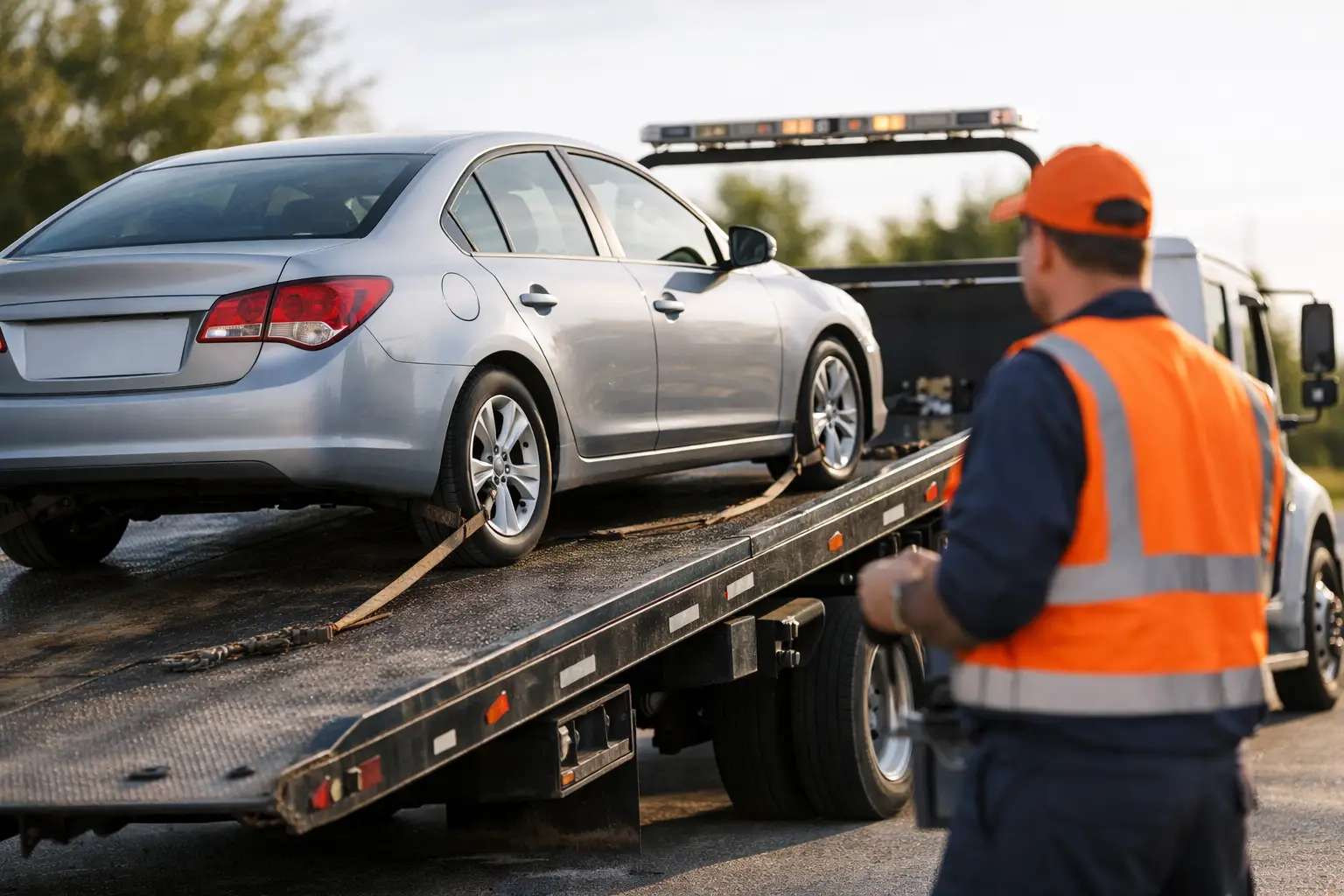
A non-running car needs to be tied down at four points with equipment rated for the weight. Use proper wheel straps or axle straps with ratchets and secure anchor points. Do not rely on a couple of hardware-store straps and hope for the best.
The goal is to keep the vehicle from shifting forward, backward, or side to side. After tightening everything down, check that the straps are not rubbing on sharp metal, brake lines, or body panels that can cut them. If the car has loose parts, damaged bumpers, or an open hood or trunk, secure those too.
Then stop and recheck the setup after the first few miles. Straps can settle once the load starts moving. A quick pull-over early in the trip is a lot better than discovering a loose tie-down later.
Road planning matters more than people think
Transporting a dead vehicle is not just about getting it on the trailer. The route matters. Sharp grades, rough back roads, and tight parking lot turns can make an easy haul a difficult one.
If you are hauling through the Verde Valley, think about where you are loading and unloading, not just the distance. A steep driveway in Jerome or a narrow pullout near Sedona can change what equipment works best. Sometimes the smart move is meeting on flatter ground, loading there, and finishing the trip with fewer headaches.
Give yourself more stopping distance than usual. Take corners slower. Watch for trailer sway, especially if crosswinds pick up or the car is not balanced right. If something feels off, stop and inspect it. Trust that instinct.
Common mistakes when transporting a non-running car
The biggest mistake is using the wrong towing vehicle. Even if a truck can technically pull the weight, that does not mean it will handle the trailer well in traffic, on grades, or during sudden stops.
Another common mistake is underestimating the condition of the disabled car. People assume a non-runner just needs a trailer, then discover one wheel is locked, the steering is frozen, or the tires are too far gone to load safely.
Poor tie-downs are another issue. So is rushing. Most bad loading situations happen because somebody is trying to get the job done in ten minutes instead of doing it carefully.
When renting a car hauler makes the most sense
If you already have a capable tow vehicle, renting a car hauler is often the most practical middle ground. You get the right equipment for a one-time job without paying for full transport service or buying a trailer you may rarely use.
That can be a smart option for moving a project car home, taking a disabled vehicle to a shop, or hauling a car after a breakdown. It is especially useful when you want control over timing and do not want to wait around for a transporter.
A local outfit like Monsoon Trailer Rental can also make the process easier because you are dealing with people who understand the roads, the grades, and the kind of hauling jobs people actually do around here. That matters when you need straight answers and equipment that is ready to work.
Know when to call for extra help
Sometimes the right answer is not doing it yourself. If the car is badly wrecked, stuck in soft ground, missing wheels, or impossible to access with a trailer, recovery service or a full-service transporter may be the safer call.
There is no prize for turning a difficult recovery into a bigger problem. If loading looks sketchy, visibility is poor, or the vehicle condition keeps changing the plan, stepping back is the practical move.
Moving a disabled vehicle is mostly about matching the method to the condition of the car. Take the time to size up the job honestly, use the right trailer, and secure everything like you expect a hard stop or rough patch of road. When the setup is right, the whole job gets a lot simpler – and that is what you want when the car is already giving you enough trouble.