
A refrigerator that tips in transit can turn a simple haul into a busted door, a damaged cooling line, or a ruined floor in your trailer. If you are figuring out how to secure appliances in trailer setups for a move, remodel, or delivery, the goal is simple: keep the load upright, tight, and unable to shift when you brake, turn, or hit rough pavement.
Why appliance loads go bad so fast
Appliances look solid, but they are awkward more than they are sturdy. A washer is heavy in the base and can rock if it is not planted well. A fridge is tall, top-heavy, and easy to tip. Dryers and ranges can slide if they are sitting on smooth metal or wood without enough friction underneath them.
The mistake most people make is assuming weight alone keeps things in place. It does not. One hard stop or one quick turn is enough to move several hundred pounds if it is not strapped correctly. That is why securing appliances is less about brute force and more about controlling movement from every side.
How to secure appliances in trailer the right way
Start by matching the trailer to the job. A utility trailer can work for many appliance moves, but you need enough floor space to keep the appliance upright and enough tie-down points to strap it without odd angles. If the trailer is too small, you will end up forcing the load into a bad position. If it is too big, you may leave too much room for movement unless you block and strap carefully.
Before loading anything, inspect the appliance itself. Tape or secure doors, drawers, cords, and loose parts. Remove shelves, glass trays, and bins if they can bounce around inside. On a washing machine, lock the drum if the manufacturer requires transport bolts. On a refrigerator, tape the doors shut and protect handles that can get bent.
Then inspect the trailer. Look at the deck, side rails, and tie-down points. You want solid anchor points rated for cargo restraint, not random spots that only seem convenient. If the floor is slick, put down a rubber mat or other non-slip layer under the appliance. That extra grip helps more than people think.
Keep appliances upright whenever possible
Most major appliances should ride upright. That is especially true for refrigerators, freezers, and some air-conditioning equipment because compressor oil can move into places it should not be if the unit is laid down. Even if the appliance survives the trip, it may need to stand upright for hours before it can be safely powered on.
There are times when laying an appliance down seems easier, especially if you are working with limited height or trying to load solo. Usually, that shortcut creates more risk than it saves. If you absolutely must transport a unit on its side, check the manufacturer’s guidance first and know what recovery time it needs before use.
For most local hauling jobs, upright is the safe play. It protects the appliance better and makes strapping more predictable.
Loading matters as much as strapping
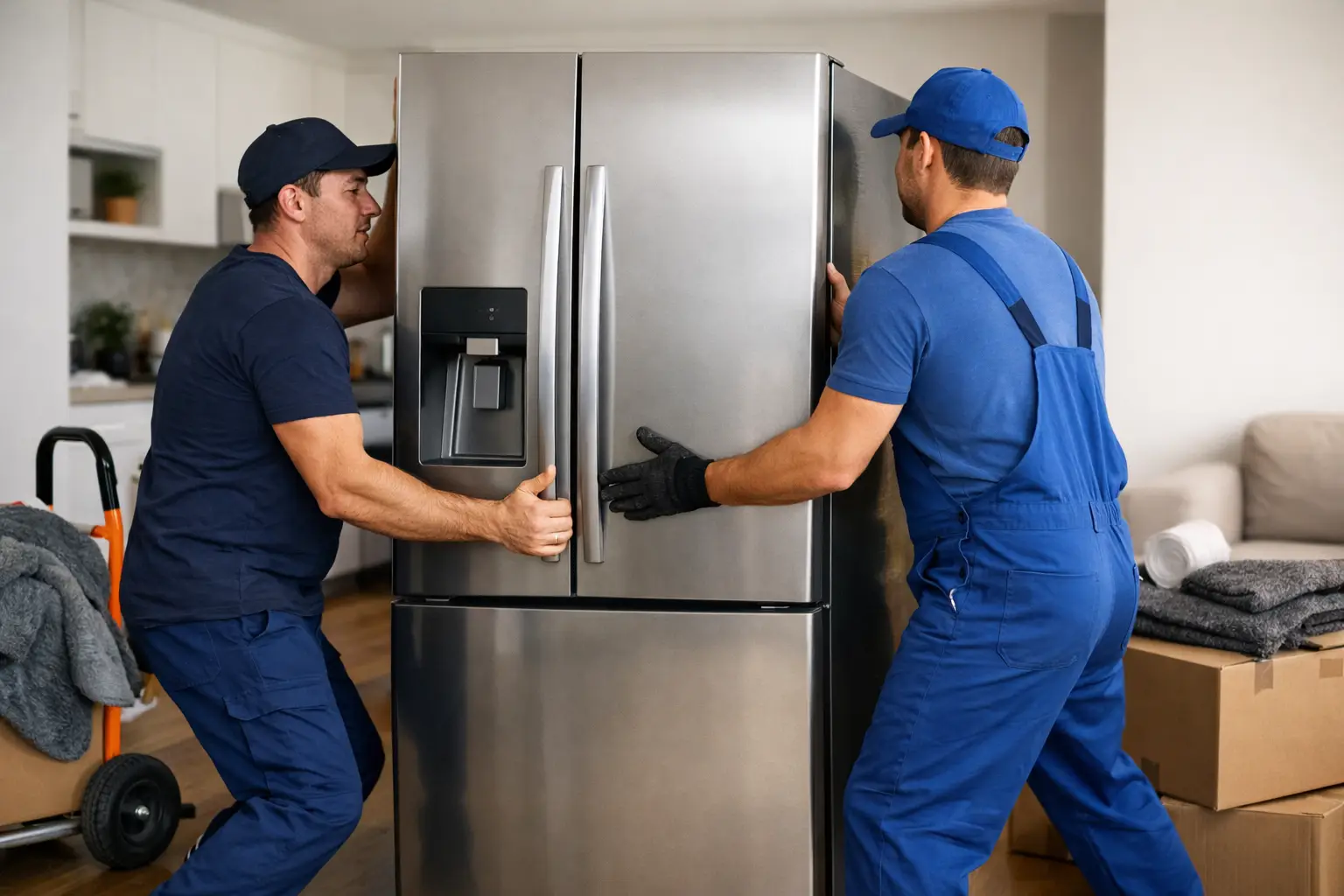
Use a dolly, ramp, and a second set of hands if you can. The loading phase is where a lot of damage happens. One bad angle on a ramp can dent a side panel or shift the center of gravity enough to drop the appliance before it ever reaches the trailer.
Place the heaviest appliance over or slightly forward of the trailer axle when possible, while still keeping proper tongue weight on the tow vehicle. You do not want all the weight hanging at the tail of the trailer. Poor weight distribution can create sway, and sway makes every tiedown work harder.
Set the appliance on the flattest, most stable part of the deck. If you are hauling more than one item, do not cram them tightly side by side without padding. A little space with moving blankets in between is better than metal corners rubbing together for 20 miles.
The best way to strap appliances down
Ratchet straps are the usual answer, but only if they are in good shape and used correctly. Frayed straps, bent hooks, or bargain-bin hardware are not worth trusting with a fridge or washer. Use straps rated well above the weight of the load, and use more than one.
For a single appliance, two straps is often the minimum. One should control side-to-side movement, and another should control forward-and-back movement. With taller appliances, a third strap can help keep the upper section from walking or leaning. The goal is to keep the appliance from shifting in any direction, not just keep it from falling over.
Run straps to solid anchor points at opposing angles whenever possible. Straight up-and-down strapping does less to stop side movement. Crossing straps can help on some loads, but only if the anchor points allow a clean angle and the strap is not rubbing on sharp corners.
Do not overtighten to the point that you crush panels, bend trim, or damage doors. This is where padding matters. Put moving blankets, cardboard corners, or edge protectors anywhere the strap contacts a finished surface. Tight enough to hold, padded enough to protect.
Blocking and bracing make the straps work better
Straps do the holding, but blocking and bracing reduce the amount of force the straps have to fight. Wheel chocks are common for equipment, but the same idea applies to appliances. If you can brace the base with wood blocks or position the item snugly against a front rail or bulkhead without damaging it, that helps stop sliding before it starts.
This is especially useful on rough roads or longer trips across the Verde Valley where pavement conditions can change fast. A washer sitting on a rubber mat with wood blocks at the base and two well-placed straps will usually ride better than the same washer with straps alone.
Just make sure any blocking is secure and not likely to kick loose. Loose lumber in a trailer becomes its own problem.
Common mistakes when securing appliances in a trailer
The biggest mistake is relying on rope instead of proper straps. Rope can work in some hauling situations, but for appliances it is harder to tension consistently and easier to loosen on the road. Another mistake is tying only around handles or doors. Those parts are not built to take restraint force.
People also forget to recheck the load after the first few miles. Straps can settle as the appliance shifts into place. A quick stop to retighten can make the rest of the haul much safer.
The other common issue is rushing the last part of the job. Unloading can be just as risky as loading, especially after a long drive when people are tired and ready to be done. Keep the appliance strapped until you are ready to control it on the ramp or dolly.
It depends on the appliance
A refrigerator usually needs the most care because of height, weight, and cooling components. Keep it upright, protect the corners, tape the doors, and use enough strap angle to stop tipping.
A washing machine is compact but dense. Make sure the drum is secured if required, and pay attention to the base so it cannot rock. Dryers are lighter, but that can make them more likely to bounce or slide if you get lazy with tiedowns.
Ranges and ovens need door protection and careful strapping to avoid bending trim or cracking glass. Dishwashers are easier to move in some ways, but they can still shift if the base is not planted well.
So when people ask how to secure appliances in trailer hauling, the honest answer is that the method stays the same, but the weak points change with each unit.
When the trailer choice makes the job easier
A good trailer does not replace proper securement, but it definitely helps. Strong tie-down points, a stable deck, and the right size trailer can make appliance hauling a lot less stressful. If you are renting for a one-time move or a home project, it is worth getting a trailer that fits the load instead of trying to make the wrong setup work.
That is one reason local renters around Cottonwood, Clarkdale, and nearby areas often ask a few questions before booking. It saves time, and it helps avoid the kind of hauling problems that only show up once the appliance is already halfway up the ramp. Monsoon Trailer Rental works with people doing real-world jobs, so the right trailer for the load matters more than fancy talk.
A few minutes up front can save the appliance
Most appliance damage happens because the load was almost secure, not fully secure. The strap was close. The trailer was close. The appliance was mostly upright. That is where expensive mistakes happen.
Take the extra few minutes to pad edges, check strap angles, balance the weight, and stop once early in the trip to recheck tension. If the appliance cannot slide, lean, bounce, or tip, you are in good shape. When you haul that way, the trip feels a whole lot shorter.