
A dirt bike ride can start before the engine ever fires. If your trailer is too small, poorly balanced, or a pain to load, you are already dealing with problems in the driveway. The best trailer for dirt bikes is the one that fits your bikes, your tow vehicle, and the way you actually ride – without paying for more trailer than you need.
For a quick run from the Verde Valley to a trailhead, a simple open utility trailer may be all it takes. For multiple bikes, longer highway miles, or gear that needs protection from dust and weather, a larger or enclosed setup can make more sense. Here is how to choose without guessing.
Start With How Many Bikes You Haul
The number of bikes matters, but so does the room around them. A trailer that technically holds two dirt bikes can still be frustrating if the handlebars overlap, the ramp is narrow, or there is no place for fuel cans and riding gear.
For one bike, a small open utility trailer is usually the practical choice. It is light, easy to maneuver, and often easy for smaller SUVs, pickups, and properly rated vehicles to tow. Look for enough deck length that the bike sits straight with the front wheel secured against a rail, chock, or sturdy tie-down point.
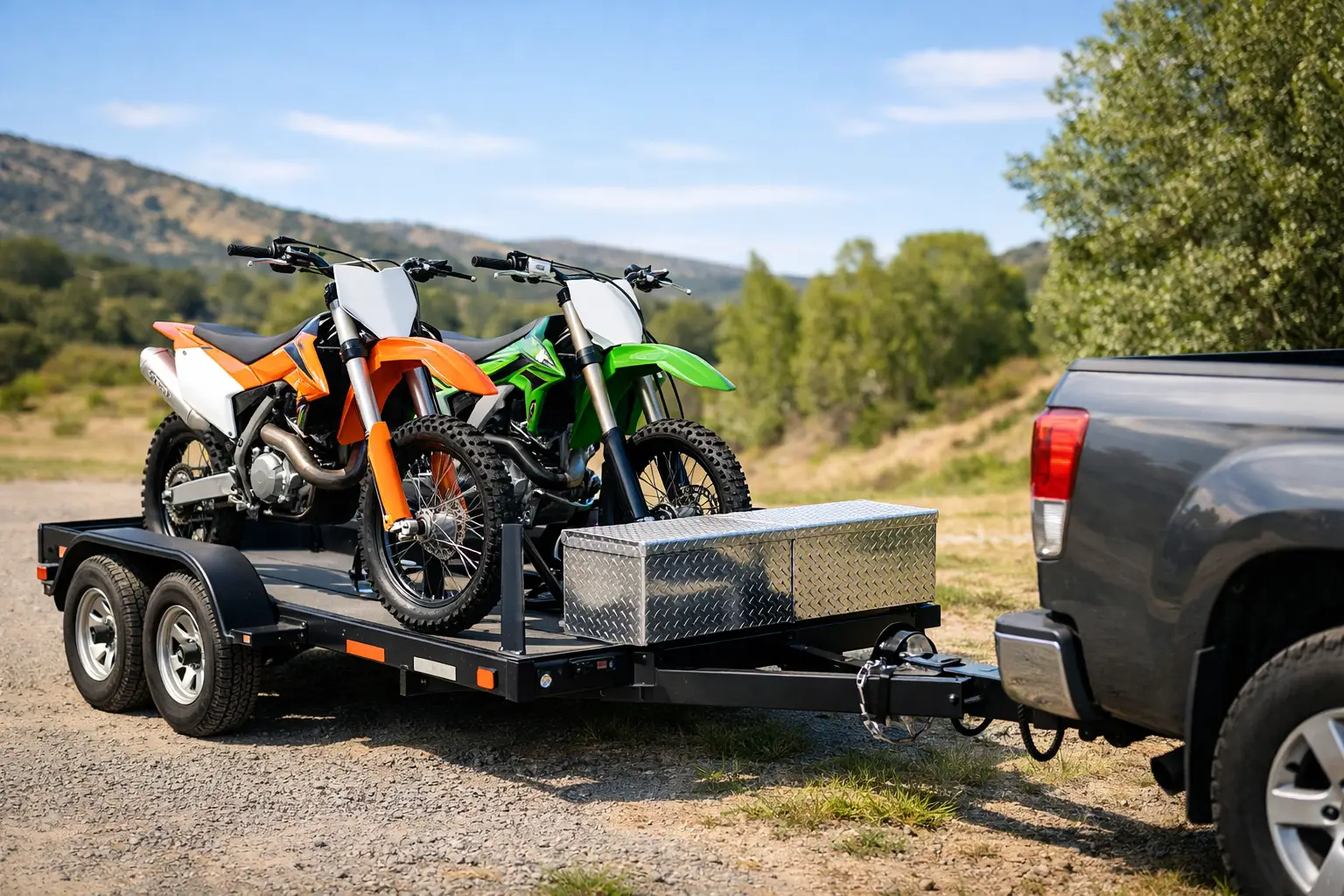
For two bikes, extra width becomes more valuable. You need room to stagger the bikes or place them side by side without handlebars, levers, and plastics fighting for space. A trailer around 6 feet wide gives you more breathing room than a narrow motorcycle-specific setup, especially if you bring a cooler, tool bag, riding stands, or spare fuel.
Three or more bikes usually call for a wider utility trailer, a longer deck, or an enclosed trailer. Do not just line bikes up by eye. Think about loading order, tie-down angles, and whether you can walk around the bikes to secure them properly. A crowded trailer makes every stop slower and raises the odds of scuffed equipment or loose straps.
Open Utility Trailer or Enclosed Trailer?
Most riders do not need an enclosed trailer every time they haul. An open utility trailer is often the best value for dirt bikes because it is straightforward, lighter, and quick to load. You can see every strap, check every bike at a fuel stop, and wash out the mud when you get home.
An open trailer also makes sense when your trip is short and the forecast is decent. In northern Arizona, though, weather can change fast. Wind, rain, and monsoon-season mud are real considerations. Your bikes can handle getting dirty, but helmets, boots, tools, and camping gear may not fare as well.
An enclosed trailer earns its keep when you make longer trips, haul expensive gear, or want to leave bikes loaded overnight. It provides security and keeps equipment out of the weather. It also gives you a place to carry riding gear without filling the cab of your truck.
The trade-off is weight and size. An enclosed trailer catches more wind, is harder to see around, and requires more attention when backing into a driveway or parking area. If you only haul one or two bikes a few times a year, an open trailer is usually the simpler answer.
The Best Trailer for Dirt Bikes Needs a Good Ramp
Loading is where a trailer either helps or causes trouble. A properly sized ramp should be wide enough to walk beside the bike or guide it safely as you load. It should also have enough traction for muddy boots and wet tires.
A built-in rear ramp is convenient because it is always with the trailer. For dirt bikes, that can be especially helpful after a long ride when nobody wants to wrestle a separate loading ramp into place. Make sure the ramp is rated for the bike’s weight and sits securely on the ground.
Ramp angle matters, too. A steep ramp can be manageable with a lightweight trail bike, but it gets more difficult with a heavier four-stroke, a tall truck, or a slick tire. A longer ramp or a trailer with a lower deck reduces the angle and makes loading less stressful.
If you use a trailer with a gate-style ramp, check that it can handle the job while traveling. Some gates create wind resistance, while others are designed to fold flat on the deck. Ask about the setup before booking so you know exactly how it loads and travels.
Match the Trailer to Your Tow Vehicle
The trailer is only half the equation. Your truck, SUV, or van needs to be rated to tow the loaded trailer safely. That includes the trailer itself, bikes, fuel, gear, ramps, and anything else you toss in at the last minute.
Check your vehicle owner’s manual for towing capacity, hitch rating, and tongue-weight limit. A trailer that is fine behind a full-size pickup may not be appropriate behind a compact SUV. Do not rely on a hitch receiver alone – the vehicle’s rating is what counts.
You also need the right ball size, functioning trailer lights, and a properly connected safety chain setup. If the trailer uses electric brakes, confirm that your tow vehicle has the needed brake controller or that the rental provider has explained the requirements.
A lighter trailer can be a smart choice for riders using midsize trucks or SUVs. But lighter does not mean flimsy. You still want a solid deck, dependable tires, working lights, and tie-down points that are built for real loads.
Secure the Bikes Correctly
Even the right trailer will not protect a bike if it is tied down carelessly. Use quality ratchet straps or purpose-made motorcycle tie-downs. Avoid frayed straps, weak hooks, and hardware-store rope. A dirt bike moving around at highway speed can damage itself, other bikes, and the trailer.
Load each bike with most of the weight centered over or slightly ahead of the trailer axle. Too much weight behind the axle can cause trailer sway. Too much weight at the front can overload the hitch and make the tow vehicle handle poorly.
Compress the front suspension slightly with straps attached to solid points on the handlebars or lower triple clamp area, depending on the bike and strap setup. Secure the rear as needed to prevent side-to-side movement. The goal is firm and stable, not suspension crushed all the way down for hours.
Before leaving, grab each bike and give it a controlled shake. If the bike shifts easily, fix it before you hit the road. Then stop after the first few miles to recheck straps. They can settle as the bike suspension moves and the trailer starts rolling.
Do Not Forget Gear, Fuel, and Road Conditions
Dirt bikes are not the only cargo. A few fuel cans, a generator, tools, coolers, ramps, and riding equipment can add weight quickly. Keep loose items secured. A gas can or toolbox bouncing around on an open trailer is not just annoying – it can become dangerous.
Arizona back roads can be rough, especially on the way to popular riding areas. Check tire pressure, trailer bearings, lights, and coupler security before the trip. Give yourself more following distance than normal, slow down on uneven pavement, and avoid sharp steering inputs. Trailers respond best to smooth driving.
For first-time renters, it is worth asking a few direct questions: How many bikes will fit comfortably? Is a ramp included? What hitch ball size is needed? Are tie-down points available? A local rental team that actually picks up the phone can save you from showing up with the wrong setup.
Choose for the Ride You Make Most Often
The best choice is rarely the biggest trailer available. If you haul one bike on occasional weekend rides, a compact open utility trailer is usually the practical fit. If you regularly bring two or three bikes, plus gear and friends, step up to more deck space. If security and weather protection matter most, consider an enclosed trailer and make sure your tow vehicle is ready for it.
Monsoon Trailer Rental can help Verde Valley riders choose a dependable trailer for the load instead of pushing an oversized option. Tell the team what you are hauling, what you drive, and where you are headed.
A good trailer should make the trip to the trailhead feel easy. Load the bikes securely, check the straps once more, and spend your attention where it belongs – on the ride ahead.