
A car halfway up the ramps is where small mistakes turn into expensive ones. If you’re figuring out how to load a car hauler for the first time, or just want to do it right every time, the goal is simple – keep the vehicle centered, keep the trailer balanced, and secure everything so it stays put from pickup to drop-off.
Loading a car hauler is not complicated, but it does punish rushing. Most problems come from bad ground, poor weight balance, or tie-downs that were “probably good enough.” They usually are not. A few extra minutes before you move can save you from damaged equipment, a shifted load, or a white-knuckle drive home.
Before You Load a Car Hauler
Start with the basics. Park the tow vehicle and trailer on the flattest, firmest ground you can find. Gravel can work if it’s packed, but soft dirt, uneven shoulders, and sloped driveways can make loading harder and less predictable. If the trailer leans, the ramps angle wrong, or the vehicle starts drifting, stop and reposition before you continue.
Next, confirm the obvious stuff that people sometimes skip. Make sure the trailer is properly coupled to the hitch, the coupler is latched, safety chains are connected, and the jack is fully raised. Check that the trailer is plugged into the tow vehicle and that the parking brake on the tow vehicle is set while you’re loading.
This is also the time to check capacity. The trailer needs to be rated for the vehicle you’re hauling, and the tow vehicle needs to be rated for the combined load. A half-ton pickup may tow one car just fine in some situations, but not every trailer-and-car combination is the same. Vehicle weight, trailer weight, hitch rating, and braking all matter.
If the car you’re loading is especially low, wide, non-running, or modified, loading may take a little extra planning. Low front bumpers can scrape. Wide tires can change ramp fit. A vehicle that does not run may need a winch rather than driving it on.
How to Load a Car Hauler Step by Step
The actual loading process should feel slow and controlled. If it feels rushed or awkward, something is off.
1. Set the ramps and inspect the path
Lower or position the ramps correctly and make sure they are fully seated and locked as designed. Look at the angle from the ground to the deck. If the transition is too steep for a low vehicle, use appropriate ramp extensions or boards if the trailer setup allows for it. Never improvise with materials that can slip, crack, or shoot out under load.
Check the deck too. Mud, loose gravel, oil, and debris reduce traction. Sweep off what you can before the tires hit the ramps.
2. Line the vehicle up straight
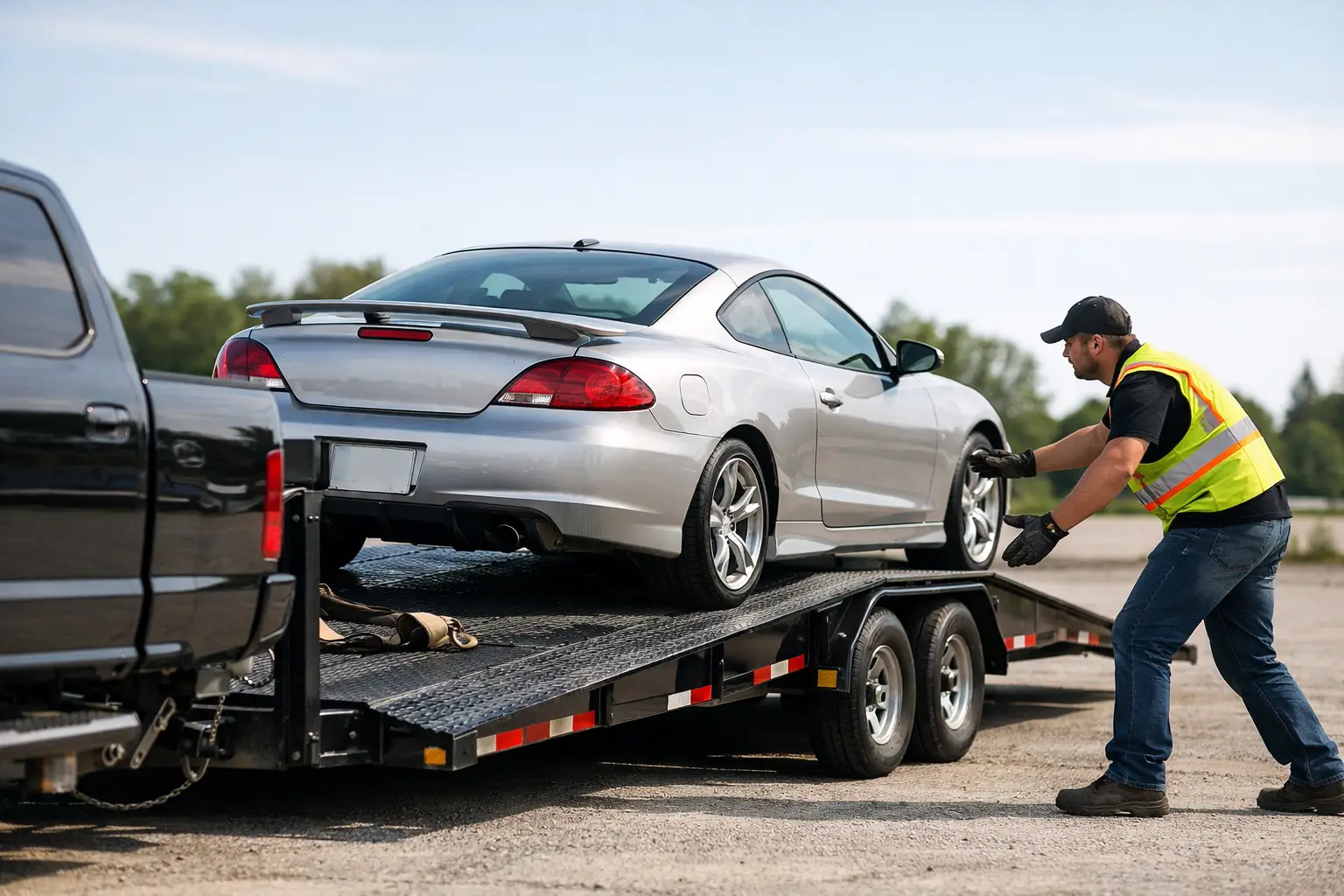
This sounds simple, but it matters more than people think. The vehicle should approach the ramps in a straight line, with the tires centered on the ramp tracks. If you’re coming in at an angle, one tire can climb before the other and the vehicle can shift off-center fast.
A spotter helps here, especially if visibility is limited. Use clear hand signals and one person giving directions. Too many voices make loading worse, not better.
3. Drive or winch the vehicle on slowly
If the vehicle runs, use low gear and steady throttle. Do not punch it. Slow and smooth is the rule. Sudden acceleration can make the vehicle jump the ramps or shift harder than expected once it reaches the deck.
If the vehicle does not run, winching is usually the safer move. Keep the pull straight and even. A crooked pull can drag the vehicle sideways on the ramps, which is exactly what you do not want.
As the vehicle climbs, keep watching clearance at the front bumper, underbody, and rocker panels. Low cars may need extra care at the breakover point where the ramps meet the deck.
4. Stop in the right place
This is where balance comes in. You do not just load the vehicle anywhere on the trailer and call it good. The vehicle needs to sit far enough forward to create proper tongue weight, but not so far forward that you overload the hitch or front trailer axle area.
In plain terms, too much weight behind the trailer axles can cause sway. Too much weight forward can squat the tow vehicle, lighten steering response, and overload equipment. The sweet spot depends on the trailer design and the vehicle you’re carrying, but a properly loaded trailer should place a reasonable amount of weight on the hitch and tow level or close to it.
A good visual check helps. If the rear of the tow vehicle is slammed down and the front looks light, the load is probably too far forward. If the trailer looks tail-heavy, it probably is. When in doubt, adjust before tying down.
The Part People Get Wrong: Weight Distribution
If you want to know how to load a car hauler safely, this is the heart of it. Balanced loading affects braking, steering, tire wear, and trailer stability at speed.
Many experienced haulers aim for tongue weight in the general range of 10 to 15 percent of total trailer weight, but the exact right setup depends on your trailer, hitch, and tow vehicle. That is why eyeballing alone is not perfect. If you haul often, it is worth learning what a properly balanced setup feels and looks like with your equipment.
Front-engine cars usually end up loaded facing forward, but not always. Some trailer and vehicle combinations load better in a different orientation. The right answer depends on axle placement, weight bias, and clearance. There is no prize for loading it the usual way if the weight ends up wrong.
Securing the Vehicle the Right Way
Once the vehicle is in position, put it in park or in gear if it’s a manual, and set the parking brake if appropriate for the transport method. Then secure it with proper straps or chains rated for the load.
Use the tie-down points intended for transport. On many setups, that means securing the tires with over-the-wheel straps or using solid frame or axle points if the trailer and vehicle call for that method. What you should not do is hook onto random suspension parts, brake lines, steering components, or anything that was never meant to hold the vehicle under transport stress.
Tighten the tie-downs evenly. The vehicle should feel planted, not just attached. If one corner is loose, the load can shift and the other straps will take more force than they should.
After securing it, walk around and check every connection. Look at strap angles, hook placement, ratchet engagement, and clearance around sharp edges. A strap rubbing on metal for 50 miles can become a failed strap.
Should you use four tie-down points?
Yes, in most car-hauler situations, four secure points are the standard approach. That gives the vehicle restraint at each corner and helps control movement in multiple directions. Fewer than that usually means you’re taking chances you do not need to take.
Final Checks Before You Hit the Road
Before pulling out, raise the ramps fully and lock them in place. Check trailer lights, brake connection, coupler latch, chains, and tire condition. Make sure nothing is loose in the vehicle being hauled and nothing can blow out of the trailer or tow vehicle.
Then drive a short distance and stop to recheck the load. Straps can settle once the trailer moves. That first recheck matters. For longer trips, inspect again at fuel stops or rest breaks.
If you’re hauling through the Verde Valley or heading over grades and rougher roads, expect the load to work a little. Heat, vibration, and road movement can change strap tension over time.
Common Mistakes When Loading a Car Hauler
The most common mistake is trying to load on bad ground because it’s “close enough.” The second is guessing on weight placement. The third is weak tie-downs or bad attachment points.
Another big one is loading too fast. People get nervous on the ramps and overcorrect with the throttle. That is when tires spin, ramps slip, or the vehicle surges farther than planned.
There is also the issue of assuming every vehicle loads the same. A compact sedan, a lifted truck, and a low sports car all behave differently. Ground clearance, wheelbase, and weight distribution change the process. What worked last time may not be the right setup this time.
When to Ask for Help
Some jobs are worth a second set of eyes. If the vehicle does not run, has brake issues, sits unusually low, or you’re unsure about balance, get help before forcing it. That can mean using a winch, changing the loading angle, or renting equipment that better fits the job.
A good local rental company should be able to talk through the basics without turning it into a sales pitch. That matters if you’re hauling a vehicle for the first time and want a team that actually picks up the phone.
Loading a car hauler comes down to patience more than muscle. Take your time, get the balance right, secure the vehicle properly, and trust the setup only after you’ve checked it twice. A calm load usually leads to a calm drive.