
You do not want to figure out your hitch is undersized when the trailer is already loaded and you are ready to pull out. A good guide to trailer hitch classes helps you avoid that problem before it costs you time, money, or a rough trip down the road.
If you rent or tow only a few times a year, hitch classes can feel more complicated than they need to be. The good news is they follow a pretty simple system. The class tells you the general weight range a hitch is designed to handle, along with the receiver size you will usually see on that setup. Once you understand the classes, choosing the right trailer gets a whole lot easier.
What trailer hitch classes actually mean
Trailer hitch classes are categories used to describe how much weight a hitch can handle. In most cases, a higher class means a stronger hitch with a larger receiver opening and a higher towing capacity.
That said, the hitch class is only one piece of the towing picture. Your vehicle still has its own towing limit, tongue weight limit, frame strength, suspension capacity, and braking ability. The hitch does not magically raise what your truck, SUV, or car can safely pull. If your vehicle is rated for less than the hitch, the vehicle rating wins every time.
This is where people get tripped up. They see a Class IV hitch and assume they can tow anything that fits the ball mount. It does not work that way. Safe towing always comes down to the lowest-rated part of the whole setup.
Guide to trailer hitch classes by type
Class I
Class I hitches are the light-duty option. They usually have a 1-1/4-inch receiver and are commonly rated for up to 2,000 pounds gross trailer weight and up to 200 pounds of tongue weight.
These are often found on smaller cars, crossovers, and compact SUVs. They work for very light utility trailers, bike racks, or small cargo carriers. For actual trailer hauling, they are limited. If you are moving yard debris, a small load of tools, or lightweight personal gear, a Class I setup may be enough. For heavier jobs, it usually is not.
Class II
Class II hitches are still on the lighter side, but they give you a little more room to work. They also usually use a 1-1/4-inch receiver and are often rated for up to 3,500 pounds gross trailer weight with up to 350 pounds of tongue weight.
This class can be a fit for midsize sedans, crossovers, and some small SUVs. It may handle a small utility trailer, a lightweight single-axle trailer, or a small pop-up camper. For basic homeowner jobs, this can be enough, but you still need to keep a close eye on actual trailer weight once cargo is added.
Class III
Class III is where towing starts to cover a lot of real-world jobs. These hitches usually have a 2-inch receiver and are commonly rated for up to 8,000 pounds gross trailer weight and up to 800 pounds of tongue weight, though many are rated lower depending on the vehicle.
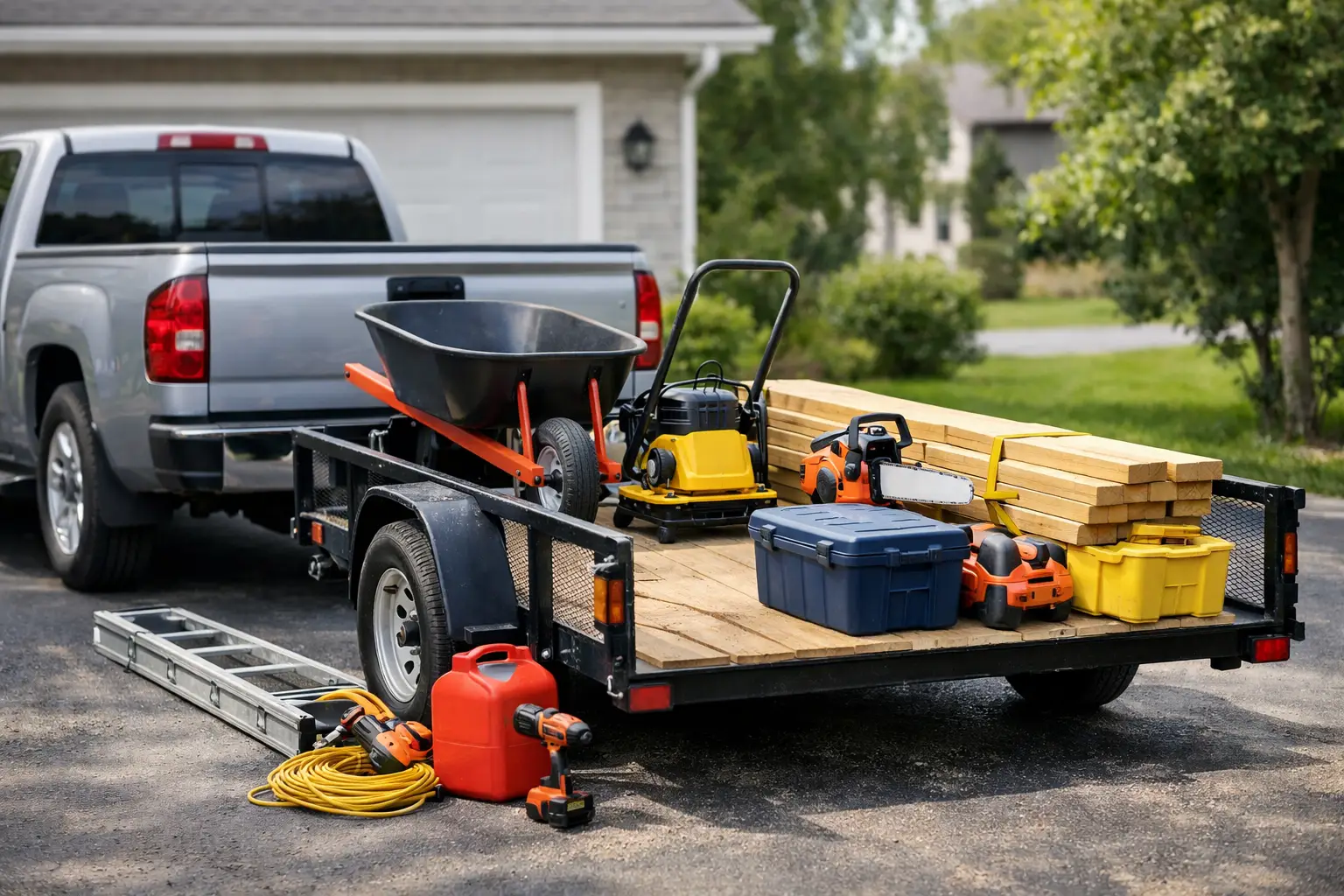
This is a common class for half-ton trucks, body-on-frame SUVs, and some properly equipped midsize trucks. A Class III hitch is often what people need for utility trailers, landscape trailers, small equipment trailers, and some car haulers. If you are hauling materials for a home project or moving equipment around the Verde Valley, this is often the range where practical towing begins.
Class IV
Class IV hitches also use a 2-inch receiver in many cases, but they are built for heavier loads. Typical ratings can go up to 10,000 pounds gross trailer weight and 1,000 pounds of tongue weight with a standard setup, sometimes more with weight distribution if the vehicle allows it.
These are common on full-size pickups, larger SUVs, and work vehicles used for heavier hauling. If you are towing a larger equipment trailer, a loaded car hauler, or bulkier jobsite loads, this may be the class you need. But again, not every Class IV vehicle can tow the same amount. Two trucks may both have Class IV hitches and still have very different tow ratings.
Class V
Class V is the heavy-duty category. These hitches may come with a 2-inch or 2-1/2-inch receiver and can handle significantly higher weight ratings, often above 10,000 pounds. These are usually found on heavy-duty pickups and commercial-use vehicles.
For most everyday renters, Class V is more than they need. But for serious equipment hauling, larger trailers, or frequent heavy towing, this is the level built for it. It is less common among casual users and more common in work fleets or specialized hauling setups.
Receiver size matters, but it is not the whole story
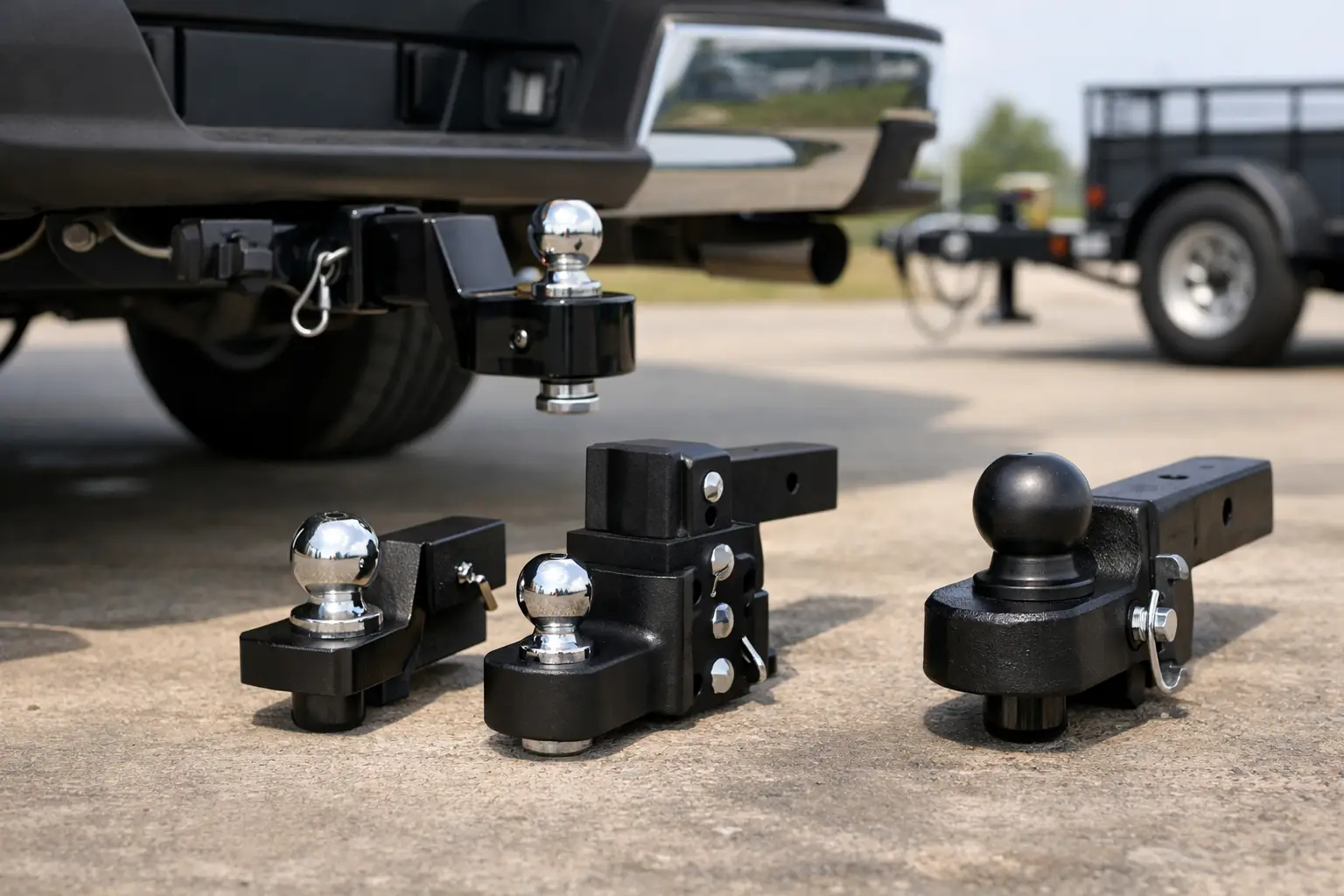
A lot of people identify a hitch by the receiver opening first, and that makes sense. A 1-1/4-inch receiver usually points to Class I or II. A 2-inch receiver usually points to Class III or IV. Larger heavy-duty receivers often point to Class V.
Still, receiver size alone does not tell you the full capacity. A 2-inch receiver on one SUV may be rated much lower than a 2-inch receiver on a full-size truck. That is why checking your owner’s manual, door sticker, or factory tow package information matters. If you are renting a trailer, it also helps to know whether you have the right ball size, the right wiring plug, and enough payload for tongue weight.
The weight ratings people mix up most often
The two numbers that matter most are gross trailer weight and tongue weight. Gross trailer weight is the total weight of the trailer plus everything loaded on it. Tongue weight is the downward force the trailer puts on the hitch ball.
Tongue weight usually needs to land in the right range for the trailer to tow properly. Too little tongue weight can lead to sway. Too much can overload the rear of the vehicle, affect steering, and create braking problems. A common rule of thumb is that tongue weight should be around 10 to 15 percent of the loaded trailer weight, but the exact target depends on the trailer design.
Brakes are another factor. Many trailers above certain weight thresholds need their own braking system. State rules and trailer specs can affect that, but from a practical standpoint, trailer brakes are a smart move once weight starts climbing.
How to choose the right hitch class for your trailer
Start with the trailer’s loaded weight, not its empty weight. That is the number people underestimate the most. A trailer that looks manageable sitting empty can end up far heavier once you add a mower, building materials, an ATV, or a vehicle.
Next, compare that loaded trailer weight to your vehicle’s maximum tow rating. Then check tongue weight capacity, receiver size, hitch class, and whether your setup calls for trailer brakes or a brake controller. If one part of the setup comes up short, that is your limit.
For lighter home projects, a Class I or II setup may be enough. For general hauling and many equipment or utility trailers, Class III is often the practical middle ground. For car haulers or heavier loads, Class IV or above may be necessary. The right answer depends less on what sounds strong and more on what your vehicle can safely support.
Common mistakes this guide to trailer hitch classes can help you avoid
One mistake is assuming a hitch ball mount from an old trailer setup will automatically work with a new one. Rise, drop, ball size, and rated capacity all matter. Another is forgetting cargo in the vehicle counts too. Passengers, tools, fuel, and gear all affect how much towing capacity you really have left.
People also confuse advertised towing capacity with real-world towing comfort. A vehicle may be technically rated to pull a trailer, but that does not mean it will handle steep grades, crosswinds, or long stops with much margin. Around northern Arizona, roads and elevation changes can make those differences show up fast.
When in doubt, give yourself extra room. A setup that is comfortably within limits is usually easier to tow, easier to brake, and less stressful overall.
When it makes sense to ask before you book
If you are not sure what hitch class you have, ask before reserving a trailer. A quick check of your receiver size, vehicle year and model, tow rating, and wiring setup can save a wasted trip. That is especially true for first-time renters or anyone planning to haul a vehicle, equipment, or dense material.
At Monsoon Trailer Rental, that kind of practical question is exactly the right one to ask. It is better to take two minutes confirming the setup than to show up with the wrong hitch, the wrong ball, or not enough towing capacity for the job.
The best towing setup is not the biggest one on paper. It is the one that matches your vehicle, your trailer, and the load you actually need to move that day.