

That project gets a lot harder the moment you realize the vehicle in front of you does not run, is not registered, or just should not be driven across town. The best car hauler rental tips are the ones that keep that problem simple – get the right trailer, load it correctly, and avoid the kind of mistakes that cost you half a day or a damaged vehicle.
A car hauler rental is one of those things people think is straightforward until pickup day. Then questions start stacking up. Is your tow vehicle rated for the weight? Do you need ramps? How should the car sit on the trailer? Are the straps included? None of this is complicated, but details matter.
If you want the job to go smoothly, think less about finding any trailer and more about matching the trailer to the vehicle, the route, and your own setup. That is what separates an easy haul from a stressful one.
Best car hauler rental tips before you book
The first smart move is knowing exactly what you are hauling. Do not guess on vehicle weight. Look up the curb weight of the car, truck, or side-by-side you plan to load, then compare that with the trailer capacity and your tow vehicle’s towing limit. The trailer might be able to handle it while your truck cannot, and that is where renters get into trouble.
You also want to know the vehicle’s dimensions. Length matters, but width and ground clearance matter too. A lowered car may need gentler ramp angles. A longer truck may technically fit, but weight balance can become a problem if there is no room to position it correctly on the deck.
Be honest about whether the vehicle runs. If it does not start, has locked brakes, or has a flat tire, that changes how you load it. A winch, a second person, or extra time may be needed. This is the kind of information worth sharing when you book because it helps prevent surprises at pickup.
It also pays to ask what is included with the rental. Some renters assume tie-downs, ramps, spare tires, or a jack are standard. Sometimes they are, sometimes they are not. Clarifying that up front keeps you from chasing gear at the last minute.
Make sure your tow vehicle is actually ready
A strong engine does not automatically mean you have a proper tow setup. Your hitch class, ball size, wiring connection, brake controller, and tire condition all matter. If one part of the setup is wrong, the whole haul gets less safe.
Start with the hitch rating and ball size. They need to match the trailer coupler and the actual loaded weight, not just the empty trailer. Then check your trailer wiring. Brake lights, turn signals, and running lights should all work before you leave the lot, not after you are already on the road.
Trailer brakes are another big one. On a car hauler, they are often essential, especially if you are hauling through grades or stop-and-go traffic. If your trailer uses electric brakes, make sure your brake controller is installed and working properly. A lot of renters overlook this until the trailer is hooked up and they realize they are not ready.
Tires deserve more attention than they usually get. Check the truck and trailer tires for tread, damage, and correct pressure. Arizona heat is not forgiving, and underinflated tires are an easy way to ruin your day.
Loading is where most mistakes happen
The best car hauler rental tips usually come down to loading and securement, because that is where a decent setup can still go wrong.
Park on level ground before loading if you can. That gives you a better ramp angle and helps keep the trailer stable. Once the trailer is connected, make sure the coupler is latched, safety chains are attached correctly, and the trailer jack is fully raised.
When you load the vehicle, go slow. If the car is drivable, ease it up the ramps and stop as needed to check clearance. If it is not drivable, take your time with a winch or come-along rather than trying to rush it. A few extra minutes here are cheaper than body damage.
Vehicle placement matters more than many first-time renters expect. Too far forward and you can overload the tongue. Too far back and the trailer may sway. You want enough tongue weight to keep the trailer stable, but not so much that the rear of the tow vehicle squats excessively. If you are unsure, ask for guidance before leaving.
How to secure a vehicle on a car hauler
Once the vehicle is positioned, tie-downs need to be done right. This is not the time for worn straps, random chains, or guessing your way through it. Use proper tie-down points and equipment rated for the load.
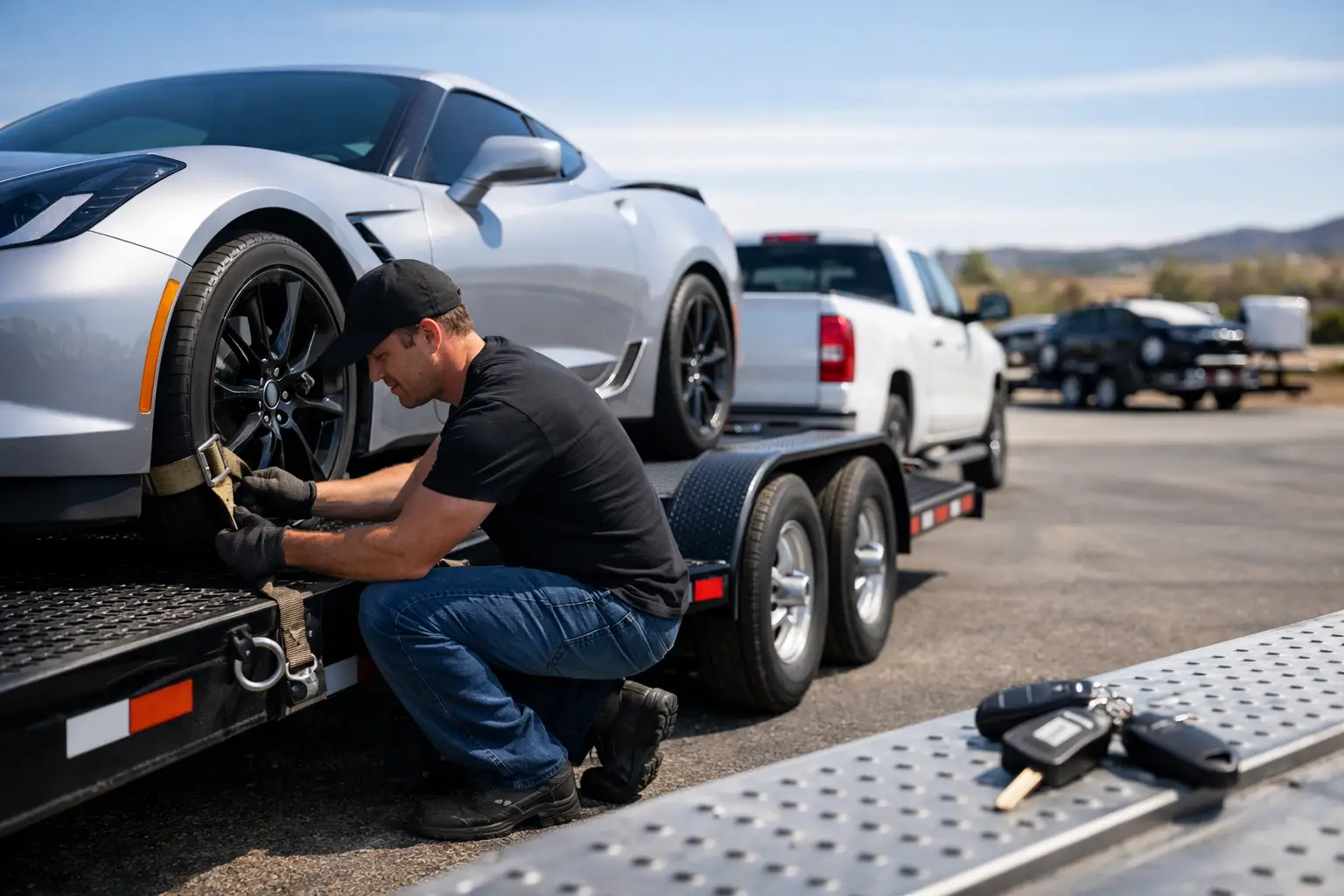
Wheel straps are common for a reason. They secure the vehicle by the tires and reduce the chance of damaging suspension or body components. If you are using axle straps or chains, make sure you know the correct attachment points. Hooking onto the wrong part of a vehicle can bend something expensive.
After the straps are tight, check that nothing is twisted, dragging, or rubbing against a sharp edge. Then check again after a few miles on the road. Straps can settle once the trailer starts moving, and a quick stop to retighten is normal.
If the vehicle has loose parts, remove or secure them. That includes lightweight ramps, detachable accessories, cargo in the bed, and anything inside the vehicle that can shift. A clean, simple load is usually the safest one.
Drive like you are hauling something valuable
People tend to focus on loading, then forget the driving part changes too. A loaded car hauler is heavier, longer, and slower to react than your vehicle by itself. That means wider turns, longer stopping distances, and more patience.
Keep your speed reasonable, especially on curves, downhill sections, and rough roads. Trailer sway often starts with speed, poor weight balance, or abrupt steering. If sway begins, do not jerk the wheel or mash the truck brakes. Ease off the accelerator and let the rig settle while keeping the steering straight.
Give yourself more room at intersections and in parking lots. Backing a trailer is harder when the load blocks visibility, so avoid tight spaces when possible. Planning your fuel stops and turnaround spots ahead of time can save a lot of frustration.
If you are traveling through places like Cottonwood, Clarkdale, or the hillier roads around the Verde Valley, grades and tighter roads make smooth driving even more important. This is where trailer brakes, good tire pressure, and proper weight balance really earn their keep.
A few rental-day details that save headaches
Showing up prepared can make pickup fast instead of frustrating. Bring your driver’s license, confirm your vehicle’s hitch and wiring setup beforehand, and know the basic specs of what you are hauling. If this is your first time renting a car hauler, say so. A good local rental team would rather spend a few extra minutes answering questions than send you out guessing.
It also helps to build a little extra time into your schedule. Loading a vehicle, checking straps, and doing a final walkaround should not feel rushed. If you are trying to squeeze the rental between other appointments, that is when details get missed.
Before you leave, do one last check of the coupler, chains, breakaway cable, lights, straps, ramps, and tire condition. Then check your route. Low clearance issues, rough back roads, and steep driveways can all change how easy the haul will be.
When cheaper is not actually cheaper
Price matters, but it is not the only number that counts. A low advertised rate can stop looking like a deal once you add missing equipment, poor availability, or time lost dealing with a provider that is hard to reach.
The better rental experience usually comes from clear communication, dependable equipment, and a process that does not waste your day. That matters whether you are moving a project car, hauling a customer vehicle, or picking up a non-running car from a private sale. Monsoon Trailer Rental built its service around that exact kind of job – practical hauling without the runaround.
The right trailer rental should feel simple. You book it, pick it up, load with confidence, and get the vehicle where it needs to go. If you start with the right questions and take loading seriously, most of the common problems never show up at all.
A car hauler rental works best when you respect the basics: match the trailer to the load, secure it properly, and give yourself enough time to do it right. That is usually the difference between a long day and a smooth one.