
A renovation gets messy fast. One day you’re picking up drywall and plywood, and the next you’re staring at a pile of busted cabinets, flooring scraps, and old fixtures with no good way to move any of it. That is where trailer rental for home renovation makes a real difference. Instead of cramming debris into a pickup bed or making too many trips in the family SUV, you get the hauling space you need to keep the job moving.
For homeowners and small crews, that matters more than people expect. Renovation projects rarely stay as tidy or as small as they looked on paper. Materials are bulky, debris adds up fast, and time gets burned on logistics when it should be spent getting the work done.
Why trailer rental for home renovation makes sense
Buying a trailer only makes sense if you haul all the time. Most homeowners do not. They need extra capacity for a week, a weekend, or a few key days during demolition and rebuild, not another piece of equipment sitting in the yard the rest of the year.
Renting gives you flexibility. If you’re tearing out a bathroom, you may only need a trailer for dump runs and debris removal. If you’re remodeling a kitchen or replacing flooring across the house, you may need it for both cleanup and material pickup. Either way, you pay for the use you need instead of taking on ownership, maintenance, storage, registration, and tire issues.
There is also the simple fact that renovation hauling is hard on vehicles. Repeated loads of tile, lumber, concrete board, or demolition waste can push a vehicle beyond what it should be carrying internally. A properly matched trailer gives you a safer, more practical way to move heavy or awkward loads.
What a trailer helps you haul during a renovation
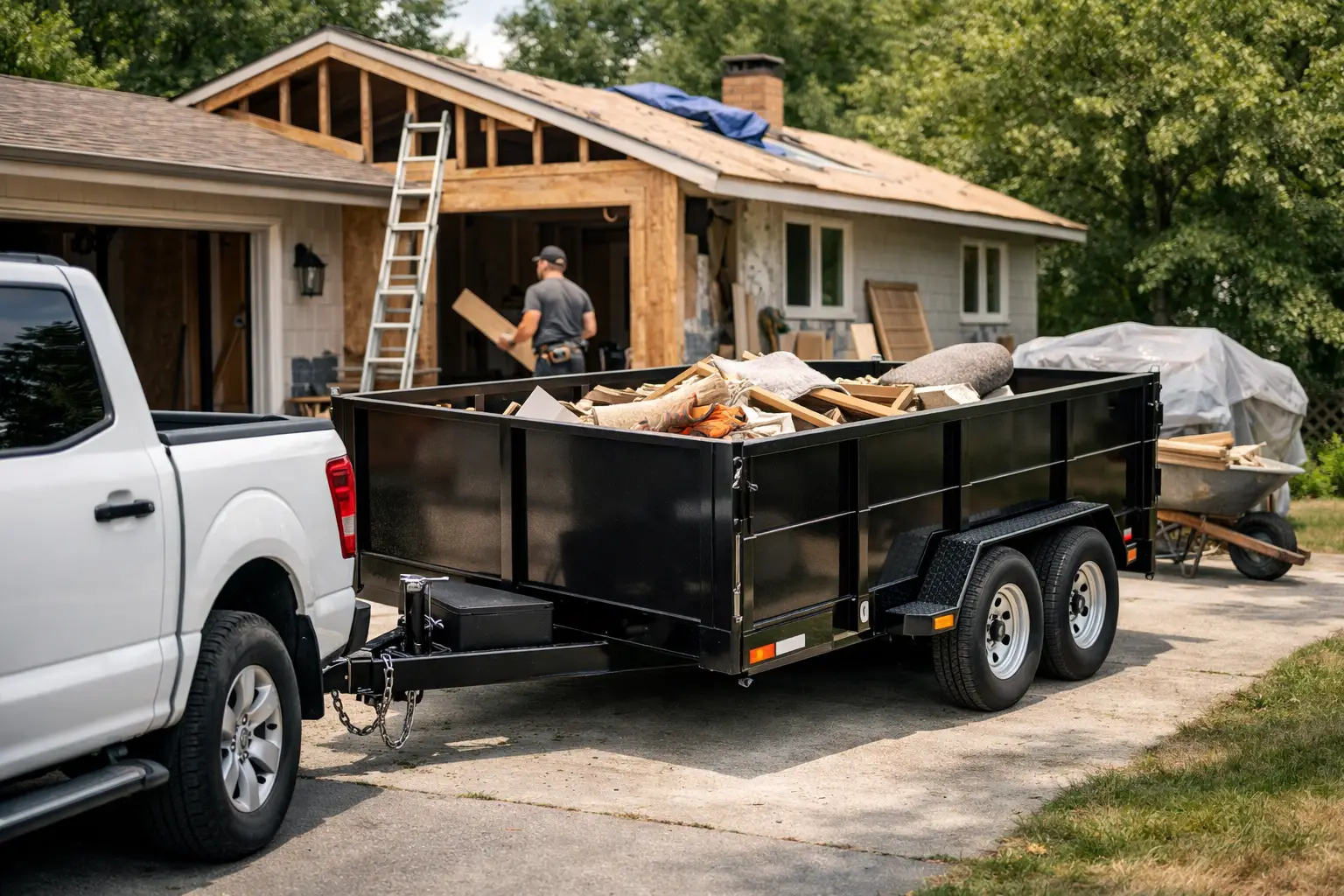
Most people think about dump runs first, and that is part of it. Old vanities, torn-out carpet, doors, trim, cabinets, drywall, fencing, and broken tile all take up more room than expected. Even a smaller project can produce a surprising amount of waste once demo starts.
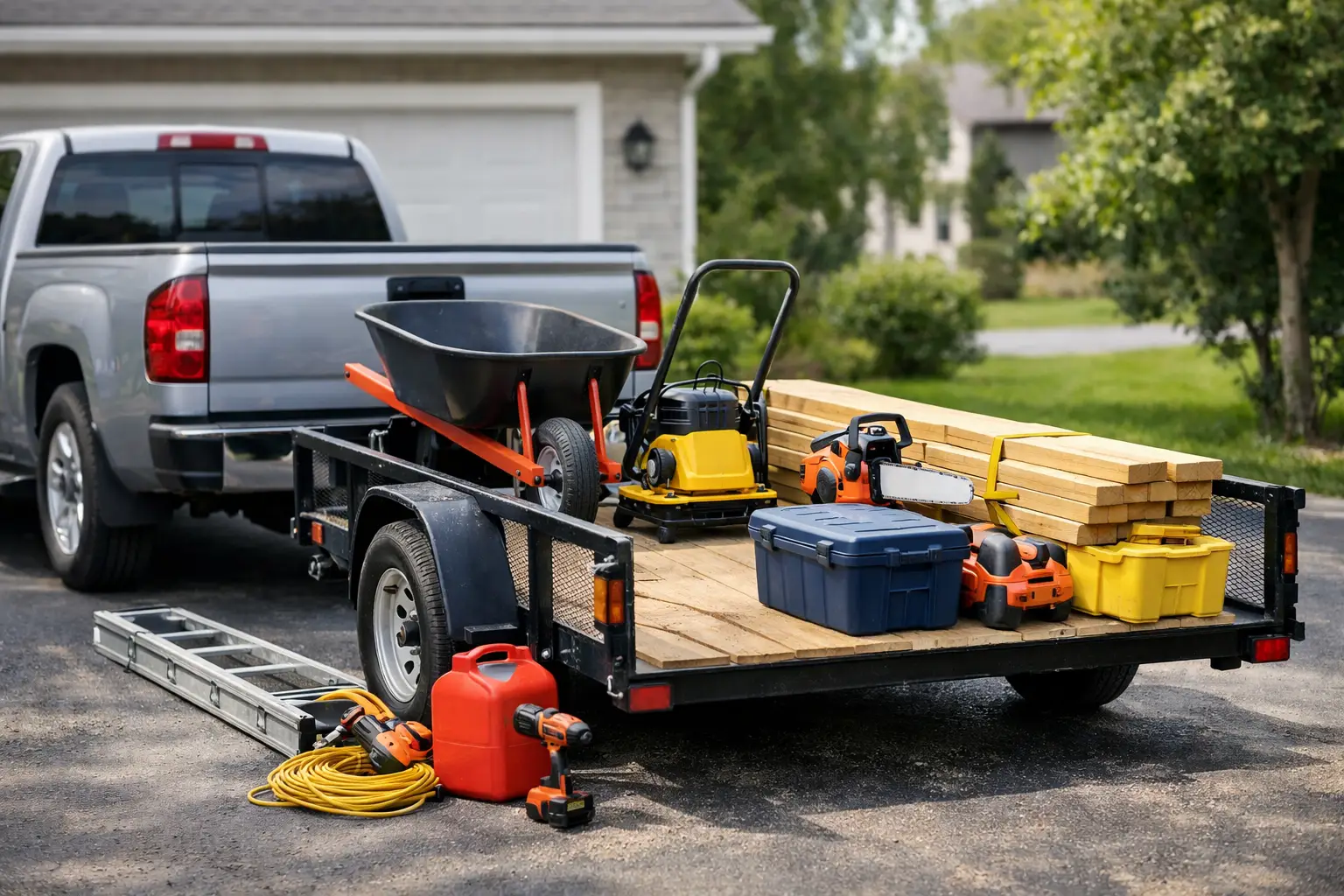
But cleanup is only half the value. A trailer can also help with material pickups from the lumber yard or home improvement store. Plywood sheets, dimensional lumber, bagged materials, appliances, new doors, and other oversized items are often easier to secure on a trailer than inside a truck bed. You get more room, better access, and less hassle trying to stack everything at odd angles.
That mix of inbound and outbound hauling is where rentals really earn their keep. One trailer can support the whole rhythm of the project, from tear-out to rebuild.
Choosing the right trailer for a renovation job
The right trailer depends on what you are hauling, how much of it you have, and what vehicle is pulling it. Bigger is not always better. A larger trailer gives you more room, but it also changes how the load handles, how much weight you can carry, and how easy it is to maneuver into a driveway or jobsite.
If your main job is debris removal, an open utility-style trailer is often the practical choice. It is easier to load with broken material, yard waste, or bulky demo debris, and it keeps things straightforward for dump runs. If you are transporting equipment or a vehicle tied to the project, that is a different conversation and calls for a trailer designed for that job.
Weight matters just as much as space. Renovation debris can get heavy in a hurry, especially with tile, plaster, concrete pieces, old countertops, or wet materials. A load that looks manageable by volume may still be too much by weight. On the other side, lumber and trim can be long and awkward without being especially heavy.
That is why it helps to talk to a local rental team that actually asks the right questions. What are you hauling? What vehicle are you towing with? How far are you going? Are you making dump runs, supply runs, or both? A good answer comes from matching the trailer to the work, not just handing over whatever is available.
A few trade-offs homeowners should think about
There is no one-size-fits-all answer with trailer rental for home renovation. If you only need one cleanup run at the very end, renting for a full week may be more than you need. If you’re in active demo and rebuilding at the same time, a short rental can feel too short.
There is also the question of loading style. Open trailers are great for bulky debris and general hauling, but loose materials still need to be secured properly. If you’re hauling anything that can shift, bounce, or blow around, tie-downs and careful loading are part of the job.
Then there is access. Some properties have easy, wide driveways. Others have tighter turns, narrower side streets, or uneven ground. A trailer that works great on paper still has to work in the real space where your project is happening.
How to make your rental work harder for the project
The easiest way to save time is to plan your hauling around project phases. If demo starts Saturday morning, have the trailer ready before the first wall or cabinet comes out. That keeps debris from piling up in the garage or blocking the driveway.
It also helps to combine tasks when possible. A smart rental window lets you do a material pickup on the front end, use the trailer through demolition, and finish with a final cleanup run. That kind of planning cuts down on wasted trips and keeps the renovation area safer and more organized.
Load the trailer with balance in mind. Put heavier items where they belong for stable towing, and do not pile material loosely just to fit one more trip’s worth. Renovation waste is full of sharp edges, odd shapes, and breakable pieces. A little extra care at loading saves a lot of trouble on the road.
If you’re working with a helper or contractor, make sure everyone knows the plan. What stays, what goes, what gets loaded first, and what needs special handling. A trailer helps, but only if the job around it stays organized.
When local rental service matters
For a project like this, equipment is only part of the equation. The other part is dealing with someone who is easy to reach when you have a question about sizing, towing, availability, or timing. That matters even more for first-time renters who do not want to guess their way through the process.
A local company has an advantage here. They understand the kinds of jobs people are doing around homes in places like Cottonwood, Clarkdale, Sedona, and the rest of the Verde Valley. They know that one customer is cleaning up after a bathroom remodel while another is hauling supplies for a deck rebuild or a landscaping overhaul tied to a larger renovation.
That kind of service is less about sales talk and more about being practical. You want dependable equipment, fair pricing, and a team that actually picks up the phone. That is the value of working with a nearby rental provider instead of getting shuffled through a bigger, more impersonal operation.
If you need help figuring out what fits your renovation job, Monsoon Trailer Rental keeps it simple. The goal is to get you the right trailer for the work, not more trailer than you need.
Common mistakes to avoid with a home renovation trailer rental
The biggest mistake is underestimating the project. People often assume they can handle hauling with their own vehicle alone, then lose half a day making repeated runs with small loads. That gets old quickly when you are in the middle of demolition or trying to keep a contractor on schedule.
Another common issue is focusing only on trailer size and not towing setup. Your hitch, vehicle rating, load weight, and driving comfort all matter. A trailer should make the job easier, not create a problem on the road.
Last, do not wait until the mess is already out of control. The best time to arrange a trailer rental is before the first big haul, not after the driveway is packed with debris and scrap material.
A good renovation plan is not just about tools and finishes. It is also about moving materials in and moving waste out without turning the project into a bottleneck. Get the hauling part right, and the whole job tends to run a lot smoother.