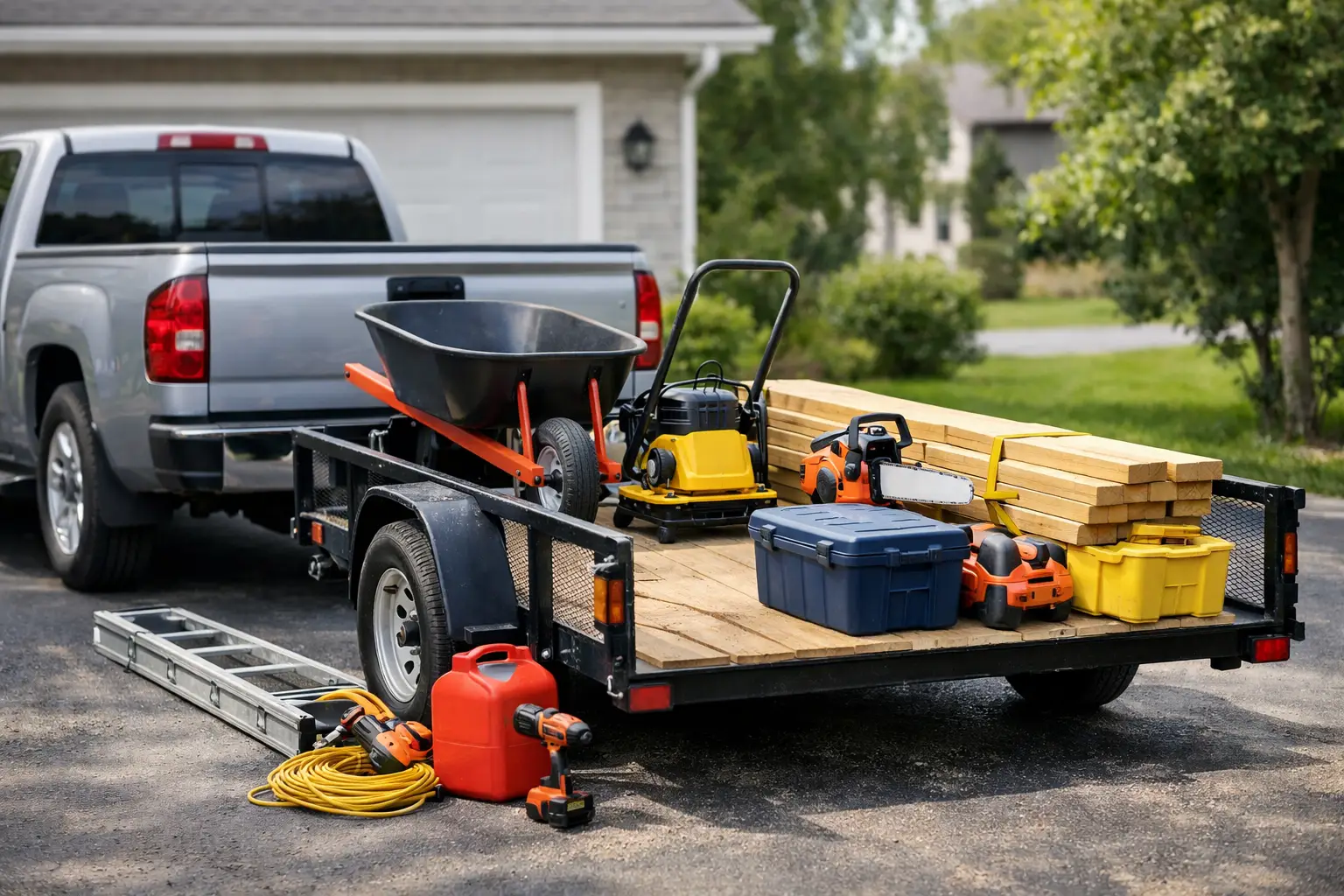

Landscaping jobs tend to look simple until the hauling starts. One load of mulch turns into three. A mower, trimmer, wheelbarrow, and a few pallets of pavers suddenly eat up all the bed space in your truck. That is where trailer rental for landscaping jobs makes a real difference – not as a luxury, but as a practical way to keep the day moving.
If you only need extra hauling capacity once in a while, owning a trailer can be more trouble than it is worth. You have storage to think about, maintenance, tire wear, registration, and the fact that the trailer you own may not even be the right fit for the next job. Renting gives you flexibility. You get the trailer that fits the work in front of you, then you return it when the haul is done.
Why trailer rental for landscaping jobs makes sense
For a lot of landscapers, property maintenance crews, and even homeowners doing serious yard work, the biggest challenge is not the labor. It is transport. Materials are bulky, debris piles up fast, and equipment is awkward to load without the right setup.
A rental trailer solves a few problems at once. It can expand what your current vehicle can handle, reduce the number of trips to the dump or supply yard, and help you keep tools and materials together instead of scattered across a truck bed. That matters when time is tight and the job site is on a schedule.
It also gives you a cleaner answer for short-term demand. Maybe spring cleanup has you slammed for two weekends. Maybe you picked up a one-off landscape install that needs gravel, soil, and plant runs. Maybe your own trailer is down for repairs. Renting lets you cover the gap without making a long-term purchase for a short-term problem.
The right trailer depends on the work
Not every landscaping job needs the same trailer, and this is where people can save themselves a headache by planning the load before they book.
If you are hauling loose material like mulch, branches, or yard debris, an open utility-style trailer is usually the most practical choice. It is easy to load, easy to unload, and you do not have to fight with enclosed space when tossing in cleanup waste or loading tools.
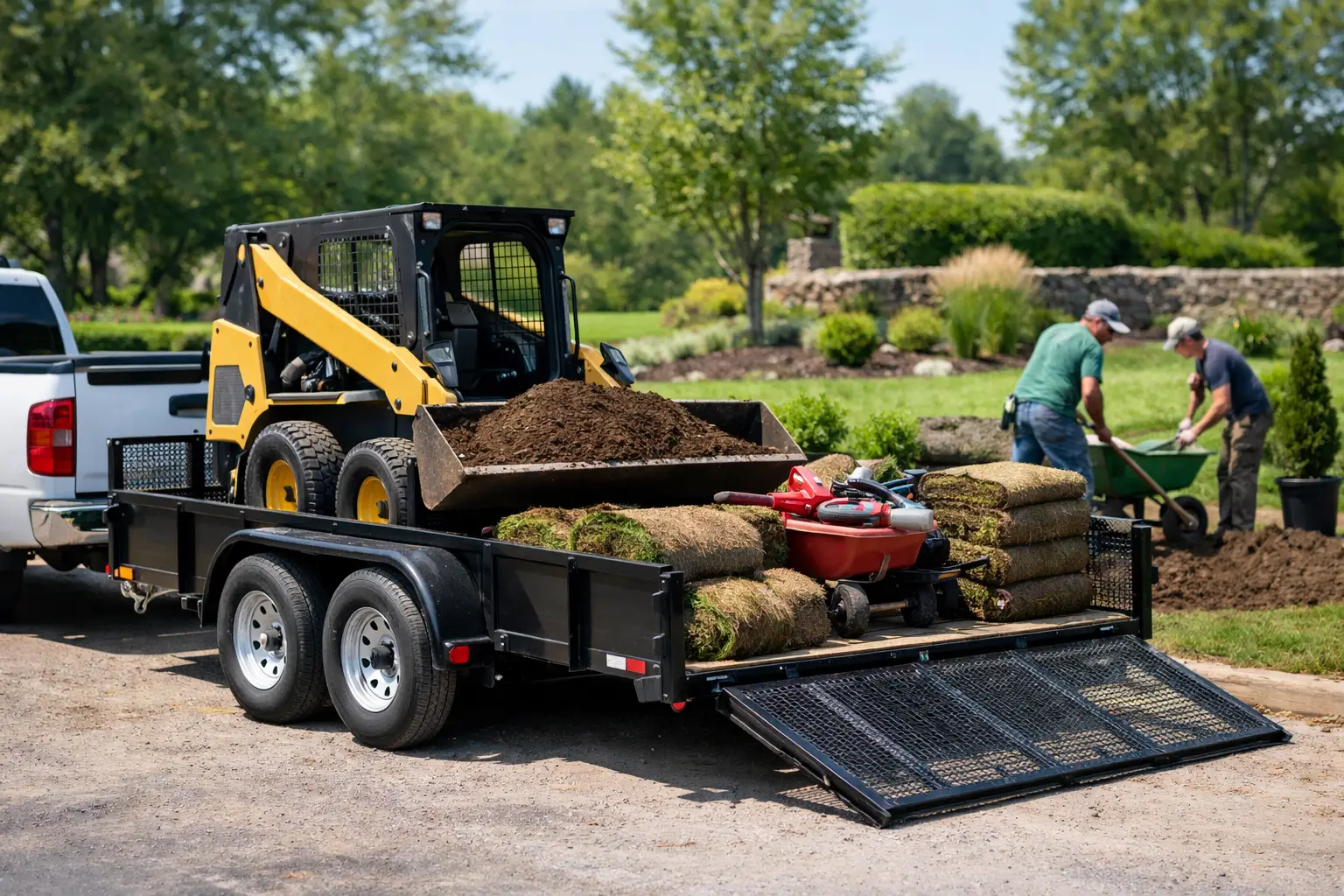
If the job includes heavier equipment, the question changes. A compact mower, small machine, or heavier pallets of material may need a trailer with more capacity and a loading setup that actually makes sense. The wrong trailer can turn a simple load into an unsafe one fast.
This is also where job type matters. A maintenance crew handling clippings and handheld tools has different needs than a contractor moving sod cutters, compact equipment, or bulk stone. The best trailer is the one that matches the actual cargo weight, the size of the load, and how often you need to get materials on and off during the day.
What to think about before you rent
The first thing to check is your tow vehicle. A trailer is only useful if your vehicle can safely tow it with the planned load. That means knowing your towing capacity, hitch setup, and electrical connection. It is better to have this figured out before pickup than to discover a mismatch in the parking lot.
Next, think through the material itself. Mulch and brush take up space quickly but may not weigh as much as rock or wet soil. Gravel, pavers, and green waste can get heavy fast. A load that looks manageable can still exceed what the trailer or tow vehicle should carry.
Loading style matters too. If you are making repeated stops between the job site, the nursery, and the landfill, convenience matters almost as much as capacity. Easy access, stable loading, and enough deck space can save time all day long.
Then there is terrain. In the Verde Valley area, not every driveway, access road, or work site is level and wide open. Tight turns, gravel approaches, and uneven ground can make a larger trailer less convenient than it looks on paper. Bigger is not always better if it slows you down or makes placement harder.
Common landscaping jobs that benefit from a rental trailer
Some jobs are obvious trailer jobs. Others do not seem like it until you are halfway through and making a second supply run.
Seasonal cleanup is a good example. Tree limbs, leaves, bagged debris, old irrigation parts, and broken edging can fill a truck in no time. A trailer keeps that cleanup moving and can cut back on repeated dump runs.
Mulch, gravel, and soil delivery runs are another common use. Even if the material source is nearby, multiple trips burn time and fuel. A trailer helps you move enough material to keep the crew working instead of waiting around for the next load.
Equipment transport is just as important. If your mower, aerator, or compact machine needs to move between properties, loading it into a truck bed is not always realistic or safe. The right trailer gives you a better setup and usually a faster one.
Homeowners taking on larger DIY landscape work run into the same issues. If you are redoing a yard, building a pathway, clearing brush, or replacing old materials, a rental trailer can make the project a lot more manageable without forcing you to borrow equipment or pay for delivery every time.
Renting versus owning
Owning a trailer makes sense if hauling is part of your daily operation and the same type of work repeats every week. But even then, ownership comes with real costs beyond the sticker price.
There is storage, upkeep, lights, tires, bearings, and the occasional repair that shows up right when you need the trailer most. If it sits for long stretches, you are still paying for something that is not earning its keep.
Renting is often the smarter move when work is occasional, seasonal, or varied. You are not tied to one trailer size, and you are not carrying ownership costs year-round. For many crews and property owners, that makes the math pretty simple.
There is also the service side of it. Working with a local rental company means you can usually get direct answers faster, especially if you are unsure what trailer fits the job. That matters more than people think. A team that actually picks up the phone can save you from booking the wrong equipment and losing half a day.
How to get more value from a trailer rental for landscaping jobs
A little planning goes a long way. Book around the job schedule, not after materials are already waiting. Confirm your hitch and wiring before pickup. Bring tie-downs if the load needs to be secured, and do not treat capacity as a guess.
It also helps to group hauling tasks together. If you are clearing debris, picking up materials, and moving equipment on the same day, plan your route and loading order so you are not unloading and reloading more than necessary. That saves labor and reduces wear on the crew.
Pay attention to what is actually slowing the job down. Sometimes the problem is not labor or materials. It is that the hauling setup is too small, too awkward, or too inconsistent. Fix that piece, and the rest of the job usually gets easier.
For landscapers and property owners around Cottonwood, Clarkdale, Sedona, and nearby areas, local access matters too. Being able to rent nearby instead of chasing equipment from a larger out-of-town provider can mean less hassle, faster pickup, and a more direct answer when timing is tight. If you need a dependable local option, Monsoon Trailer Rental is built for exactly that kind of work.
Choosing a rental company matters
Price matters, but it is not the only thing. If the trailer is not ready, the booking is confusing, or getting help feels like pulling teeth, a cheap rate stops looking cheap pretty quickly.
A good rental experience is straightforward. You know what you are getting, the trailer is dependable, and someone is available to answer questions without making it complicated. That is especially useful for first-time renters, but even experienced haulers appreciate clear communication when they are trying to keep a job on schedule.
For landscaping work, the best trailer is the one that fits the load, tows safely, and does not add extra friction to the day. Get that part right, and everything else tends to run smoother.