
You can have the right trailer, the right tow vehicle, and a full day blocked out for the job, then lose an hour because the hitch setup does not match. That is why a solid guide to trailer hitch compatibility matters. If the receiver size, ball mount, coupler, wiring, or weight rating is off, the trailer is not ready to tow – even if it looks close enough in the driveway.
Most hitch problems come from assumptions. People assume a 2-inch ball fits every trailer, or that a pickup with a hitch can pull anything on the lot, or that trailer lights are all wired the same way. They are not. Compatibility is a mix of physical fit and weight limits, and both matter every time you tow.
What trailer hitch compatibility actually means
When people talk about hitch compatibility, they usually mean one simple question: will this trailer connect safely to this vehicle? The real answer has a few parts. The hitch receiver on the tow vehicle has to accept the right ball mount. The hitch ball has to match the trailer coupler. The wiring plug has to match the trailer lights and brakes. Just as important, the tow vehicle and hitch both need enough capacity for the trailer and its load.
If one part is wrong, the setup is not compatible. Sometimes that means it will not hook up at all. Other times it means it hooks up physically but is still unsafe because the ratings are too low or the trailer brakes are not connected properly.
The guide to trailer hitch compatibility starts with hitch class
The first place to look is the hitch class on the tow vehicle. Hitch class tells you the general weight range the hitch is built for, along with the receiver size it usually uses.
Class I and Class II hitches are typically found on smaller SUVs, crossovers, and cars that are rated for light towing. These often use a 1-1/4 inch receiver. They work for smaller utility trailers, but not for heavy equipment or most car haulers.
Class III, Class IV, and Class V hitches are more common on trucks, full-size SUVs, and heavier-duty tow setups. These usually use a 2-inch receiver, though some heavy-duty setups use a 2-1/2 inch receiver. These classes are what you usually see when towing larger utility trailers, enclosed trailers, or car haulers.
The catch is that hitch class alone does not give you full permission to tow a certain trailer. Your vehicle still has its own tow rating, and that rating can be lower than what the hitch hardware itself could handle.
Why vehicle tow rating matters more than guesswork
A truck may look capable, but factory tow ratings vary a lot based on engine, transmission, axle ratio, suspension, and braking package. Two pickups that look nearly identical can have very different towing limits.
That is why the vehicle owner’s manual or manufacturer tow guide matters more than what a friend says they pulled once. If the vehicle is rated for 5,000 pounds, that is your working limit even if the receiver says more. The lowest-rated part of the system sets the real limit.
Receiver size, ball mount, and hitch ball have to match
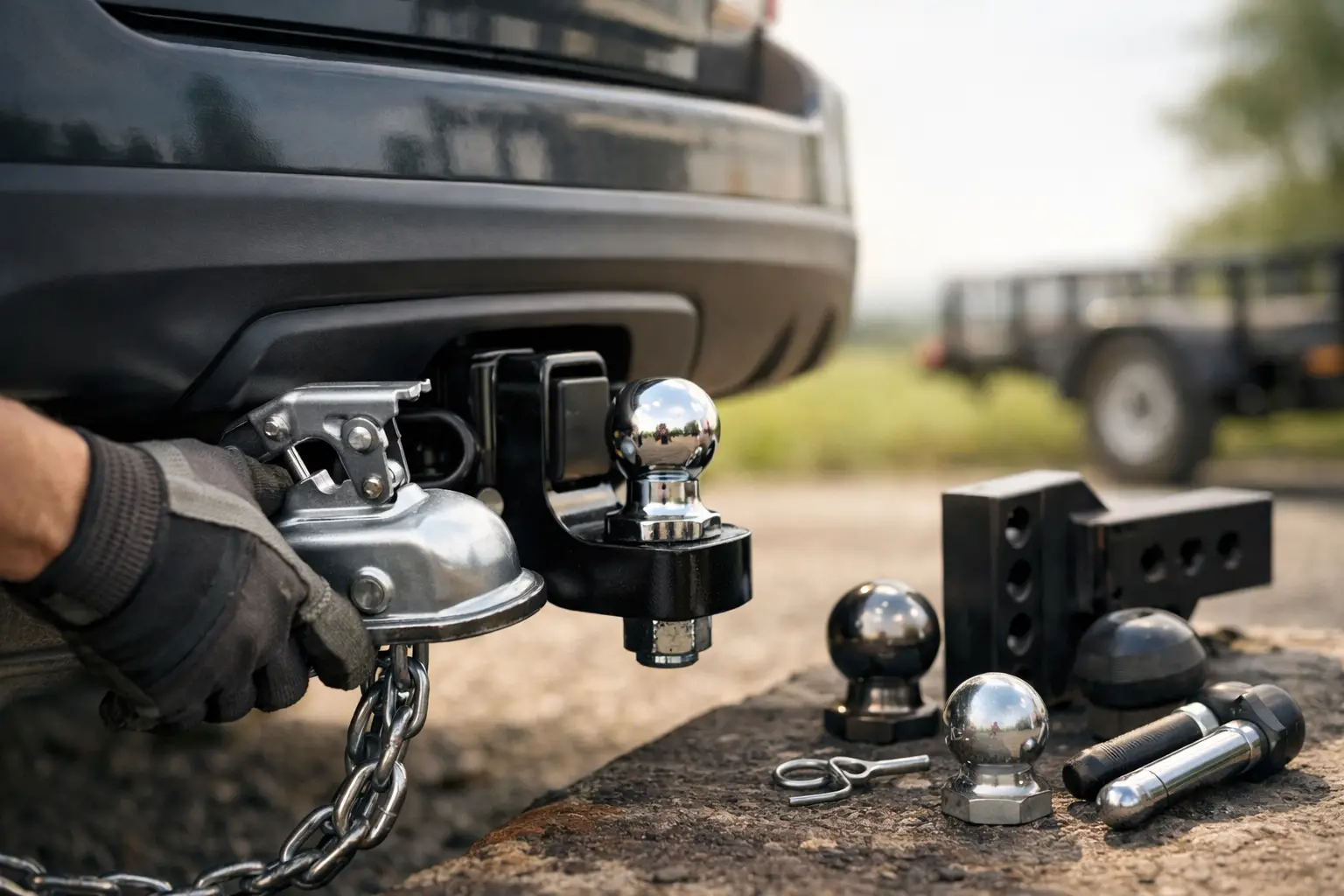
Once the hitch class and tow rating check out, the next step is physical fit. The receiver opening on the vehicle determines what size shank your ball mount needs. A 2-inch receiver needs a 2-inch shank unless you are using a properly rated adapter. Adapters can help in some cases, but they can also reduce capacity, so they are not a free pass.
Then comes the hitch ball. This is where a lot of people get tripped up. Common hitch ball sizes include 1-7/8 inch, 2 inch, and 2-5/16 inch. The trailer coupler must match the ball size exactly. Close does not count here. A 2-inch coupler on a 1-7/8 inch ball is unsafe. A 2-5/16 inch coupler on a 2-inch ball is unsafe. Even if it seems to latch, it is the wrong setup.
Ball mount height matters too. The trailer should ride level or very close to level when connected. If the nose is too high or too low, handling, braking, and tire wear can all suffer. Sometimes the fix is as simple as using the right rise or drop on the ball mount.
Coupler ratings are part of compatibility too
The coupler itself has a weight rating, and it needs to meet or exceed the loaded trailer weight. So does the hitch ball and the ball mount. People often check the vehicle and forget the smaller hardware. That is a mistake. The whole chain has to be rated correctly.
Wiring is part of trailer hitch compatibility
A trailer that physically connects but has no working lights is not road-ready. Wiring compatibility is just as important as mechanical fit.
The most common trailer plugs are 4-pin and 7-pin. A 4-pin plug typically handles basic lighting – running lights, brake lights, and turn signals. A 7-pin plug is used when the trailer has electric brakes and sometimes other functions like reverse lights or battery charge lines.
If your tow vehicle has a 4-pin connector and the trailer requires a 7-pin, you may need an adapter, but an adapter alone does not create brake controller capability. If the trailer has electric brakes, the tow vehicle generally needs a brake controller and proper 7-pin wiring support. This is especially important with heavier trailers and car haulers.
Trailer brakes are not optional on heavier loads
Brake requirements depend on trailer weight and state law, but from a practical standpoint, heavier trailers should have working brakes and a tow vehicle equipped to control them. It is not just about legal compliance. It is about stopping distance, control on downhill grades, and avoiding extra strain on the tow vehicle.
Around the Verde Valley, that matters. A setup that feels fine on flat roads can feel very different on grades or winding stretches. Weight, brakes, and balance show up fast once the road gets less forgiving.
Weight ratings: the part people skip
This is the least exciting part of any guide to trailer hitch compatibility, but it is the one that prevents the biggest problems.
You need to know the trailer’s empty weight, also called curb weight, and the loaded weight once cargo is added. Then compare that number against the tow vehicle’s maximum towing capacity, the hitch rating, and the ball mount rating. If the trailer has a gross vehicle weight rating, or GVWR, that tells you the maximum it is designed to weigh when fully loaded.
Tongue weight matters too. That is the downward force the trailer puts on the hitch. Too little tongue weight can make the trailer sway. Too much can overload the rear of the tow vehicle and hurt steering and braking. A common rule of thumb is that tongue weight should be around 10 to 15 percent of total trailer weight, though exact numbers depend on the trailer type.
This is where experience helps, because the right trailer for the job is not just about what can technically move. It is about what tows well, stops well, and gives you some margin instead of running right at the limit.
Common compatibility mistakes
The most common issue is matching by eyeballing it. If the ball looks about right, or the trailer seems light enough, people assume it is fine. That shortcut causes trouble.
Another mistake is confusing receiver size with towing ability. A 2-inch receiver is common, but that alone does not tell you what the vehicle can safely tow.
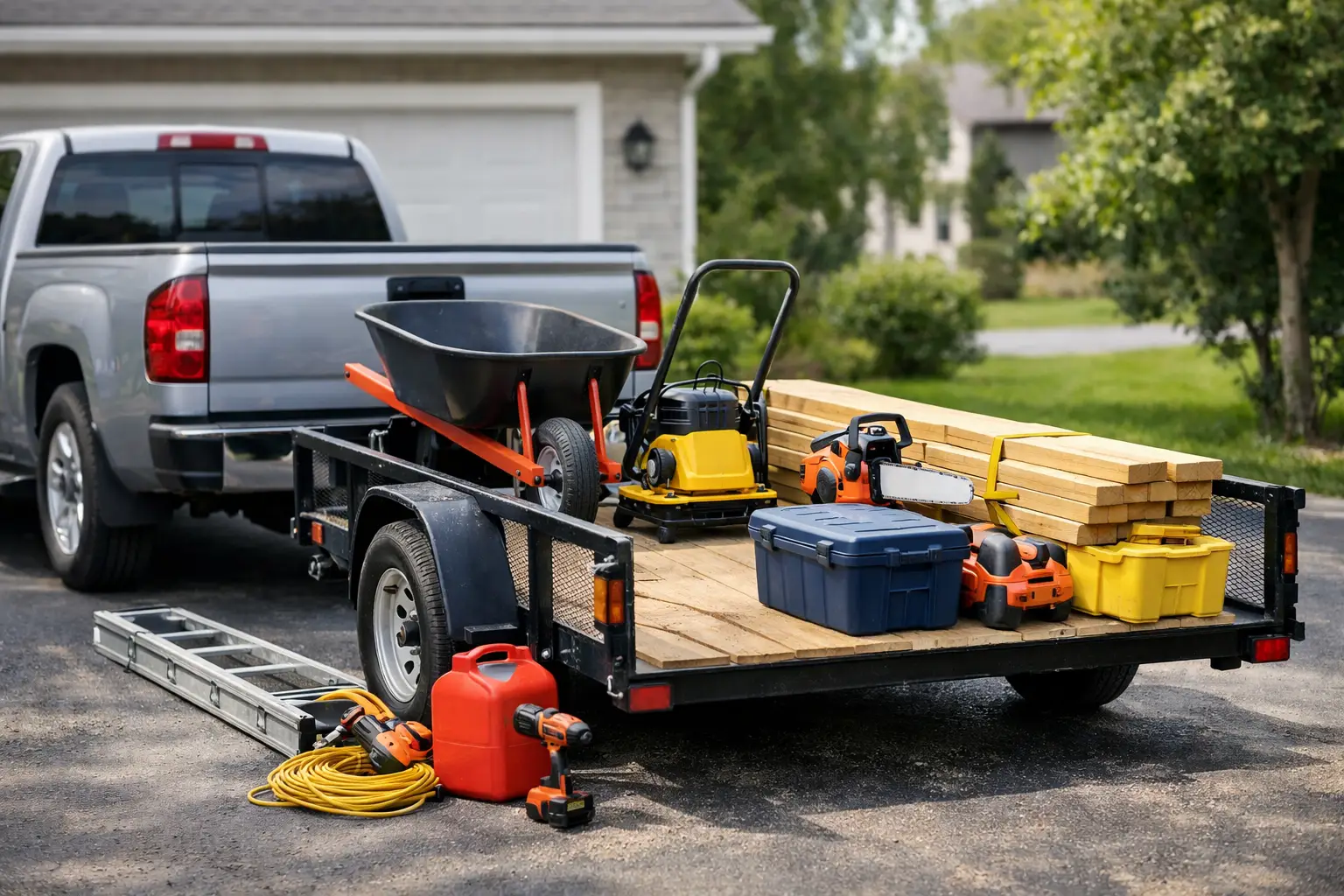
A third problem is forgetting about loaded weight. A trailer may be fine empty, then become a different story once you add a mower, a side-by-side, building material, or a vehicle.
People also overlook tire condition and tire load rating, especially on older tow vehicles and personal trailers. Hitch compatibility is not just the coupler and receiver. It is the whole towing setup working together.
How to check compatibility before you book or tow
Start with the tow vehicle. Know the year, make, model, tow rating, receiver size, and wiring plug type. If you are not sure whether it has a brake controller, check before pickup day.
Then look at the trailer requirements. Confirm coupler size, loaded weight, whether it has electric brakes, and what wiring connector it uses. Compare every number and connection point, not just one or two.
If anything is unclear, ask. A local rental company that deals with real hauling jobs every week can usually spot a mismatch quickly. That is a lot better than finding out after you have already backed up to the trailer.
At Monsoon Trailer Rental, that straightforward matching process is part of the value. You want a trailer that fits your vehicle, your load, and the road ahead without a bunch of guesswork.
The best towing setup is not the one that barely works. It is the one that hooks up cleanly, rides level, stops confidently, and lets you get the job done without second-guessing every mile.
Pingback: Guide to Utility Trailer Rental – Monsoon Trailer Rental LLC