
You do not need a bigger truck for every hauling job. A lot of the time, the real question is simpler: what trailer fits my truck, and will it handle the load without making the trip harder than it needs to be? If you get that part right, hauling feels predictable. If you get it wrong, even a short drive across town can turn into white-knuckle work.
The answer starts with your truck, but it does not end there. Trailer choice depends on what you are hauling, how much it weighs, how the weight sits on the trailer, and whether your truck is set up with the right hitch and wiring. Two people with the same pickup can need two very different trailers.
What trailer fits my truck depends on more than towing capacity
Most people jump straight to the tow rating in the owner’s manual. That number matters, but it is only one part of the picture. Your truck also has limits for payload, tongue weight, axle capacity, and overall combined weight. A trailer can fall under the tow rating and still be a poor match if the tongue weight is too heavy or the load is not balanced well.
Take a common example. Maybe your truck can tow 7,000 pounds. That does not automatically mean a 7,000-pound rated trailer loaded to the max is a good idea. The empty trailer itself might weigh 2,000 pounds or more, which leaves less room for cargo. Then you add passengers, tools, fuel, and bed cargo in the truck, and your usable margin gets smaller fast.
That is why trailer matching works best when you look at the whole setup, not just the biggest number on a brochure.
Start with what you plan to haul
Before you think about trailer style, think about the actual job. Hauling a side-by-side is different from moving a sedan. Cleaning out a property is different from transporting a mini skid steer. The cargo tells you what kind of trailer makes sense.
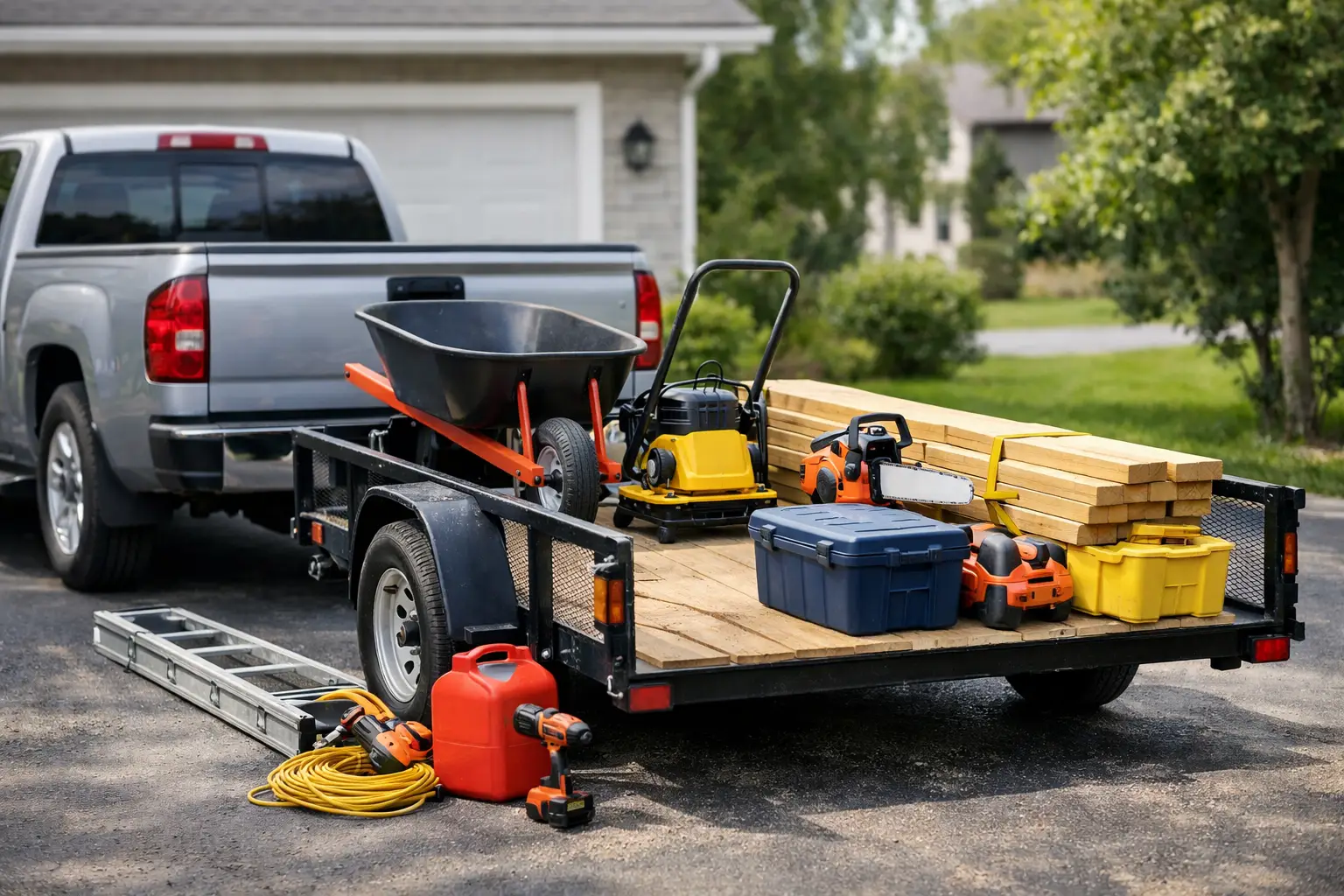
If you are hauling furniture, yard debris, appliances, or general project material, a utility trailer often makes the most sense. It is easier to load by hand, lighter than many enclosed options, and usually a better fit for half-ton trucks and midsize pickups.
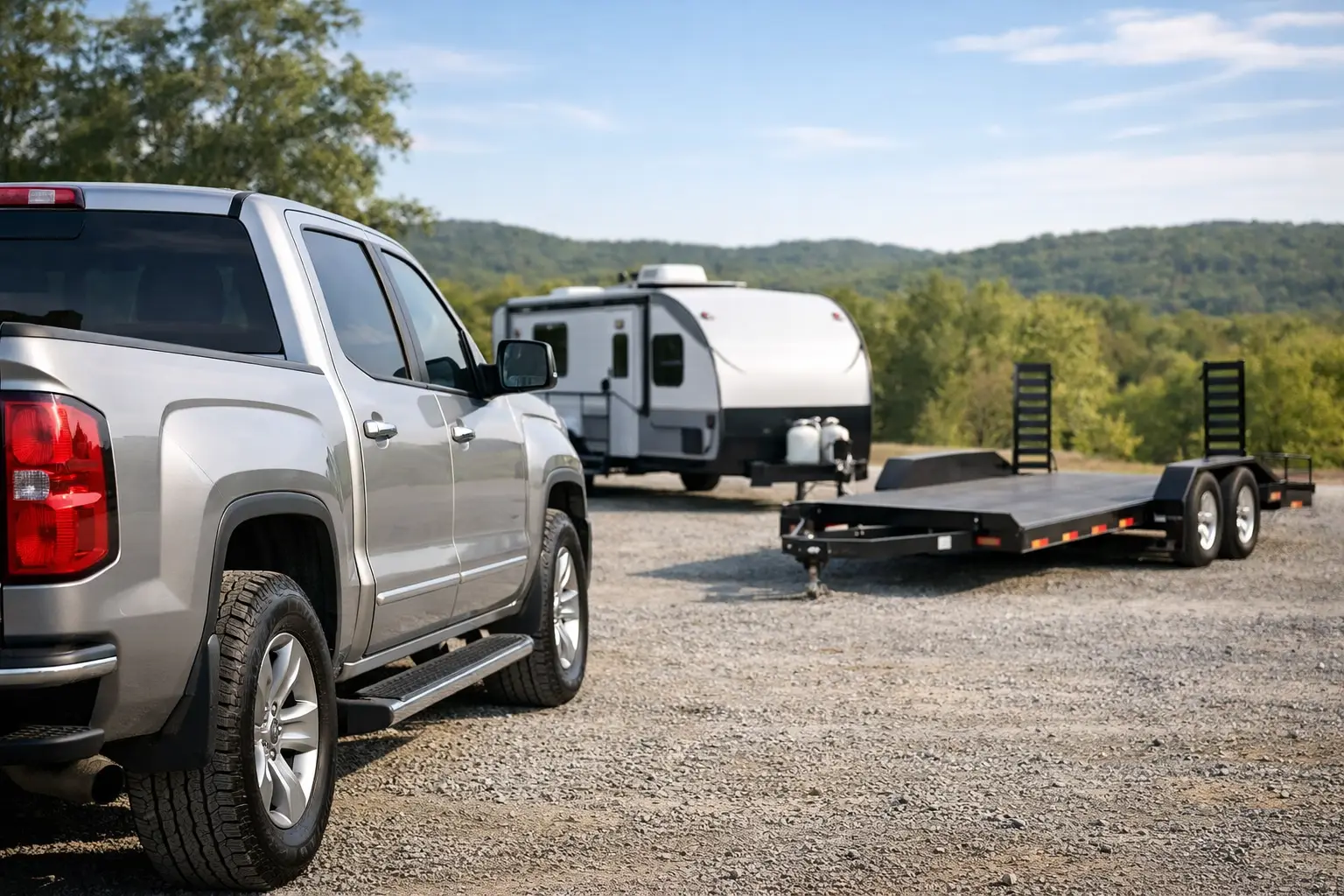
If you need to move a car, SUV, or small truck, a car hauler is the better tool. It is built for vehicle weight, wheel placement, and secure tie-down points. Trying to make a general utility trailer do a car hauler’s job is where people get into trouble.
If you are hauling equipment like mowers, compact machines, or palletized material, trailer size and deck strength matter as much as weight rating. Sometimes the issue is not whether your truck can pull it. The issue is whether the trailer gives you enough deck space and the right loading angle.
Know your truck’s real numbers
If you are asking what trailer fits my truck, you need four numbers from your truck before you book anything.
First is the maximum tow rating. Second is payload capacity, which is how much weight the truck can carry in and on itself. Third is maximum tongue weight, which is the downward force the trailer puts on the hitch. Fourth is whether your truck has a hitch receiver and wiring that match the trailer you plan to pull.
These numbers are usually on the driver’s door sticker, in the owner’s manual, or both. If your truck has trim upgrades, bigger tires, a lift, or aftermarket parts, do not assume the original numbers still tell the whole story. Modifications can change how the truck tows, even if the engine is strong enough.
A simple rule helps here: leave yourself some breathing room. Towing right at the limit is rarely the most comfortable or safest setup, especially on hills, in crosswinds, or on longer drives.
Why payload gets overlooked
Payload is the number that surprises people. It includes passengers, tools in the cab or bed, hitch weight, and anything else riding on the truck. So if you have three adults, a cooler, a generator, and job gear in the bed, that all counts before the trailer even enters the picture.
For bumper-pull trailers, tongue weight often lands around 10 to 15 percent of the loaded trailer weight. If your loaded trailer weighs 5,000 pounds, your hitch may be carrying 500 to 750 pounds. That adds up quickly against payload.
Match the trailer type to the load
A good trailer fit is not just about weight. It is also about shape, length, and how easy the trailer is to load safely.
Utility trailers are great for mixed hauling. They work well for home projects, landscaping material, motorcycles, and equipment that does not require a full car hauler. They are also often lighter, which helps if your truck is capable but not heavy-duty.
Car haulers are designed for vehicles. They usually have a longer deck, better support for vehicle placement, and the right setup for straps or other securement points. If you are moving a car from Cottonwood to Sedona, or just getting a vehicle across the Verde Valley without adding miles to it, a car hauler is the right lane to be in.
Equipment trailers can overlap with utility trailers, but the difference is in the build. Heavier axles, stronger deck materials, and better loading options make a big difference when the cargo has concentrated weight.
Size matters, but bigger is not always better
People often rent more trailer than they need because they think extra size equals extra safety. Sometimes it just means more empty trailer to tow, more weight on the truck, and a harder time backing into a driveway or jobsite.
A trailer should be long and wide enough for the cargo with room to secure it properly. Beyond that, oversized trailers can create their own problems. The right fit usually feels balanced, not oversized.
Hitch class, brakes, and wiring are part of the answer
Even if the trailer weight looks fine on paper, your truck still needs to be equipped to pull it correctly. Hitch class matters. Ball size matters. Wiring matters. Trailer brakes matter.
Lighter utility trailers may not require brake controllers, depending on the load and local rules, but heavier trailers often do. If the trailer has electric brakes and your truck is not set up for them, that is not a small detail. It is a major part of safe towing.
The same goes for lighting connections. A mismatch in plugs or missing wiring can delay the job before you ever leave the lot. This is one reason local renters like working with a team that actually picks up the phone. It is easier to ask a basic question ahead of time than fix a preventable issue later.
How to tell when a trailer is too much for your truck
Sometimes the numbers technically work, but the setup still feels wrong. That is worth paying attention to.
If the rear of your truck squats heavily when the trailer is hooked up, if steering feels light, or if the trailer weight pushes the truck around during braking, you are likely too close to the edge. The same goes if loading the trailer correctly still leaves you uneasy about stability.
There is also a practical side. If the truck struggles up grades, takes too long to stop, or feels busy at normal road speeds, the combination may be legal but not smart for the job.
Good towing should feel controlled. You should not be guessing every time a semi passes or the road curves.
The easiest way to answer what trailer fits my truck
The fastest path is to gather your truck info, then compare it to the actual loaded trailer weight and trailer requirements. Not just empty trailer weight. Not just what you hope the cargo weighs. The real numbers.
Have your year, make, model, engine, and tow package details ready. Know what you are hauling and an honest estimate of the load weight. Include tools, attachments, fuel, and anything loaded in the truck bed. Once you have that, it becomes much easier to narrow down the right trailer instead of guessing.
For first-time renters, this is where talking to a local rental company helps. A straightforward conversation can usually sort out whether you need a utility trailer, a car hauler, or something with a higher capacity. It also helps avoid paying for a bigger trailer than the job requires.
That matters because the best rental is not the largest one on the yard. It is the one that fits your truck, fits your load, and gets the work done without adding stress.
If you are in Clarkdale, Cottonwood, or nearby and trying to sort through trailer options, keep it simple. Start with your truck’s limits, match the trailer to the load, and leave yourself a margin. The right setup should make the job easier from the first mile to the last.