
A trailer problem usually shows up at the worst time – halfway up a grade, at a stoplight, or after you have already loaded a few thousand pounds of equipment. That is why the top trailer safety checklist items matter before the wheels ever start rolling. A quick walkaround can save you from tire trouble, bad lights, load shift, or a hitch issue that turns a simple haul into a long day.
If you rent or tow only a few times a year, it is easy to miss the basics. Even experienced haulers can get comfortable and skip steps when they are in a hurry. The smartest approach is simple: check the same key items every time, in the same order, and do not assume anything looks fine just because the trailer moved fine last trip.
Why the top trailer safety checklist items come first
Most trailer issues are not mysterious. They are worn tires, loose couplers, crossed safety chains, weak straps, dead lights, or cargo loaded too far back. None of those are hard to spot if you look before leaving.
That matters even more when you are hauling around the Verde Valley, where a short local drive can still mean hills, heat, rough pavement, and traffic that forces sudden stops. A trailer that feels acceptable in a flat parking lot can act very different once speed, grade, and load are involved.
Start at the hitch
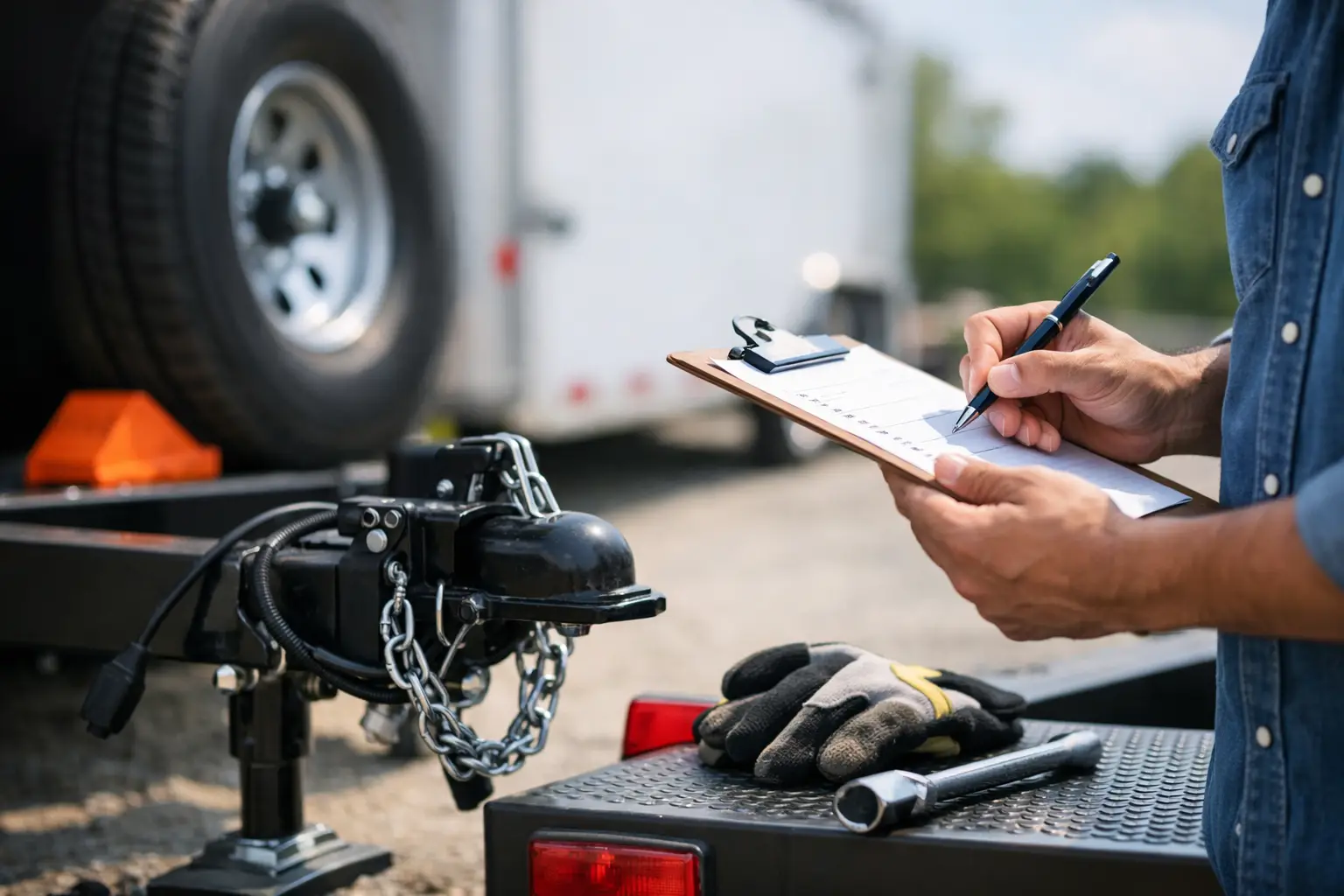
The hitch connection is the first thing worth checking because if this part is wrong, the rest almost does not matter. Make sure the coupler is fully seated on the correct size ball and latched all the way down. If there is a safety pin or lock for the latch, it needs to be in place. Without it, the latch can bounce loose.
Take a second and try lifting the coupler by hand after it is connected. You should not get any separation from the ball. If you do, stop and fix it before moving.
Safety chains matter just as much. Cross them under the tongue so they can help catch it if the coupler ever disconnects. They should have enough slack for turning, but not so much that they drag on the road. If they are dragging, shorten them correctly rather than wrapping them in a way that weakens the setup.
If the trailer has a breakaway cable, attach it to the tow vehicle separately from the chains. Do not clip it onto the same chain hook and call it good. It needs its own connection point so it can do its job if the trailer separates.
Check tires, wheels, and lug nuts
Trailer tires take a beating, especially in Arizona heat. Before every trip, look at tread, sidewalls, and overall condition. Cracks, bulges, cords showing, or uneven wear are all warning signs. Trailer tires often age out before they wear out, so a tire can still have tread and still be a bad bet.
Tire pressure deserves a real check with a gauge, not a kick with your boot. Underinflated tires run hotter and fail sooner. Overinflated tires can ride harsh and reduce traction. Use the proper pressure for that trailer and tire setup.
While you are down there, look at the wheels and lug nuts. Missing lug nuts, rust streaks around studs, or a wheel that looks out of line can point to a bigger problem. If a hub seems excessively hot after a short test move, that may mean a bearing issue or brake drag.
Make sure the lights work
Trailer light problems are common because plugs get dirty, wires get pinched, and connections loosen over time. Check running lights, brake lights, and turn signals before pulling out. If you are alone, use reflections in a window or back up near a surface where you can see the lights bounce back.
Do not settle for one brake light out or a turn signal that works only when the plug is held just right. That kind of temporary fix tends to become a roadside problem. A clean plug and secure connection go a long way, but damaged wiring needs real attention.
Look at the load and weight balance
A trailer can be mechanically fine and still tow badly if the load is wrong. Weight balance is one of the top trailer safety checklist items because poor loading causes sway, weak braking, and steering problems.
The goal is balanced weight with enough tongue weight to keep the trailer stable. Too much weight behind the axle can make the trailer fishtail. Too much weight on the tongue can overload the rear of the tow vehicle and hurt steering control. If the trailer squats hard in the back of the vehicle or rides nose-high or nose-low, stop and rethink the load.
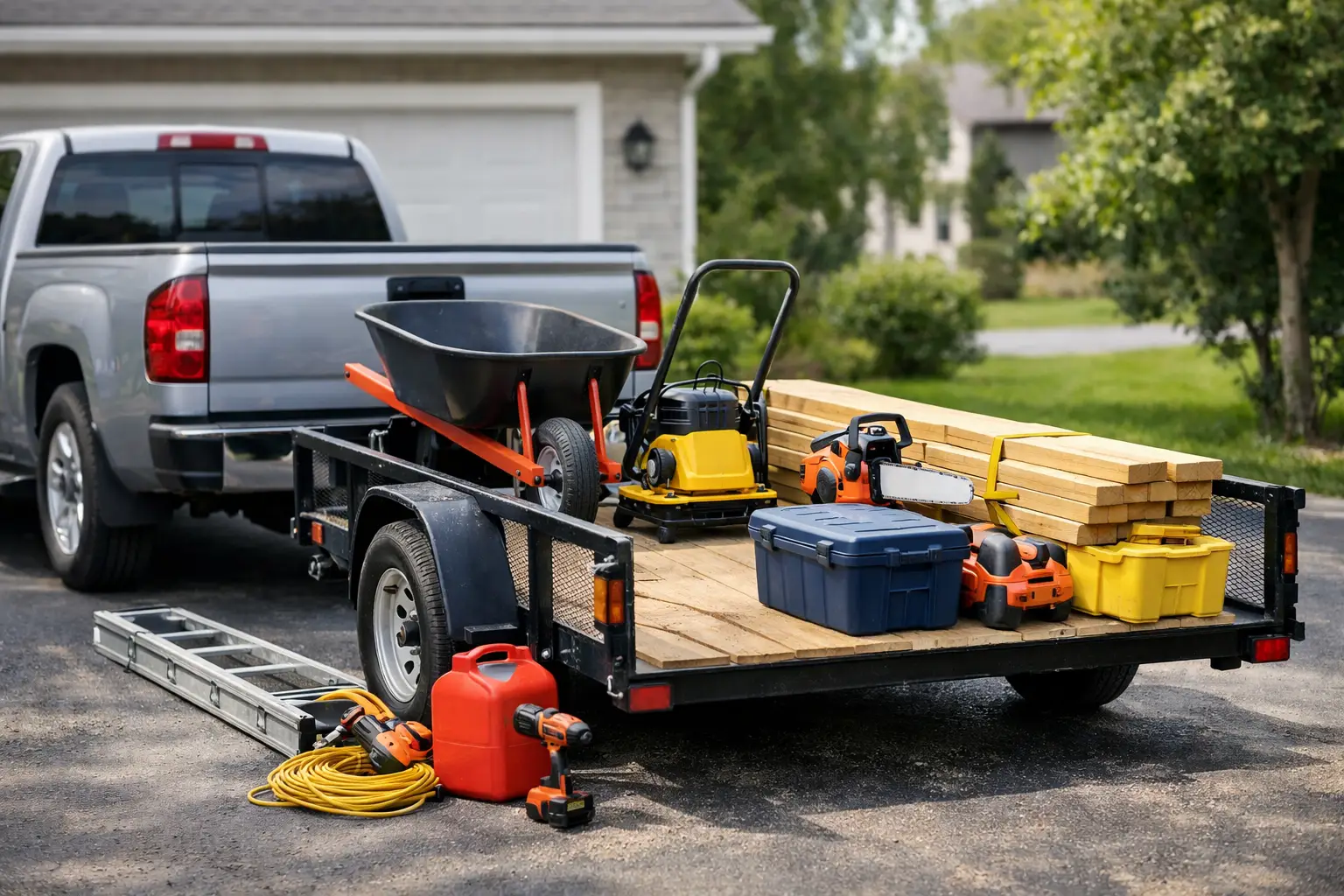
With equipment, lumber, furniture, or landscaping material, keep the heaviest items low and centered over or slightly forward of the trailer axle area when appropriate for that trailer. Spread the load evenly side to side. One heavy item shoved against one rail can affect handling more than people expect.
Secure the cargo like it matters
A load that shifts a few inches can change how the whole rig behaves. Straps, chains, binders, ramps, and loose tools all need attention before you leave.
Use tie-downs that match the load. A lightweight strap may be fine for some household items but not for a vehicle or compact equipment. Look for cuts, fraying, damaged hooks, or bent hardware. Tighten everything, then check it again after a few miles because straps often settle once the trailer starts moving.
If you are hauling a car, tractor, mower, or side-by-side, secure it at the proper points and follow a method that keeps it from rolling, bouncing, or walking sideways. If ramps are removable, stow them and pin them correctly. If they fold up, make sure they are locked.
Test trailer brakes and the brake controller
Not every trailer has electric brakes, but when it does, they need to work with the tow vehicle. Test the brake controller before getting out on the road. You want smooth, controlled trailer braking – not a trailer that shoves the vehicle through stops and not brakes that grab too hard.
This is one of those areas where it depends on trailer weight, road conditions, and what you are hauling. A lightly loaded trailer may need different controller settings than a fully loaded one. Spend a minute making sure the setup feels right in a safe area rather than figuring it out at your first downhill stop.
Check the trailer deck, ramps, and frame
A basic walkaround can catch structural problems before they become dangerous. Look at the deck boards or metal floor for damage that could affect support. Check ramps for cracks, bent sections, or bad hinge points. If something looks twisted or unusually worn, do not ignore it.
Also glance over the frame, jack, fenders, and rails. You are not doing a full shop inspection in the parking lot, but you are looking for obvious signs that something is loose, damaged, or not ready for the load you are about to put on it.
Confirm your tow vehicle is up to the job
People often focus on the trailer and forget the vehicle doing the pulling. Make sure your tow vehicle is rated for the trailer and load combination. Check mirrors, brake function, and rear suspension height once the trailer is connected and loaded.
If visibility is poor, fix that before leaving. If the back of the vehicle is sagging more than expected, that is not something to shrug off. The rig needs to sit and handle properly.
Do one last pull-around before heading out
After everything looks right, move the rig a short distance and test it. Listen for clunks, watch how the trailer tracks, and feel how the brakes respond. Then stop and recheck coupler, straps, ramps, and lights. This last step catches plenty of issues that do not show up while parked.
For local renters and working haulers, this habit pays off. It is faster to spend five extra minutes in the lot than to deal with a tire failure on the shoulder or cargo that needs to be resecured on the side of the road.
A practical order to follow every time
If you want this to become routine, keep the order simple: hitch and chains, breakaway cable, tires and wheels, lights, load balance, cargo securement, brakes, and a final short test move. That gives you a repeatable process instead of guessing what you might have forgotten.
And if you are renting a trailer for a move, equipment haul, or vehicle transport, ask questions before you leave the lot. A good local rental outfit should be easy to reach and willing to walk you through the setup without making you feel like you are wasting their time. That is part of safe towing too.
The safest trailer trip is usually the one that starts a little slower, with a careful check before the key turns and the road starts asking more from your equipment.