
You usually figure out how to move a side by side when time is short. Maybe it broke down on the trail, maybe you bought one across town, or maybe you need it on a jobsite by morning. Either way, the goal is simple – get it there safely without damaging the machine, the trailer, or your tow vehicle.
A side by side is not hard to haul if you match the trailer to the machine and take your time with loading. Most problems happen before the wheels ever start rolling. The trailer is too small, the ramps are too steep, the weight is off, or the tie-downs are an afterthought. Get those parts right, and the trip gets a whole lot easier.
How to Move a Side by Side the Right Way
The first step is knowing what you are actually hauling. Side by sides vary more than people think. A smaller two-seat model might be manageable on a lighter trailer, while a four-seat machine with accessories, bigger tires, a roof, winch, spare fuel, and gear can weigh a lot more than the owner expects. Before you pick a trailer, check the machine’s overall length, width, curb weight, and tire stance.
Do not guess. Look at the owner’s manual or manufacturer specs, then add the weight of any accessories or cargo still on the machine. That number matters because your trailer and tow vehicle both have limits. If your side by side weighs 1,800 pounds and your trailer weighs 2,000 pounds, your tow vehicle needs to safely handle at least 3,800 pounds, and preferably more once you account for tools, straps, and real-world conditions.
An open utility trailer can work for some machines, but it depends on deck size, axle rating, and ramp strength. In a lot of cases, a car hauler trailer is the better call because it gives you more deck space, better stability, and tie-down points that are built for hauling wheeled equipment. If the machine barely fits, it does not fit. You want enough room to load straight, balance the weight, and secure it without fighting for inches.
Choose the trailer before you choose the route
A common mistake is planning the move around convenience instead of capacity. A buddy may have a trailer sitting in the yard, but if it is too narrow, too short, or under-rated, it is the wrong trailer. A proper trailer should comfortably fit the wheelbase and width of the side by side, support its weight, and pair with a tow vehicle that is rated for the total load.
Brakes matter too. The heavier the setup, the less room there is for error on hills, rough roads, and sudden stops. Around the Verde Valley, that matters more than people think. Grades, curves, and uneven road surfaces can expose a bad loading job fast.
Picking the Best Trailer for a Side by Side
If you are deciding between trailer types, think in terms of clearance, capacity, and control. A trailer with a full deck gives you flexibility in where the tires sit and makes loading easier for machines with wider stances. Strong ramps are just as important. If the ramps flex too much or the angle is too steep, loading gets sketchy in a hurry.
A car hauler is often a strong option because it is built for rolling loads, has a wider platform, and usually offers better balance than a small utility trailer. That does not mean every car hauler is automatically right. You still need to confirm deck length, axle rating, GVWR, and ramp capacity.
Tie-down points should be easy to reach and solidly mounted. If you have to improvise with weak spots or awkward angles, the trailer is making the job harder than it should be.
Open vs. enclosed trailer
For most local moves, an open trailer is the practical choice. It is easier to load, usually lighter, and simpler to work with. An enclosed trailer gives more weather protection and security, but it adds weight and can create clearance issues if your side by side has a roof, windshield, or taller accessories. It can be the right option, but only if the inside dimensions truly fit.
Loading Without Creating a Problem
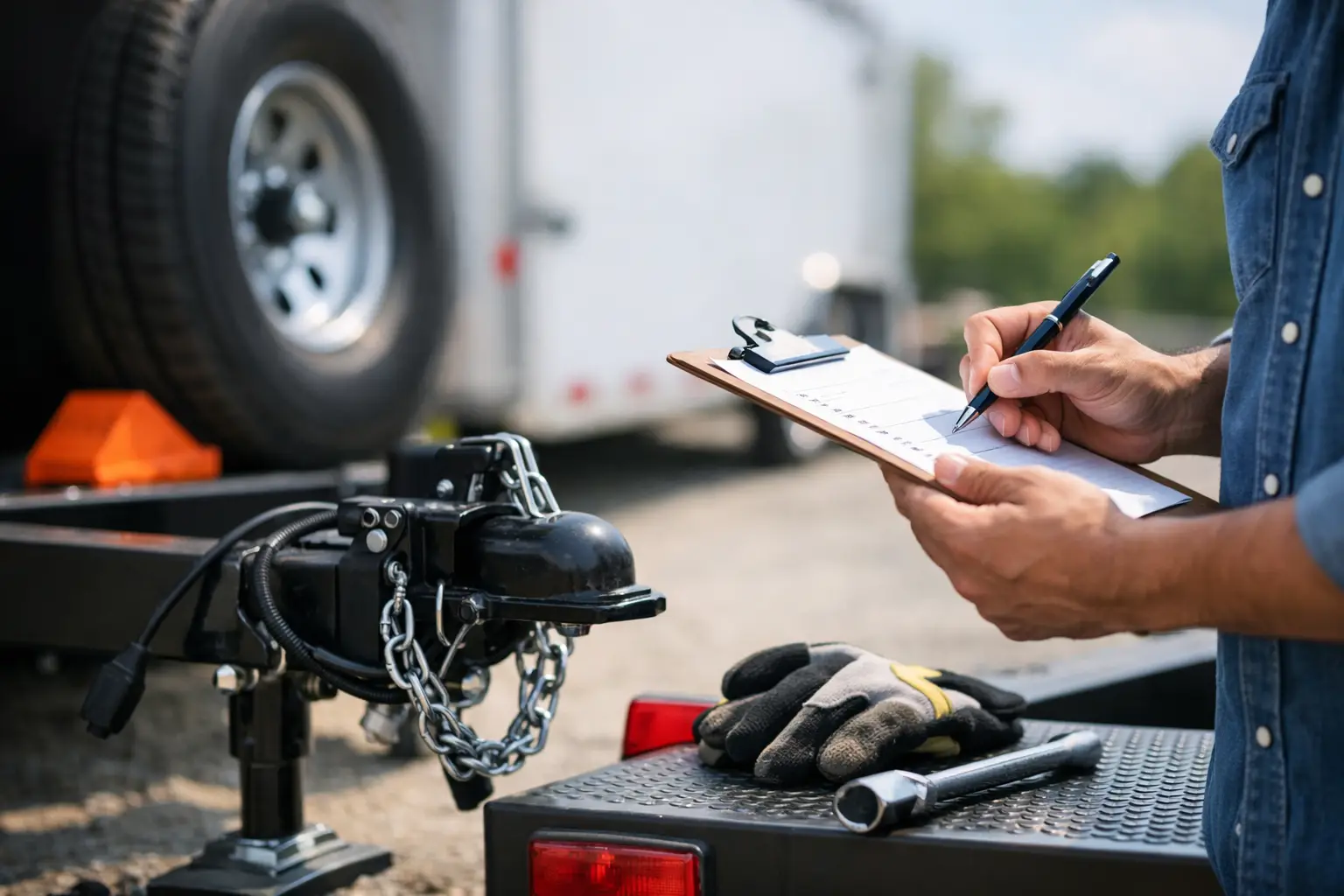
Before loading, park the trailer on level ground and make sure it is properly hitched to the tow vehicle. The coupler should be locked, safety chains connected, trailer plug attached, and jack fully raised. Chock the trailer wheels if needed so the trailer does not shift during loading.
Inspect the ramps before you start. They need to be fully seated, pinned if required, and lined up with the tires. If the side by side is muddy, wet, or not running well, slow down even more. A spotter can help, especially if you are loading onto a narrower deck or dealing with reduced visibility.
Drive up the ramps in low gear and keep a steady pace. Do not gun it. Too much throttle can bounce the machine, spin the tires, or overshoot the balance point on the trailer. Once the machine is on the deck, stop and check position before setting the brake.
Where should it sit? Usually, you want the side by side centered left to right with enough forward placement to create proper tongue weight, but not so far forward that you overload the hitch. There is some judgment involved here. Too far back and the trailer can sway. Too far forward and towing can feel heavy and unstable in a different way. If you haul often, you get a feel for it. If you do not, this is one place where using the right trailer from the start makes life easier.
Securing the Side by Side for Transport
This is where people get lazy, and it is where damage starts. Use quality ratchet straps or wheel nets rated for the load. Four-point tie-down is the standard approach. Secure the machine at four separate points so it cannot roll, shift, or bounce sideways.
The best tie-down points depend on the machine. In many cases, you will secure to the frame or designated tow points, not to weak accessories, bumpers, or suspension parts that are not meant for transport loads. Cross-strapping can help with stability, but the main thing is making sure each strap has a solid anchor point and a clean angle.
After tightening the straps, shake the machine by hand if possible. You want to see the suspension settle a bit while the machine stays planted. If the straps are loose enough that the side by side can walk around on the deck, they are not doing their job.
A few extra steps help too. Remove loose gear from the cab or cargo bed. Fold or secure mirrors if needed. Check that ramps are locked in place. If the machine has a windshield or light accessories that catch wind, make sure they are secure before heading out.
Recheck after the first few miles
Even a good tie-down job can settle once you are moving. Stop after the first few miles and inspect everything. Straps can loosen slightly as the machine shifts into position. A quick re-tighten is cheap insurance.
Towing Tips That Matter on the Road
Once the side by side is loaded and strapped down, your job changes from loading to towing. Give yourself more following distance than usual. Brake earlier. Take corners wider and slower. Trailer tires, wheel bearings, lights, and brakes should all be checked before you leave, not after something feels off on the road.
Speed is where small mistakes turn into big ones. A trailer that feels fine at lower speed can start to sway if the load balance is wrong or the road gets rough. If you feel sway, do not accelerate through it. Ease off the gas and slow down gradually while keeping the steering wheel steady.
Backing up takes patience too. If you are not used to towing, practice somewhere open before you try to squeeze into a tight driveway or trailhead lot. It saves time, and it saves arguments.
When It Makes Sense to Rent Instead of Borrow
If you only move a side by side once in a while, renting the right trailer usually makes more sense than forcing the job with whatever is available. The right trailer gives you proper deck space, safer loading, and less guesswork on tie-down placement and load balance. That matters whether you are moving a recreational machine, hauling one in for service, or transporting equipment for work.
For folks around Cottonwood, Clarkdale, Sedona, and the surrounding area, having access to a dependable local trailer rental can save a lot of hassle. A car hauler or equipment-ready trailer is often the difference between a smooth move and a long afternoon of trying to make the wrong setup work.
If you are not sure what size trailer you need, ask before booking. A team that actually picks up the phone can help you match the trailer to the side by side and your tow vehicle, which is a lot better than finding out at pickup that the numbers do not work.
Moving a side by side is not complicated, but it does punish shortcuts. Take ten extra minutes to verify the weight, fit, ramps, and tie-downs, and the whole job gets easier from there.
Pingback: 9 Best Uses for Car Haulers - Monsoon Trailer Rental LLC