
A side by side can turn into a real problem fast if it is loaded wrong. One bad strap angle, too much tongue weight, or tires set on the wrong part of the deck can make a short drive feel sketchy in a hurry. If you are figuring out how to haul a side by side, the goal is simple – keep the machine secure, keep the tow vehicle stable, and get there without white-knuckling the whole trip.
The good news is that hauling a UTV is not complicated once you get the basics right. Most trouble comes from mismatched trailers, rushed loading, or tie-downs that were good enough until they were not.
How to haul a side by side with the right trailer
Start with the trailer, because everything else depends on it. A side by side needs enough deck space for the full wheelbase, enough payload capacity for the machine plus gear, and ramps that can handle the width and weight without flexing too much.
A lot of owners look only at dry weight, and that is where mistakes start. Your side by side may weigh one number from the factory, but that changes once you add fuel, spare tires, coolers, tools, or accessories like roofs, winches, and bumpers. It is smart to leave margin instead of cutting it close.
For many standard side by sides, a utility trailer or car hauler works fine if the dimensions and weight rating line up. Wider four-seat models can be a different story. They may need more deck length and a little more room to load without climbing the fenders or crowding the rails.
Before you book or borrow a trailer, check four things: overall trailer payload, deck width, deck length, and ramp rating. If any one of those is marginal, keep looking. The trailer should fit the machine comfortably, not barely.
Know your weights before you tow
Weight matters more than people think. You need to know the loaded weight of the side by side, the trailer weight, and the towing capacity of your truck or SUV. You also need to know the hitch rating, because a strong engine does not automatically mean a strong towing setup.
Tongue weight matters too. If the side by side sits too far forward, the rear of the tow vehicle may sag and steering can feel light. Too far back, and the trailer can sway. In most cases, you want enough weight on the tongue to keep the trailer planted, but not so much that the tow vehicle gets overloaded. That balance usually lands around 10 to 15 percent of total trailer weight, though the exact number depends on your setup.
If you are not used to towing, this is the part to slow down on. A trailer that technically moves is not the same as a trailer that tows safely.
Loading the side by side the right way
Pick flat, solid ground before you start loading. Gravel can work if it is packed well, but loose dirt, soft shoulders, or uneven surfaces make loading harder than it needs to be.
Hook the trailer to the tow vehicle first. Do not load a loose trailer sitting on a jack. The coupler should be locked, safety chains attached, and the trailer plugged in. If the trailer has wheel chocks, use them.
Line the side by side up straight with the ramps. Go slow and steady. Most loading mistakes happen because someone gets in a hurry and climbs a ramp crooked or with too much speed. Low gear helps. A spotter helps even more if the ramps are narrow or the trailer deck is tight.
Once the side by side is on the trailer, stop and check where the tires are sitting. The machine should be centered left to right, with enough forward placement to create proper tongue weight without overloading the hitch. This may take a little adjustment. It is normal to pull forward or back a few inches to get it right.
Set the parking brake, put the machine in park if equipped, and shut it off before securing it.
Best way to strap down a side by side
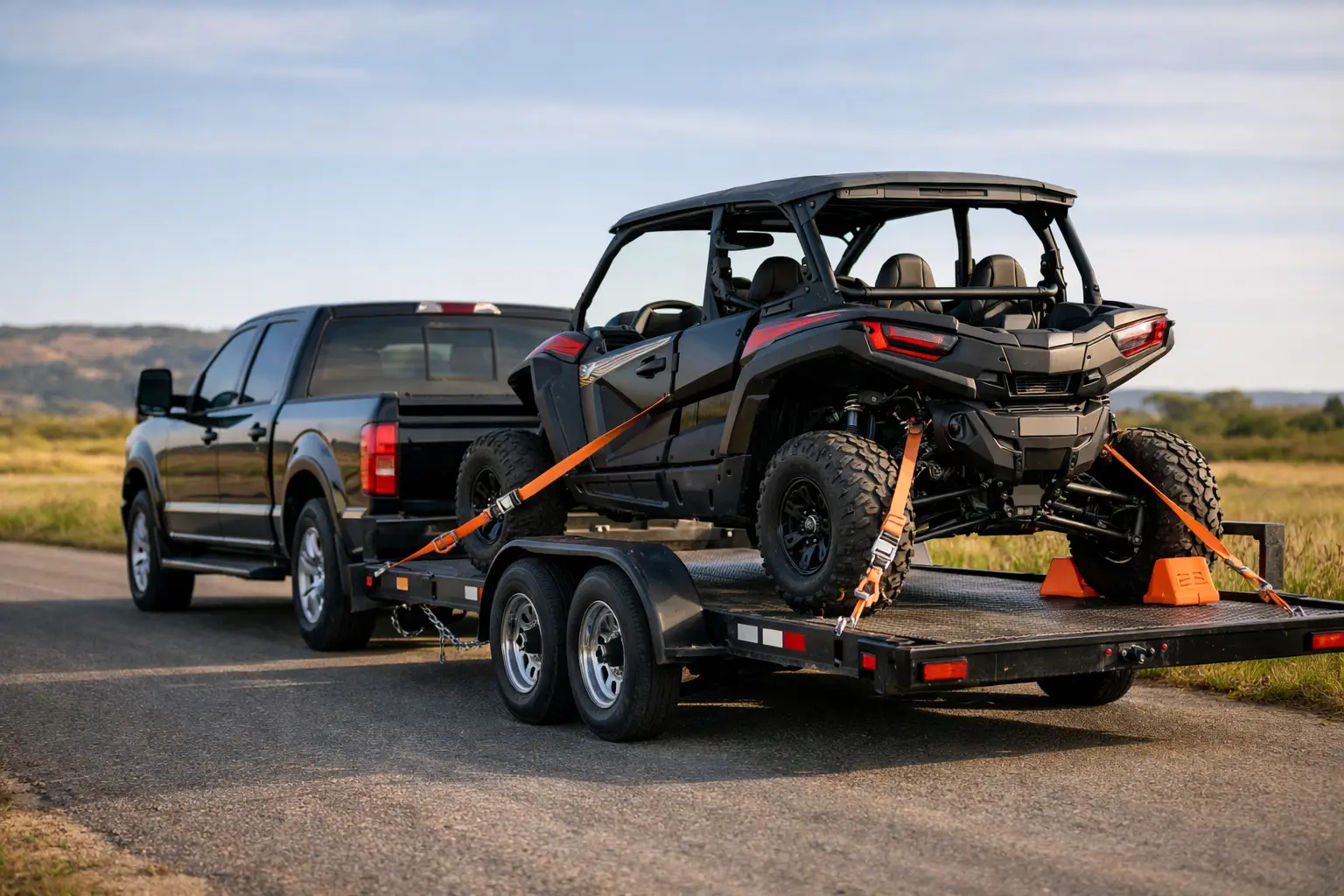
The best tie-down setup is one that holds the machine down and keeps it from shifting front to back or side to side. In most cases, that means using four rated tie-downs at four solid points.
Use quality ratchet straps or chains that are rated for the load. Do not use old straps with cuts, frayed edges, or bent hardware. This is not where cheap gear pays off.
Most side by sides have designated frame or suspension tie-down points. If your owner manual gives approved locations, use those. If not, secure to strong structural points on the frame, not to plastic parts, bumpers that are not rated for load, or random accessories.
There are two common approaches. Some haulers strap to the tires using wheel nets or basket straps. Others secure the frame or suspension. Either can work if done correctly, but the setup should match the trailer and the machine. Tire straps are often a clean option when you want the suspension to move naturally over bumps. Frame tie-downs can also work well, especially on shorter local trips, but they need to be placed carefully so the machine stays settled.
A good rule is to pull the front straps slightly forward and outward, and the rear straps slightly backward and outward. That creates opposing tension and helps prevent movement in every direction. Tighten each strap evenly. You want the machine held firmly, but not with straps rubbing on sharp edges or twisted into knots.
After everything is tight, secure the loose ends so they do not flap in the wind.
Common mistakes when hauling a side by side
A lot of side by side hauling problems come from simple oversights. People trust one heavy strap instead of four proper tie-downs. They guess on trailer capacity. They load too far to the rear and end up fighting sway down the highway.
Another common mistake is forgetting trailer tire pressure. Underinflated trailer tires run hot, wear fast, and increase the chance of a blowout. Before any trip, check tire pressure on both the trailer and tow vehicle. Also check lug nuts, lights, brake function if the trailer has brakes, and the hitch latch.
Ramp storage is another one. If ramps are removable, make sure they are locked down before driving off. You do not want them bouncing out halfway to camp.
And do not forget height and width. If your side by side has a roof, windshield, light bar, or other add-ons, make sure the full setup still clears where you are going. This matters more than people think, especially with enclosed spaces or low branches near trailheads.
How to drive once it is loaded
Towing a side by side should feel controlled, not rushed. Give yourself more following distance, brake earlier, and take turns wider. If your trailer starts swaying, do not try to steer your way out of it with sudden corrections. Ease off the gas and let the trailer settle.
Your first stop should come early. After about 5 to 10 miles, pull over somewhere safe and recheck the straps, coupler, chains, and trailer tires. Straps can loosen slightly after the machine settles into place. A quick recheck saves a lot of trouble later.
If you are driving through windy stretches around the Verde Valley or heading out on rougher back roads, plan on checking again during the trip. Heat, vibration, and road bounce can change things.
What first-time haulers usually need most
If this is your first time hauling a UTV, the main thing you need is enough trailer and enough patience. Bigger is usually better than barely enough, especially if you are still getting used to loading and balancing weight.
It also helps to think beyond the side by side itself. Will you also be hauling fuel cans, a spare tire, tools, or camping gear? That extra stuff counts toward your trailer payload and changes how you should place the machine.
For many local customers, renting a properly sized trailer makes more sense than trying to force the job onto whatever is available. A dependable trailer, fair rates, and a team that actually picks up the phone can make the whole job easier, especially if you are hauling only a few times a year.
If you are unsure what trailer size fits your side by side, ask before you hook up. A few minutes of planning beats fixing a bad load on the side of the road.
A side by side is built for rough ground, but hauling it home should feel smooth, predictable, and boring in the best possible way.